Google and SpaceX discuss building data centers in Earth orbit
Google and SpaceX are in talks about building data centers directly in Earth orbit. The companies see space as a solution for the high-performance computing AI
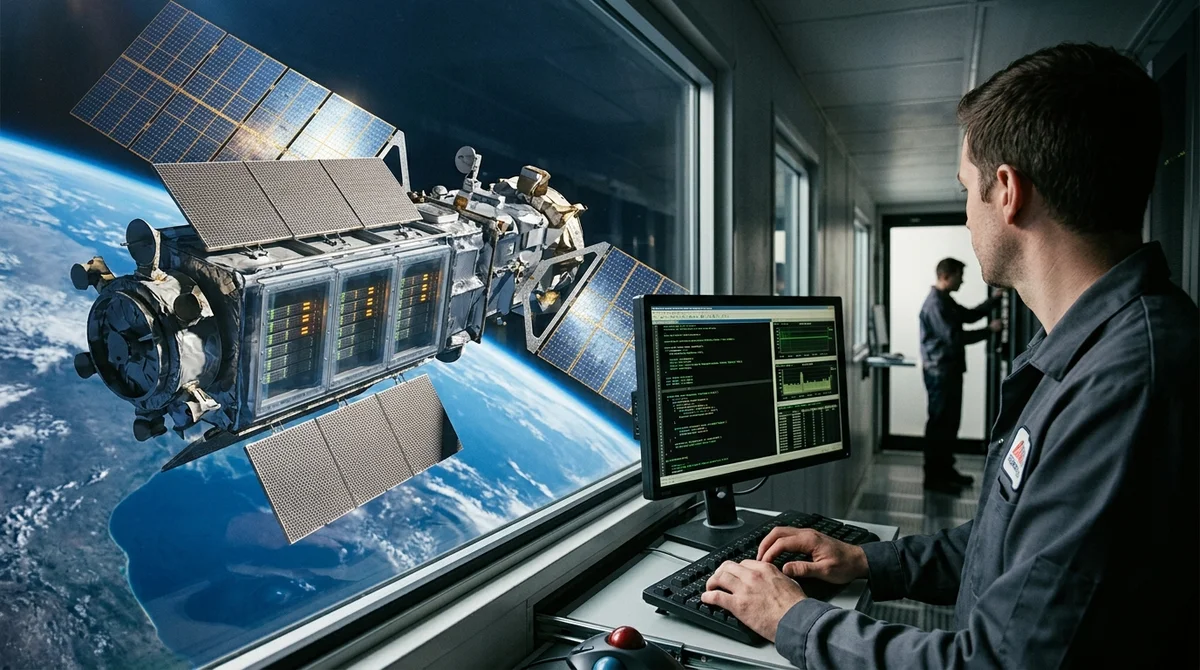
Google and SpaceX are negotiating the construction of data centers directly in Earth's orbit. Both companies see space as a solution for the powerful computing required for AI development — despite the fact that current costs remain significantly higher than terrestrial alternatives.
Why Space Attracts Tech Giants
A modern data center is an energy monster of enormous scale. A single large facility consumes as much electricity as a mid-sized city. But the main problem isn't even basic energy — it's cooling: servers generate a colossal amount of heat, and the entire air conditioning system consumes a significant percentage of the operational budget.
On Earth, this is tackled the old way: air conditioners, water cooling, giant ventilation systems. All of this requires additional energy. In space, physics is entirely different. In a vacuum, heat is dissipated through special radiators directly into space — this is natural, passive cooling that requires no energy. Theoretically, an orbital data center with the same computing power could require significantly less electricity than its terrestrial counterpart.
Google has already been investing for years in cooling optimization at its terrestrial data centers — this is one of the company's key engineering challenges. But this approach has a physical ceiling. SpaceX, on the other hand, possesses a critical asset: reliable, repeatedly tested technology for reusable launches and orbital servicing. Together, they could attempt to realize an idea that long seemed exclusively like science fiction.
What Challenges Will the Project Face
Sending a data center to space today costs several times, even tens of times more than building it on Earth. Real costs include several layers:
- Specialized servers resistant to extreme vibrations during launch and radiation in orbit
- Launching equipment into orbit (hundreds of millions of dollars per ton of payload)
- Redundancy and fault-tolerance systems for conditions where repairs cannot be made quickly
- Continuous maintenance, repairs, and component replacement in open space conditions
- Protection from space debris, solar flares, and other risks inherent to orbit
This means the return on investment could stretch over an entire decade or more. But the fact itself that Google and SpaceX are conducting such negotiations hints that both see the mathematics that may one day add up — probably when launch costs fall even further or AI computing consumption grows so much that terrestrial data centers can no longer keep up.
What This Means
Orbital data centers remain in the early stages of negotiations and concepts, but the negotiations themselves between two such giants send a signal: the idea is no longer science fiction — it's a real engineering challenge worth analyzing seriously. For the world of AI computing, which is only beginning to pick up pace, space could become the next frontier of infrastructure.