Google adds Gemini dictation to Gboard, posing a threat to startups
Google has built Gemini dictation into Gboard — a strategic move against independent dictation apps. The feature will be available on Samsung Galaxy and Pixel f
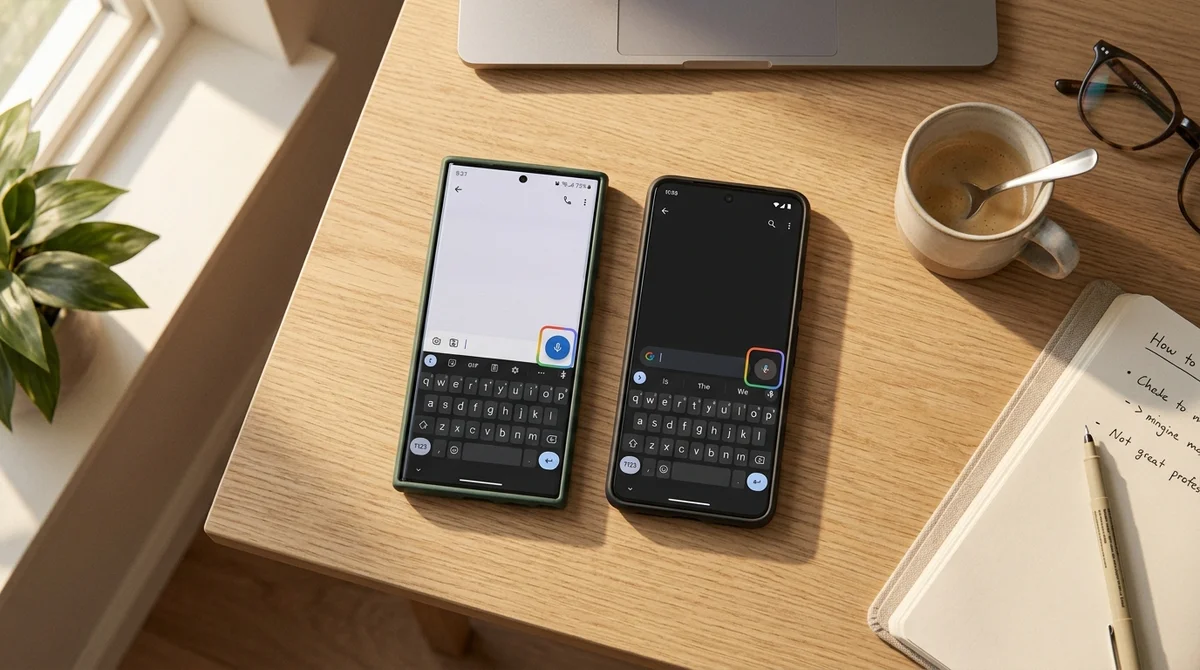
Google has integrated Gemini-powered dictation directly into the Gboard keyboard, with Samsung Galaxy and Google Pixel users receiving the feature first. This is a powerful strategic move in the speech recognition market, but potentially a death blow for all startups in the dictation category.
Embedded in every smartphone
Google has integrated Gemini into Gboard — the standard keyboard on hundreds of millions of smartphones worldwide. Users don't need to download a separate application. Dictation will work with natural language support, automatic punctuation, and grammar correction thanks to Gemini's capabilities. The feature uses local Gemini models on new Tensor chips for fast offline operation and cloud models for maximum recognition quality. This combined approach ensures both speed and accuracy. The key to this strategy is integration into the text input pipeline. The user sees a microphone button right in Gboard, taps it, starts speaking — and text appears on the screen. No need to switch between applications, copy results, or paste text. Everything happens in one place.
Threat to startups
For independent dictation applications, this is an existential threat. Startups like Otter.ai, which built their business on providing quality dictation and transcription, now must compete with an opponent embedded in the standard software of every smartphone. The history of consumer technology shows that built-in features often defeat quality. Even if an application is superior in functionality, recognition accuracy, or unique features, convincing millions of users to install a separate app is a task of colossal difficulty. When a feature works "out of the box," requiring no additional actions, users choose the convenience of the built-in solution.
Google possesses numerous advantages in this competition. The company has hundreds of millions of Gboard installations, enormous resources for training models on billions of dictation examples, the financial power to keep the feature completely free, and deep integration with the Android ecosystem. The threat is particularly acute for:
- General-purpose dictation and transcription applications
- Services whose primary revenue depends on dictation
- Solutions with premium access models, when a free built-in solution captures users
- Startups without other products in the Google ecosystem that would create user lock-in
Global integration strategy
Embedding Gemini dictation is not an isolated move. It is part of Google's global strategy to embed AI in every critical smartphone infrastructure. Google is already embedding Gemini in Search, Gmail, Google Docs, Google Photos. Now it's the keyboard's turn — the most intimate tool for user interaction with the device. The strategy is crystal clear: make AI embedded, invisible, standard. Not a separate product that users choose or purchase, but a fundamental part of the platform. For consumers this is convenience, but for competitors — an invisible wall that is impossible to jump over.
What it means
Dictation transforms from a separate product into a platform feature. Google consolidates control over one of the most basic points of user interaction with the smartphone — text input. Startups competing with this built-in feature have two main strategies remaining. First: develop specialized features that the platform cannot embed — for example, meeting transcription, intelligent editing, integration with corporate systems. Second: find niche markets and languages where Google's built-in solution is still weak or not deployed. But overall this is a classic story in technology: built-in features become a form of monopoly that works at the level of user habit and convenience, not at the level of product quality.