Data Centers Arrive in Rural America: The Story of a Shuttered Paper Mill in Maine
The paper mill in Jay, Maine, which closed in 2020, is being converted into a data center. An investment consortium led by developer Tony McDonald spent three y
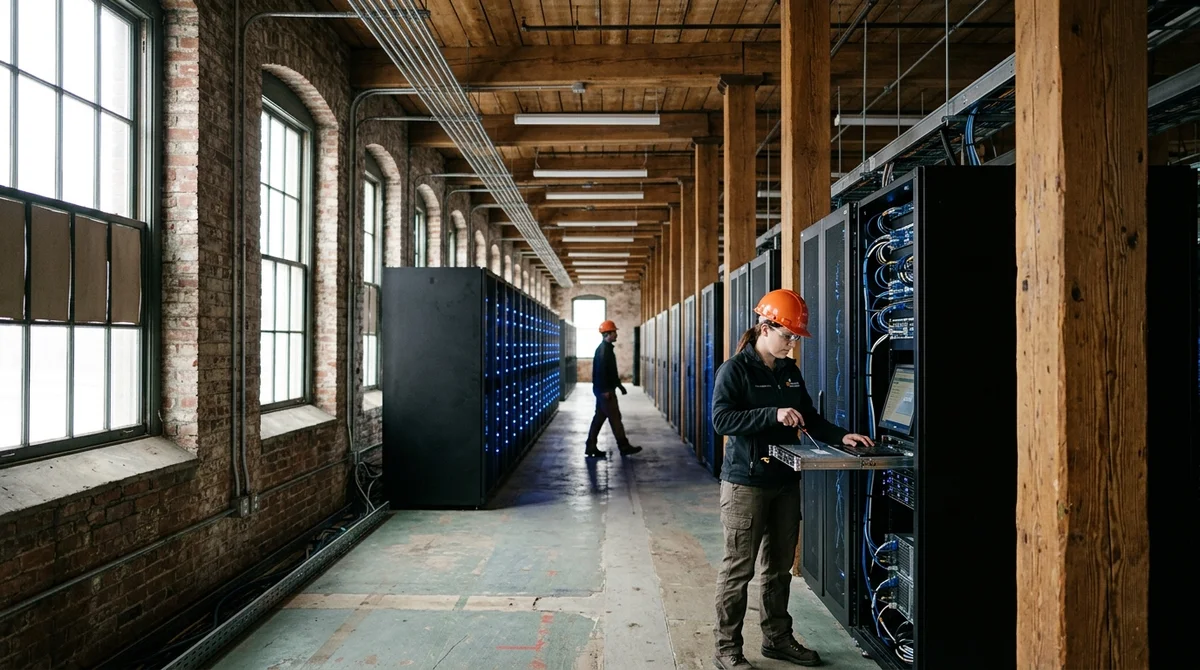
The Androscoggin paper mill, closed in 2020 in Jay, Maine, is getting a second life — being converted into a data center. This symbolizes a new trend in America: tech companies are buying up closed factories and converting them into server centers.
The Story of One Factory
The Androscoggin mill was the industrial heart of Jay for nearly a century. At its peak, it employed almost 1,500 people, producing pulp for the paper industry. In 2020, an accident occurred — an explosion in the pulping digester — and the factory closed forever. The 1.4 million square foot building became a monument to rural industrial decline. For a long time, the property was considered hopeless. But in 2023, an investment consortium led by developer Tony McDonald acquired the property. The team spent three years on complex and expensive preparation: dismantling equipment (a significant portion was sent to Pakistan), clearing the site of industrial waste, restoring engineering networks. The result is a clean building ready for conversion.
Why Data Centers Are Coming to Rural America
Global tech companies like Amazon, Google, and Microsoft are facing growing demand for computing power for AI, cloud storage, and streaming. They are looking for sites for massive data centers, and rural regions of America offer three critical advantages:
- Cheap land and real estate (compared to cities)
- Existing industrial infrastructure (access roads, power supply, utilities)
- Proximity to natural cooling resources (rivers, cold climate)
Local authorities are thrilled with such investments. They see the possibility of bringing jobs back to regions devastated by industrial closure. Data centers require permanent staff — security guards, electricians, network engineers, maintenance specialists.
Mass Conversion Begins
The story of the Maine factory is not a unique case. Across America, a movement to repurpose abandoned facilities is beginning. Closed textile mills in the Northeast, old auto plants in the Midwest, abandoned mines and quarries in the Southwest — all are potential sites for data centers. Most of these buildings were already designed to support massive equipment and can handle heavy loads. Floors are built for weight, walls for vibrations, electrical networks for power. All this is ideal for data centers.
What It Means
Converting closed factories into data centers is not just a change of sign. It is a potential reboot of rural America's economy. Even if the number of jobs is smaller than it was during the factory era, it will still be stable, well-paid, and connected to a growing sector.