Adaption launched AutoScientist: a tool for automatic model fine-tuning
Adaption introduced AutoScientist, a tool for automatic fine-tuning of AI models. The system independently selects training parameters, the amount of training d
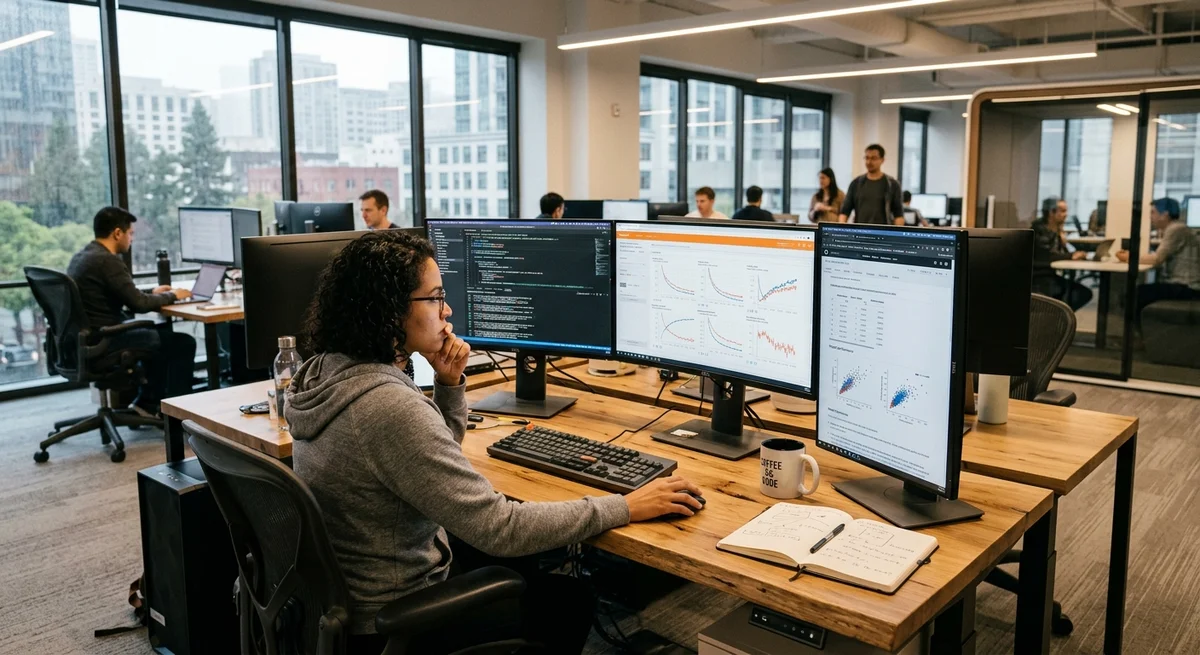
Adaption has launched AutoScientist — a tool that automates the fine-tuning process of AI models. Instead of manually adjusting parameters and conducting lengthy experiments, the system automatically determines the optimal training strategy for a specific task.
How It Works
AutoScientist analyzes the target task and automatically selects training parameters, the volume of training data, and the model adaptation strategy. The system functions as an expert system that accumulates knowledge about which approaches work best in different scenarios. The tool works with existing models and can accelerate the time from idea to production code.
Instead of developers manually experimenting with hyperparameters and waiting for results from each run, AutoScientist offers a ready-made configuration based on data and goal analysis. This is especially useful for companies that want to adapt open models like Llama or Mistral to their specific tasks but don't have an entire team of ML engineers on staff. Previously, this required months of experimentation and deep understanding of gradient descent.
Now, a single engineer can do this simply by selecting a model and describing the task.
The Problem AutoScientist Solves
Traditional fine-tuning is a high-cost process. You need experts who understand the mathematics behind training, can read loss function graphs, and make decisions about when to stop, when to increase the learning rate, and when to add regularization. Incorrect parameter selection can lead to overfitting — the model learns the training data but fails to generalize to new examples.
Or underfitting — the model simply doesn't understand the task. The balance is found manually, through iteration and expert intuition. This takes weeks and requires specialized expertise.
AutoScientist automates this process by analyzing metrics on the validation set and offering corrections in real time. The system tracks overfitting, selects the right stopping point, and even suggests whether additional data is needed.
Practical Advantages
- Companies can adapt models without an ML engineer on staff — a developer with basic knowledge is enough
- Reach a working MVP faster — in days instead of weeks of experimentation
- Save on cloud computing through intelligent selection of data volume and learning rate
- Standardize the training process — everyone gets the same reproducible results
- Less experienced developers can work with AI models at an expert level
What This Means
Tools like AutoScientist blur the boundary between research and engineering. Fine-tuning becomes not an art requiring a PhD, but a standard operation that any developer with basic machine learning knowledge can run. This could accelerate the development cycle of AI products and allow startups to compete with large labs that have hundreds of ML engineers.