Americans reject AI data centers: 71% opposed, Gallup poll finds
A Gallup poll conducted in March and April 2026 revealed a striking result: 71% of Americans oppose the construction of AI data centers in their area. Only 7% s
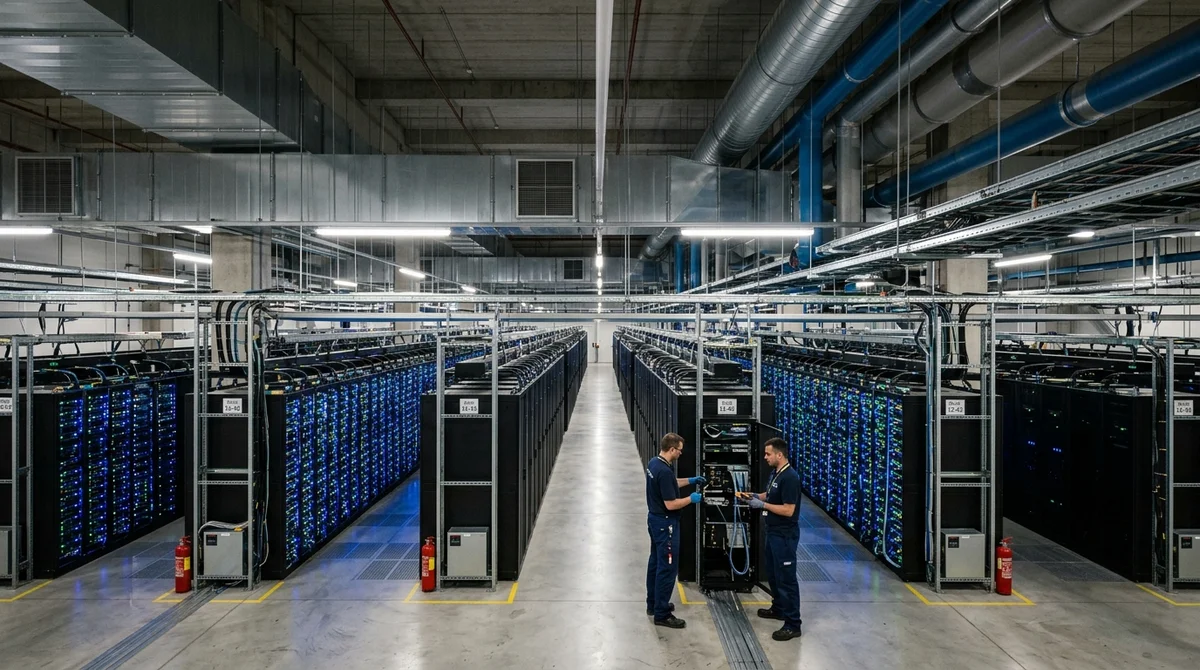
Gallup survey shows that Americans have a sharply negative attitude toward AI data centers. 71% of US residents are firmly against the construction of such facilities near their homes. This is the highest level of dissatisfaction ever recorded for infrastructure projects in the history of the company's surveys.
Scale of Discontent
The Gallup study, conducted in March and April 2026, covered two independent representative samples: 1,000 randomly selected adults from all 50 states and the District of Columbia, as well as 2,054 members of the permanent Gallup Panel. The sample was balanced by gender, age, income, geography, and education level, ensuring high reliability of the results.
The results are staggering: 71% of respondents oppose the construction of AI data centers in their area. Only 7% firmly support such projects. The rest are either undecided or unable to answer. No other infrastructure that Gallup has ever surveyed has received such unanimous rejection.
The most striking conclusion from the study is the comparison with nuclear energy. Americans, historically fearful of nuclear power plants, are far more tolerant of them. In previous surveys on nuclear power plants, maximum opposition to construction reached only 63%. It turns out that data centers for AI encounter more intense and almost unconditional rejection than even nuclear energy, which for decades has been a symbol of danger.
- 71% firmly oppose the construction of AI data centers
- 7% actively support and approve such projects
- 63% — the maximum number of opponents in the history of nuclear power plant surveys
- Data centers provoke less sympathy than any other infrastructure
- Negative attitudes are evenly distributed across all demographic groups
Why Americans Oppose
The Gallup survey does not reveal detailed reasons for the discontent, but the context is crystal clear. AI data centers require astronomical volumes of electricity and water. One large modern center consumes as much electricity in a year as a city with a population of 50,000 people. The cooling system for thousands of servers requires water volumes comparable to the needs of an entire industrial district.
This colossal burden falls entirely on the local infrastructure of the region. Electricity and water bills rise for all residents of the surrounding area. The risk of emergency shutdowns during peak hours of center operation increases sharply. Underground aquifers are depleted, threatening wells in villages and rural areas. Rivers and lakes suffer from water withdrawal and its return at elevated temperatures.
Add to this the economic analysis. A data center occupies thousands of hectares of land but creates only dozens, at most hundreds of permanent high-skilled jobs inaccessible to the local population without specialized education. The bulk of profits go to the headquarters of Google, Microsoft, Meta in Silicon Valley. The region receives air pollution, depleted water bodies, scorched landscape, but does not receive fair financial compensation for the damage.
What It Means
The Gallup results are a serious, almost existential challenge for the tech industry. Deep learning of large language models requires unimaginable volumes of computation, and computation requires energy-intensive data centers. But American society clearly is not ready to sacrifice local environmental quality for the convenience of global AI services.
There are several likely paths forward. Companies may relocate new centers to economically depressed regions and rural areas outside densely populated zones, where opposition is weaker and land is cheaper. They may accelerate expansion abroad — to Iceland, Norway, Kazakhstan, African countries and Southeast Asia, where electricity is cheaper and political resistance is less.
Or finally, invest seriously in alternative solutions: data centers with zero carbon emissions, more efficient chips, water-free cooling systems. But the Gallup survey speaks clearly and loudly about one thing: ignoring protests is no longer possible. Americans have expressed their will in the language of numbers — 71% against. They do not want to be neighbors to AI infrastructure.