Elon Musk's SpaceXAI has lost more than 50 employees after the merger of SpaceX and xAI
Elon Musk's SpaceXAI is having trouble retaining people: following the February merger of SpaceX and xAI, more than 50 engineers and researchers have reportedly
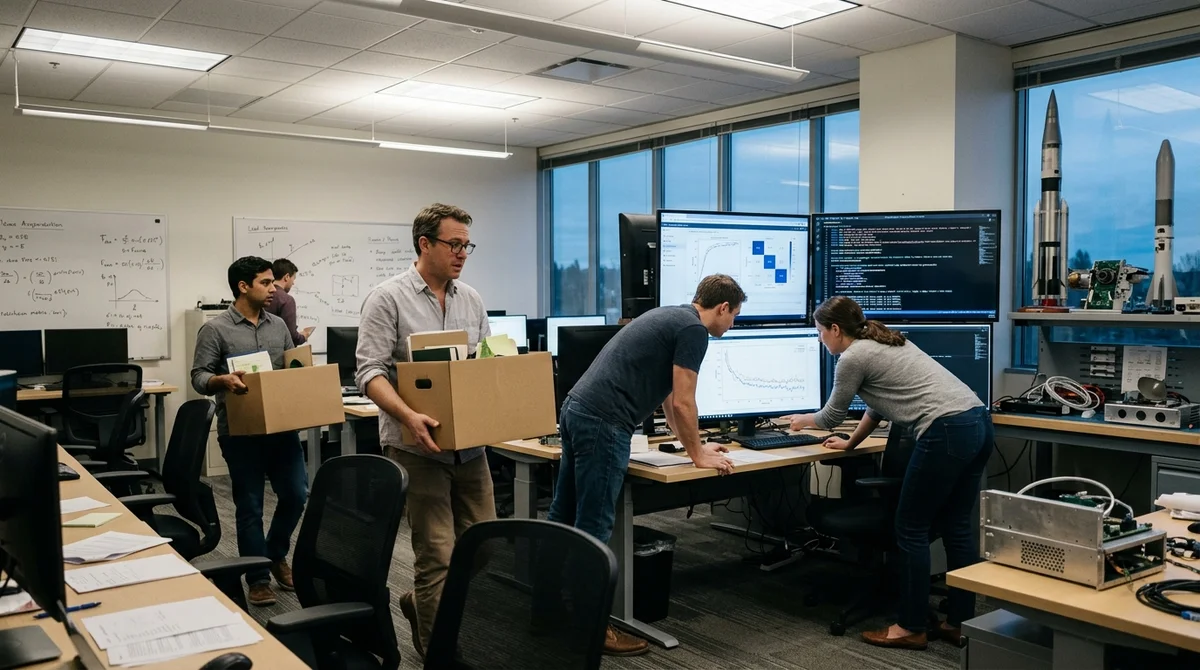
After the February merger of SpaceX and xAI, the new structure under the SpaceXAI brand appears to have faced a noticeable employee exodus. Since February, more than 50 engineers and researchers have reportedly left the company — and for Musk's AI business, the problem here is not only the number, but also who exactly is leaving.
Scale of the Exodus
The SpaceX and xAI merger deal was announced on February 2, 2026, and in early May the company received a new name — SpaceXAI. Since then, more than 50 employees have reportedly left the merged structure. Among them are specialists who worked on key directions: AI coding, world models, and Grok's voice features. This does not look like ordinary rotation after rebranding: we are talking about a noticeable drop in staff in those teams that directly affect the speed of launching new models and product features.
An additional signal is where these people are going. Part of the team has already been picked up by competitors. According to available data, at least 11 former xAI employees have moved to Meta, and at least seven to Thinking Machines Lab, Mira Murati's startup. For the market, this is an important marker: when strong researchers are quickly picked up by other labs, the problem is usually not in cyclical hiring, but in the fact that competitors see ready scarce talent and take it without long waiting.
Vulnerable Core
Particularly concerning is the situation with the pre-training team. Pre-training is precisely the first and foundational stage of creating new AI models: it sets the architecture, the quality of the model's basic behavior and the ceiling for further fine-tuning, as well as the distribution of computational resources between teams. If such a group shrinks to a handful of people, it immediately undermines the company's ambitions to develop cutting-edge models independently, rather than just catching up with the market in applied features.
According to reports about the situation inside SpaceXAI, after the departure of this direction's leader Juntang Zhuang, the pre-training group's composition has shrunk to almost a symbolic level. Against the backdrop of management changes already made after the merger, this reinforces questions about the company's priorities. From the outside, it looks as if SpaceXAI is simultaneously trying to maintain an aggressive development pace, restructure management, and not lose focus on its own foundational models. Usually combining all three tasks without setbacks is very difficult.
Why People Are Leaving
There seems to be no single explanation for such an exodus. Rather, it is a combination of factors: pressure from the deal, team restructuring, active headhunting by competitors, and changed financial motivation. Within fast-moving AI companies, such reasons rarely work in isolation. When several of them overlap, even strong teams begin to lose people faster than they can replenish their ranks. This is apparently what happened here.
- extreme work culture and high risk of burnout
- unrealistic deadlines for model training
- change of management after the SpaceX and xAI deal
- aggressive headhunting by Meta and Thinking Machines Lab
- weakening of motivation to hold onto shares amid tenders and IPO expectations
Employees familiar with the situation link some of the departures to harsh management style and unrealistic timelines. Under such conditions, teams can start cutting corners, and this is already a blow not only to people's morale but to the quality of the product itself. For Grok, this is especially sensitive: if rush affects model training, the consequences quickly become visible both in the quality of responses and in the reliability of new features.
There is also a financial factor. SpaceX regularly conducts tenders, allowing employees to sell already vested shares on the secondary market. Plus, the market expects a possible SpaceX IPO. When people get a chance to lock in part of their package value, retention through options works weakly. Simply put, if financial motivation has already been partially realized, enduring overload and internal turbulence becomes much less attractive. For the company, this is bad timing: options stop holding precisely when the business needs maximum stability.
What This Means
For SpaceXAI, this is a test not only of hiring but also of the ability to retain critically important teams during a business integration moment. If the exodus continues precisely from pre-training and the research core, the company could slow both Grok's development and attempts to compete with OpenAI, Anthropic, and Meta at the level of foundational models. Against the backdrop of expectations around SpaceX and Musk's entire ecosystem, the staffing story quickly transforms from an internal problem into a strategic risk.