What the jury will actually decide in Elon Musk's case against Sam Altman and OpenAI
Nine jurors in California are deciding whether OpenAI violated the terms of Elon Musk's donations and whether Microsoft helped steer the company away from its o
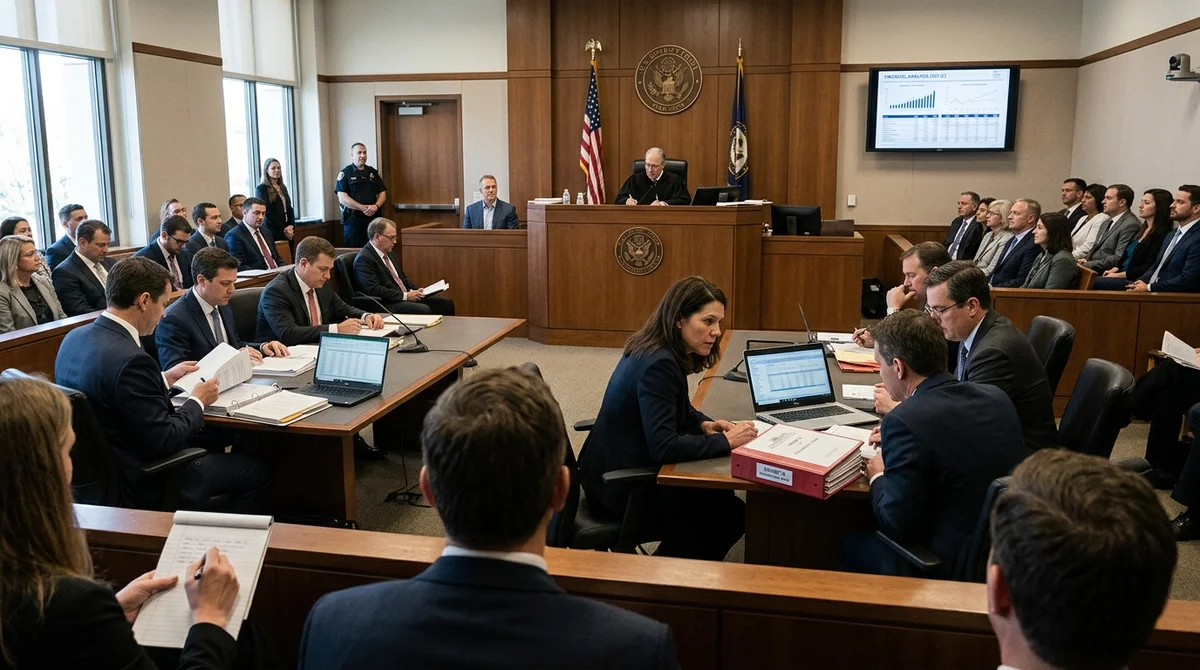
In California, nine jurors went into deliberation on Elon Musk's lawsuit against Sam Altman, Greg Brockman, OpenAI, and Microsoft. But the dispute in court comes down not to the general question of whether OpenAI betrayed the idea of safe AI, but to several very specific legal points.
What the jury decides
TechCrunch writes that the jurors are considering three narrow claims. The first — whether OpenAI violated so-called charitable trust, meaning the special conditions under which Musk donated money to a nonprofit structure. The second — whether the defendants used these donations in such a way as to ultimately enrich management and investors through the commercial division. The third — whether Microsoft knew about the restrictions that Musk allegedly set and played a significant role in potential damages.
This is important: the court is not now giving a general moral assessment of OpenAI's entire history, but is examining the specific grounds of the lawsuit.
- violation of donation conditions and charitable purpose
- unjust enrichment through OpenAI's commercial structure
- possible complicity by Microsoft in this violation
The logic of Musk's team is as follows: he supported a laboratory that was supposed to work in the public interest, not turn into a company where key benefits go to shareholders. They single out Microsoft's $10 billion investment, which became known in 2022 and closed in 2023, as a separate point. According to the plaintiffs, it was this deal that finally showed that OpenAI had abandoned its original mission. Along the way, Musk's lawyers are trying to prove that the nonprofit foundation ended up in the shadows, and the main value and power shifted to the for-profit structure.
How OpenAI responds
OpenAI has three lines of defense, and they too are quite down-to-earth. First — statute of limitations: if the alleged harm occurred before August 5, 2021 on the first count, before August 5, 2022 on the second, and before November 14, 2021 on the third, then the corresponding claims of Musk fall away. Second — unreasonable delay: the company argues that Musk delayed too long and only filed the lawsuit in 2024. Third — doctrine of unclean hands, meaning the plaintiff's own conduct may deprive him of the right to such a claim.
The defense also hits on the facts. According to OpenAI, all of Musk's donations were spent for their intended purpose long before the disputed deals, and a court accountant showed that the money was used before the key date of August 5, 2021. The lawyers note that other donors have not claimed a violation of charitable purpose, and Musk himself once supported the idea of a commercial structure through which researchers could be paid in shares. Altman separately argued that free access to ChatGPT also helps fulfill OpenAI's mission of spreading the benefits of AI.
A harsher thesis was also heard in the courtroom: Musk not only left OpenAI in 2018, but also built his own AI projects within Tesla in parallel.
"Mr.
Musk abandoned OpenAI to die in 2018," said OpenAI's lead attorney Bill Savitt.
Why the stakes are high
Although the jury's questions are narrow, the consequences could be large. If Musk wins, OpenAI's current for-profit structure will be at stake, but this does not mean the immediate dismantling of the company the day after the verdict. As TechCrunch notes, the following week the court should separately discuss what measures are possible if the jury sides with the plaintiffs. That is, first responsibility is decided, then consequences.
For OpenAI this is crucial, because almost all of its operational activities have long been concentrated in the commercial structure. A separate nerve of the case is Microsoft. Musk's team points to Satya Nadella's involvement in Altman's return after the 2023 crisis and to the clause in the agreement that gave Microsoft veto power over major corporate decisions. Microsoft responds that it knew of no special conditions for Musk's donations and did not block OpenAI's decisions. But the fact itself that the center of the trial involved not only the old conflict of co-founders, but also the architecture of control over the main AI player in the market, makes the case much broader than personal enmity.
What this means
This trial is important not because two tech billionaires are publicly settling scores, but because the court is essentially testing the boundaries between nonprofit mission and commercial growth in AI. If Musk's arguments work, future laboratories and investors will need to outline their promises, control, and the role of corporations like Microsoft much more precisely from the very beginning.