Closing arguments in Musk's case against Altman and OpenAI did not favor the plaintiff
Closing arguments in Musk v. Altman showed a stark contrast between the sides at a decisive stage of the case. Elon Musk's lawyer confused names, was corrected
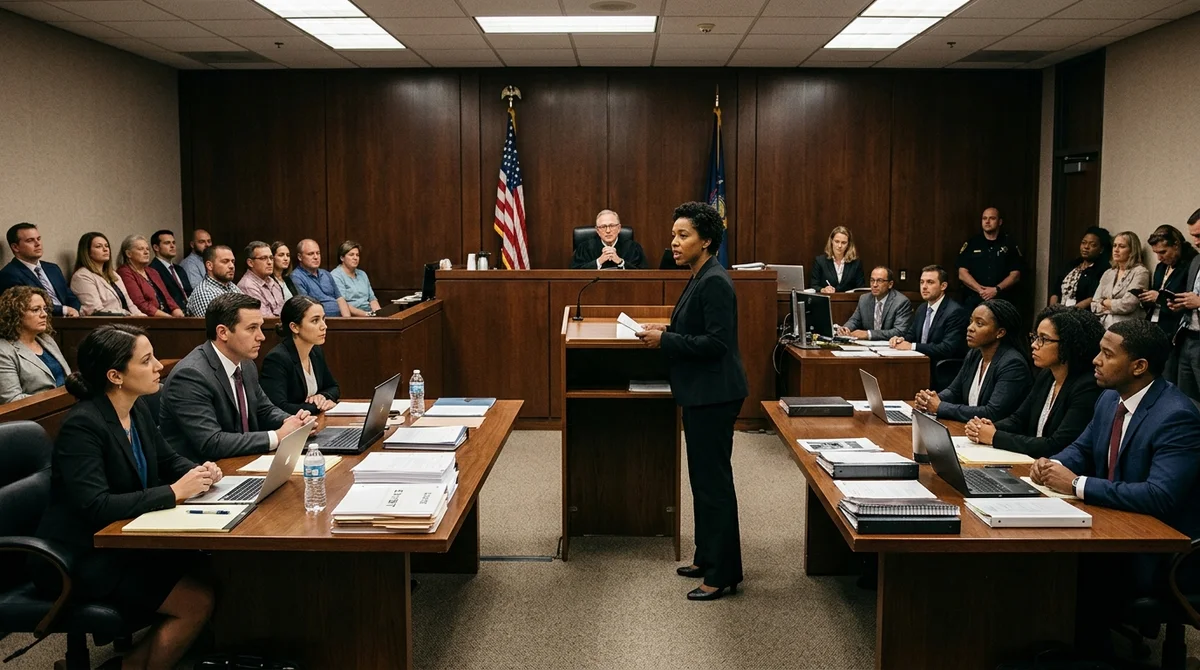
Final arguments in Musk v. Altman revealed a sharp contrast between the parties. While Elon Musk's team tried to emphasize drama and distrust toward OpenAI's leadership, the company's lawyers bet on documents, the sequence of events, and the internal logic of the dispute itself.
How the
Final Went The most notable moment of the day was not a new piece of evidence, but how uneven Musk's lawyer Stephen Molo's performance appeared. He stumbled, confused names, and at one point called OpenAI co-founder Greg Brockman 'Greg Altman'. For a case of this magnitude, this is not just a slip: in final arguments, a party usually assembles all arguments into the clearest and most convincing structure.
Problems were compounded when the judge had to correct Molo for incorrectly stating that Musk was not seeking money. This undermined not only the rhythm of his presentation but also confidence in his interpretation of the lawsuit. Instead of firmly connecting witness testimony, correspondence, and legal claims into a single coherent line, Musk's side returned again to general accusations of lies and deviation from the original mission.
'We have heard much lying over the past weeks,' — this is how
Musk's side described the course of the trial.
OpenAI's Chronology OpenAI's response appeared far more grounded and therefore stronger.
Lawyer Sara Eddy did not try to outshout her opponent with loud declarations. Instead, she arranged the evidence the company had already submitted in chronological order. Such an approach in final arguments is especially important: the court finds it easier to see not isolated emotional episodes but a cause-and-effect chain.
This is precisely where the main divide between the parties became evident. OpenAI's team demonstrated how decisions, agreements, and the company's structure changed over time, while Musk's team insisted more on their own moral reading of the history. In courtroom logic, these are different weight classes.
Outrage may set the tone, but the outcome is usually determined by how precisely a party ties its claims to documents, facts, and formulations.
Why
This Matters At the heart of the conflict lies an old schism within the AI boom itself: can one simultaneously speak of a mission for the benefit of humanity, build increasingly expensive models, and enter large-scale commercial partnerships? Musk tries to present this schism as a breach of initial agreements. OpenAI, by contrast, portrays the organization's evolution as a sequential process confirmed by records, negotiations, and official decisions.
Final arguments in such a case are not merely a ceremonial end to hearings. It is a moment when each party must answer several fundamental questions on which the outcome depends: what exactly promises, according to the plaintiff, were made and by whom; whether there are documents confirming these promises, not just later interpretations; how OpenAI's decisions regarding structure, partnerships, and commercialization relate to the claims of the lawsuit; whether the plaintiff seeks money, restrictions on the company, or both simultaneously; * whether witness testimony is sufficient to support legal, not merely reputational accusations. Against this backdrop, the errors in Musk's presentation appeared especially painful.
When a dispute has reached its final stage, the court expects not a new spectacle, but a concise and evidence-based version of the case. If one party gives the court a neat timeline and the other offers a set of vivid but loosely connected claims, the impression of the trial inevitably shifts.
What
This Means If we evaluate specifically the final arguments, not the entire multi-week process as a whole, OpenAI completed this stage more confidently. For the entire AI industry, this is an important signal: disputes over mission, non-commercial roots, and control of cutting-edge models will increasingly be resolved not in posts and interviews, but in courts, where victory goes not to the loudest narrative, but to the most coherent chain of evidence.