Musk’s case against Altman showed that OpenAI’s reputation was the biggest loser
Jurors are now weighing Elon Musk’s lawsuit against OpenAI and Sam Altman, but the main conclusion is already clear: the case has damaged the reputation of ever
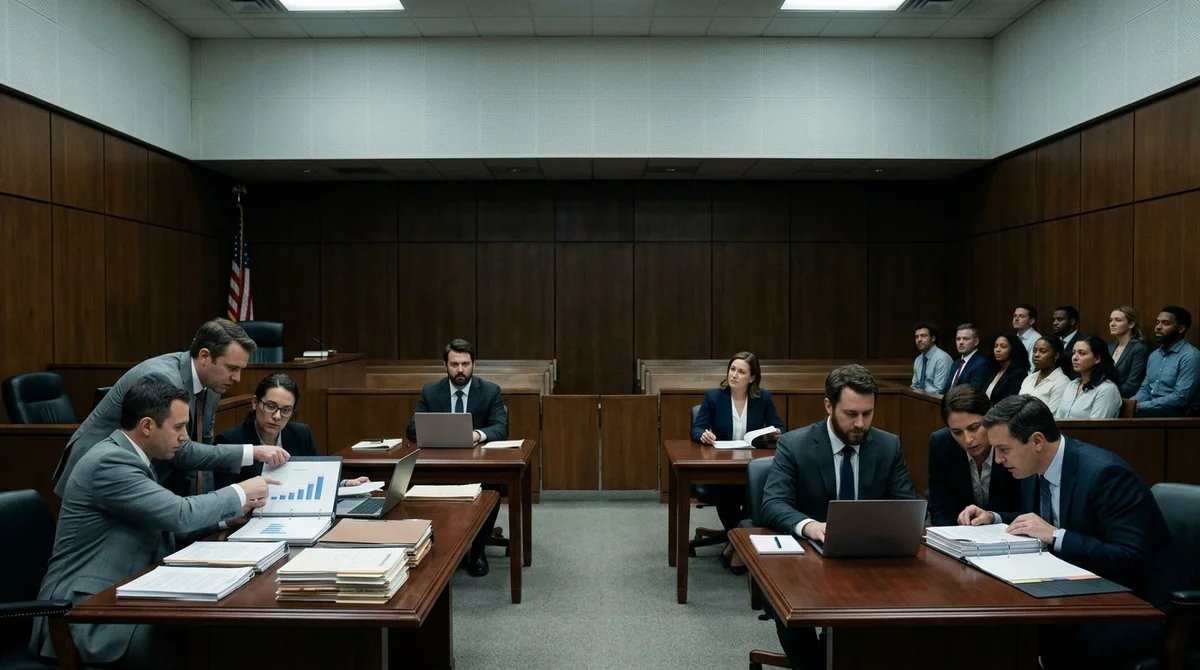
Federal jurors in the United States have received the case of Elon Musk's lawsuit against OpenAI and Sam Altman. But even before the verdict, the trial has already revealed the main thing: the dispute over "a mission for humanity" has long turned into a struggle for control, capital, and the right to build AGI first.
What the Dispute is About
Musk claims that OpenAI, Altman, and Greg Brockman abandoned the company's original non-profit mission. According to his version, his early donations—about $38 million—helped build a structure that later became a commercial machine valued at around $850 billion. In court, he is trying to prove that the money was given for a specific public purpose, not for creating another tech giant with billion-dollar stakes for insiders.
OpenAI's defense responds sharply: Musk secured no special conditions, and all key participants understood from the beginning that donations alone would not be enough to compete with Google DeepMind. By this logic, the transition to a more commercial model was not a betrayal, but the only way to avoid losing the race for strong AI. The most uncomfortable detail here is that humanity, for whose benefit OpenAI was supposedly created, is not even a party to the lawsuit.
How the Mission Broke Down
From correspondence and testimony at trial, an unpleasant picture emerges. OpenAI was indeed launched as a non-profit organization, but in early discussions "startup" compensation figured prominently, and later the non-profit form itself began to be viewed as a brake on scaling. Both Musk and his co-founders wanted the same thing: to beat competitors and get more money, computing power, and management control to do so. In other words, the dispute was not about the race itself, but about who would own its results.
- In one early letter, Altman discussed "startup" motivation for the team.
- In 2016, Musk wrote that launching OpenAI as a non-profit may have been a mistake.
- In 2017, the co-founders were already discussing creating a commercial wing and even abandoning the original structure.
- After a power conflict, Musk proposed embedding OpenAI into Tesla and called on Altman to head that direction.
This list is important not because of personal drama. It shows that the non-profit mission long served as a moral shield and convenient brand while the company increasingly behaved like an ordinary ambitious startup. OpenAI used this status to attract researchers, gain the trust of regulators, and earn public goodwill, but as it grew, this status increasingly looked like a legal shell for a very commercial project.
Who Actually Lost
By this logic, the main losers are not Musk and not Altman, but those who believed in OpenAI's special status. These are employees who came to the company because of its non-profit mission, policymakers and regulators willing to treat it more gently than an ordinary big tech corporation, and the general public who for years were told that OpenAI's structure was needed to protect the public interest, not to maximize business value. In the end, it is their expectations that proved most vulnerable.
Notably, in court the non-profit organization was discussed almost like an ordinary investor: supposedly, if it now has a giant stake in the commercial part, then the mission is protected. Critics disagree. Money is important, but the meaning of a non-profit is not reduced to a large equity package—it must also actually manage risks, priorities, and the rules of the game around AGI.
The very gap between capital and real control became one of the most painful stories of the trial.
"It's hard to understand how the public interest is protected here at all."
Against this backdrop, the trial has only strengthened the impression that OpenAI is increasingly indistinguishable from other leaders in the AI market. The company already has disputes over copyright, claims about safety culture, and conflicts around business influence on the research agenda. The court did not automatically prove Musk right, but it showed something else quite convincingly: talk of humanity's benefit did not prevent all parties from simultaneously fighting for money, influence, and control.
What This Means
Whatever the verdict, Musk's case against Altman has already undermined OpenAI's main intangible asset—the reputation of a structure that supposedly stands above the ordinary logic of Silicon Valley. For the market, this is a signal that a beautiful mission is no longer enough: investors, employees, and regulators will look increasingly strictly not at promises, but at who exactly controls the most powerful AI systems and in whose interests they are being developed.