OpenAI puts Greg Brockman in charge of product and merges ChatGPT with Codex for AI agents
OpenAI has reshuffled its org structure again: company president Greg Brockman has officially taken charge of the entire product organization. The main goal for
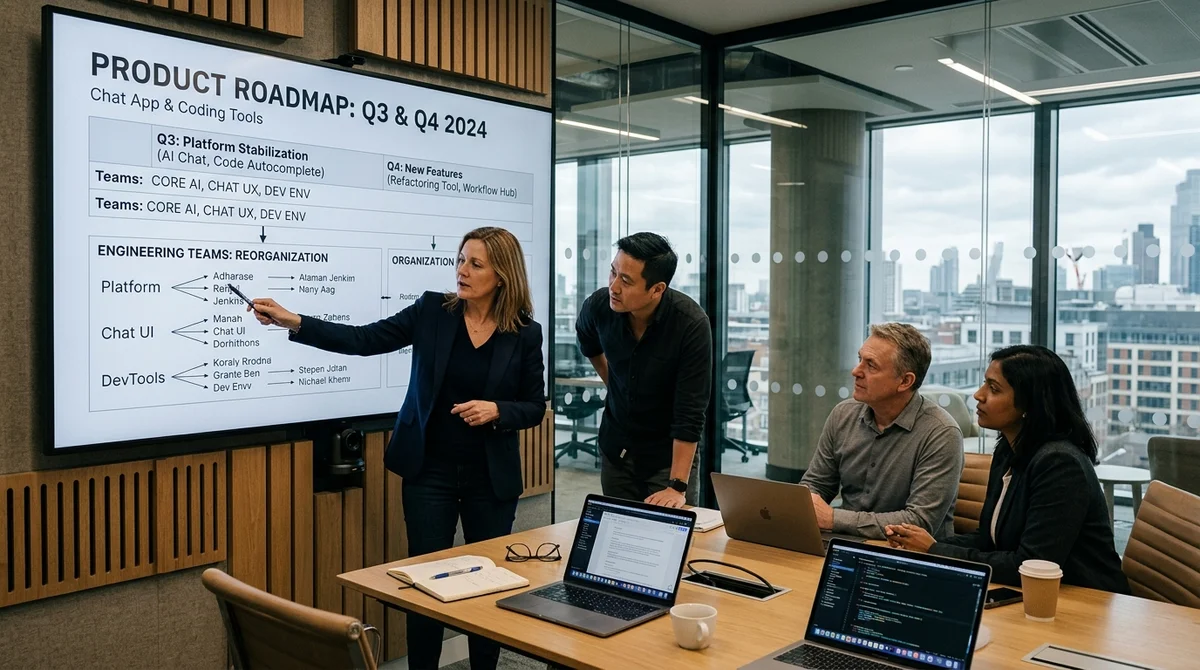
OpenAI is reorganizing its leadership again and definitively consolidating product control under company president Greg Brockman. Inside the company, this is directly linked to the focus on AI agents: ChatGPT and Codex aim to merge into one platform and one user scenario.
Betting on Agents
OpenAI announced the new reorganization on May 15. According to an internal memo, the company's product strategy for 2026 is to go all-in on AI agents. For OpenAI, this is no longer a side direction or experimental add-on, but the main vector around which teams, leadership, and product priorities are now being organized. This explains why staffing decisions are currently tied not to individual products, but to the overall architecture of the future service.
"Invest in a unified agent platform and merge
ChatGPT and Codex into a single agent experience for everyone."
In practice, this means consolidating products around a unified agent platform. Inside OpenAI, they directly speak of the goal to connect ChatGPT and Codex into one common user experience for all. That is, the company wants to remove the boundary between chat interface, code assistant, and more autonomous agent actions, so one product can answer questions, perform work, and help with development. The logic is simple: one entry point, one platform, more use cases for individual users and companies.
New Organizational Structure
To achieve this, OpenAI is changing its org structure and formally establishing Brockman's role not only as curator of strategy but also as head of the entire product block. His area of responsibility now includes the scaling direction as well. This restructuring partially continues changes from last month, when responsibilities were already redistributed following the medical leave of AGI direction head Fiji Simo. Now the temporary arrangement becomes official and is tied to the new product course.
- core product and platform — Thibault Soutou, formerly Codex engineering lead
- critical enterprise industries — Nick Turley, who previously headed ChatGPT
- consumer direction, including health, commerce and personal finance — Ashley Alexander, vice president of products in healthcare
- core infrastructure, ads, data science and growth — Vigjaye Raji, formerly OpenAI apps CTO
Effectively, the company is building four major pillars under unified product leadership instead of a more fragmented structure. This matters not only for internal management. Such a scheme shows that OpenAI wants to move decisions faster from infrastructure and data to the end interface, especially when it comes to an agent that should work equally well in consumer and enterprise scenarios. The fewer internal barriers between teams, the easier it is to accelerate feature releases and scaling.
Pressure on Business
This reorganization fits into OpenAI's broader strategic turn. The company is increasingly concentrating on directions that can generate revenue here and now — primarily on coding and the enterprise market. In parallel, it is reducing attention to "side quests," that is, initiatives that are not considered key for near-term business growth. In other words, resources are to be directed where commercial impact is seen fastest.
Context is also important: OpenAI, as reported, is thinking about a possible IPO later in 2026 and is experiencing pressure from investors expecting a clearer path to profitability. Against this backdrop, consolidation around agents looks not like cosmetic management reshuffling, but as an attempt to build one clear product contour around what should scale best. If the bet works, the company will be able to sell not a set of tools, but a complete platform with clearer monetization.
While Fiji Simo is absent, OpenAI is maintaining some of the previous management decisions. Earlier, the company already distributed business operations among CSO Jason Kwon, CFO Sarah Friar, and CRO Denise Dresser. Now Brockman's role in the product becomes official rather than temporary, and the vector toward agents gets not only a slogan, but concrete organizational form.
For the market, this is also a signal that the company is accelerating management decisions rather than postponing them until Simo's return.
What This Means
If OpenAI truly merges ChatGPT and Codex into a unified agent product, users will get not just another chatbot, but a more cohesive work tool for tasks, code, and automation. For the market, this is a signal that the AI agents battle is moving out of the demo stage: major players are already restructuring their entire company around it.