Sea rolls out Codex across its entire engineering organization and bets on AI-native development
Sea Limited is scaling OpenAI Codex across its entire engineering organization. The company says the main impact is not faster code typing, but understanding la
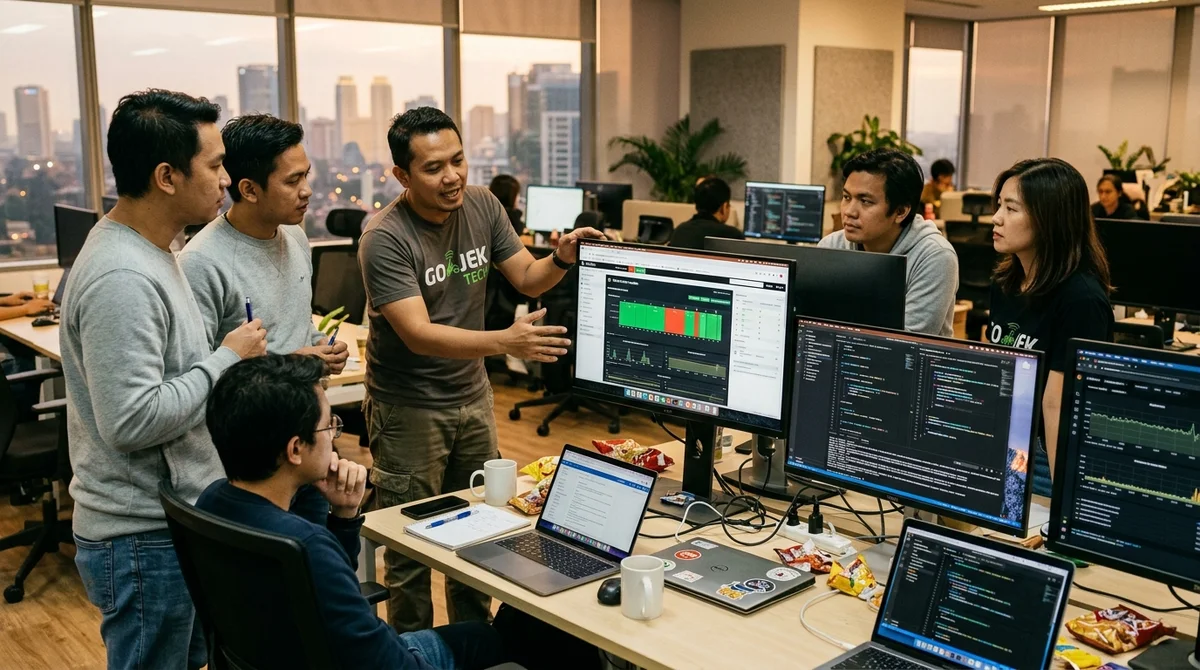
Sea Limited has begun rolling out Codex across its entire engineering organization, viewing this as a bet on a new development model. The company believes that AI agents should not only accelerate code writing, but also change how teams understand complex systems, test changes, and bring ideas to production.
Why Sea Chose Codex
For Sea, development is not just about creating new features. The company manages large products across Southeast Asian markets, where it must simultaneously work with e-commerce, payments, logistics, and local nuances of different countries. At this scale, the main bottleneck becomes not the speed of writing code, but the ability to quickly understand distributed systems, inter-service dependencies, and legacy logic that cannot simply be rewritten from scratch.
This is exactly where, according to David Chen, Sea's co-founder and CPO of Shopee, Codex stood out from typical AI tools. He describes it not as an advanced autocomplete, but as a system with deep context across large and heterogeneous codebases. For a team with massive microservices architecture, this means less time spent manually navigating unfamiliar services and more focus on architectural decisions, reliability, and launching new product ideas.
How Development Is Changing
In its internal feedback, Sea sees strong demand for Codex in three scenarios: code understanding, debugging, and developing new features. The company notes that among Codex users, 87% are active every week. Another metric concerns developers who rated the tool 4 or 5 out of 5: 73% of them are willing to recommend it to colleagues. For Sea, this is a sign that the tool is not used episodically, but becomes part of the daily workflow.
The most important change that Sea sees is the transition from AI as a passive assistant to agentic scenarios within the engineering loop. According to Chen, developers use Codex not only to write faster, but to think better about the system. The agent is already integrated into CI/CD pipelines: it analyzes requirements, proposes implementations in the spirit of test-driven development, raises possible edge cases in distributed systems, and accelerates debugging cycles. At the same time, this helps not only increase pace, but also systematically reduce technical debt.
- Understand unfamiliar services and dependencies faster
- Prototype multiple implementation options without lengthy manual preparation
- Expand test coverage and find vulnerable spots earlier
- Accelerate debugging loops in complex distributed systems
Betting on the Region
Sea considers Southeast Asia a natural testing ground for AI-native development. The region has repeatedly leapfrogged traditional technology adoption cycles: from mobile-first models to super apps. Here developers must solve multilingual and fragmented tasks across multiple domains—commerce, payments, communications, and logistics—simultaneously. Against this backdrop, AI agents look not like a trendy layer on top of existing processes, but as a tool that can remove some operational burden and amplify small teams.
"Those who today begin to rebuild engineering culture and processes
around human-AI collaboration will win."
This logic extends beyond Sea itself. The company, together with OpenAI, is launching the first regional Codex Hackathon Series in Asia. The launch is scheduled for Singapore, followed by programs in Indonesia, Taiwan, and Vietnam. The goal is not just to showcase a new tool, but to reduce the gap in access to cutting-edge AI tools for the local community. Sea expects that this will allow developers to faster transition from curiosity to creating scalable AI-native applications and gradually build its own engineering school in the region around agentic development.
What This Means
Sea's story shows how large Asian tech companies are beginning to view AI coding not as another productivity tool, but as the foundation for rebuilding engineering processes. If this approach takes hold, the role of the developer will indeed begin to shift from manual implementation to system design, quality control, and orchestration of AI agent work.