Meta suspended part of its cable project in Africa amid the conflict with Iran
The conflict around Iran has hit the tech market more broadly than expected: Meta has paused part of its internet project in Africa, investors are…
AI-processed from Bloomberg Tech; edited by Hamidun News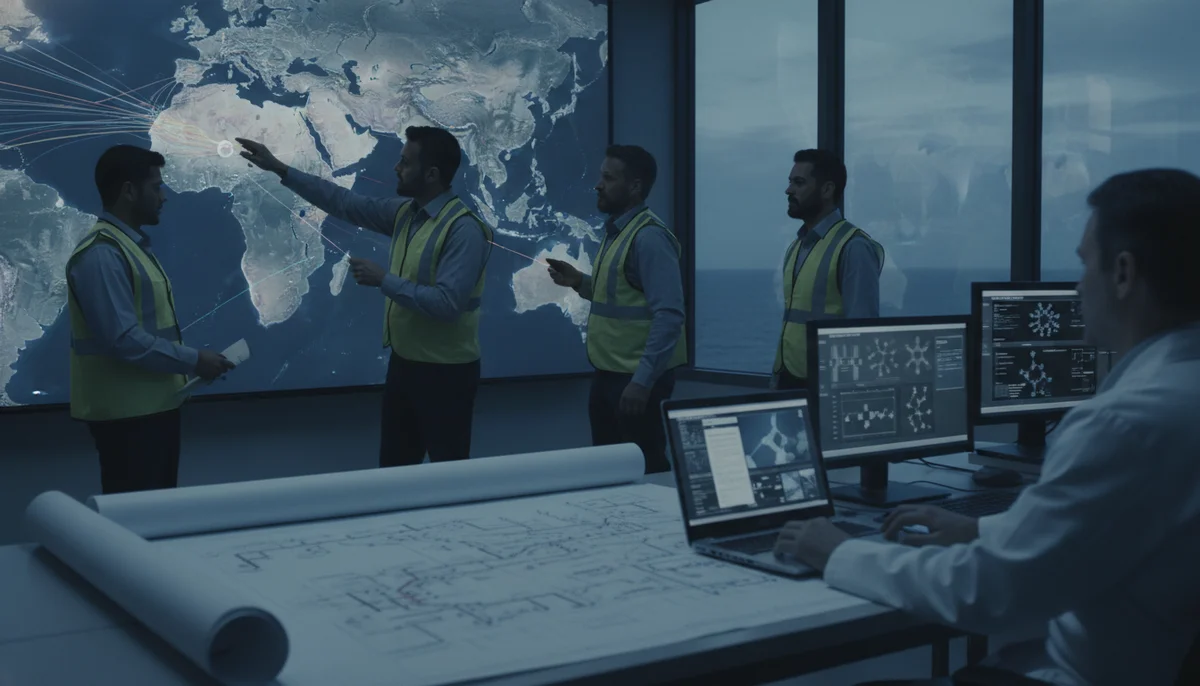
The conflict around Iran is beginning to affect not only oil and stock indices, but also technology projects. Against this backdrop, Meta has paused part of a major internet expansion in Africa, while the market simultaneously received two more signals: a leadership change at Adobe and a possible loosening of index rules that could help SpaceX after its IPO.
Pressure on infrastructure
The Meta story shows how closely AI investments are now tied to geopolitics. This is not just about data centers and chips, but about basic infrastructure — international communication channels, routes, construction, contractors, and long-term budgets. When military risk grows in a region, investors and corporations begin to reassess timelines, insurance costs, and the overall priority of capital. Even projects that are geographically located in Africa can be slowed down by changes in neighboring markets and the general nervousness surrounding the Middle East.
The pause in part of Meta's cable project matters in its own right, because infrastructure bets are typically made years in advance and companies try not to stop them without a compelling reason. If a company slows down such a project, the market reads this as a sign of a more cautious approach to spending and operational risks. For the AI ecosystem, this is particularly sensitive: without stable connectivity, reliable routes, and predictable timelines, it becomes harder to build new computing clusters and international services.
- Geopolitics is starting to affect the pace of AI construction as much as chip costs
- Long-term infrastructure projects have become dependent on insurance, logistics, and political risks
- Africa and the Middle East are increasingly viewed by investors as an interconnected circuit
- For major platforms, it is no longer just about the models but the physical network beneath them
Changes at Adobe
The second thread of this story is the departure of Adobe CEO Shantanu Narayen. Such a transition is always perceived as a strong signal, but in 2026 the context is different: investors are demanding from large software companies not just talk about AI, but a clear growth strategy in the new reality. The skepticism around Adobe's ability to confidently navigate this cycle means that the market is no longer willing to automatically award a premium for a large-scale brand and a strong execution history.
For Adobe, this is the moment when it needs to prove that generative tools and AI features are genuinely strengthening the core business, not just supporting the news cycle. For the entire sector — a reminder that the era of quiet expectations is over. If a company fails to convince the market of exactly how AI will affect revenue, customer retention, and product differentiation, the pressure quickly moves from stocks to management. That is precisely why the resignation news looks not like an isolated event, but part of a broader reassessment of technology bets.
A window for SpaceX
The third topic is the possible revision of S&P Dow Jones Indices rules for including companies in the index. For now, only discussions are underway, but even the mere fact of such a step matters. If the rules are indeed changed, it could accelerate SpaceX's entry into the index after its IPO. For the company, this is not just a matter of status, but of demand from a vast number of passive funds that are required to buy shares following the index.
This clearly illustrates how the logic of the tech market is changing: what matters now is not only products and growth rates, but also the market infrastructure surrounding a company. Index rules can affect liquidity, the cost of capital, and the scale of interest from institutional investors almost as powerfully as a quarterly earnings report. Therefore, the discussion around SpaceX is not a formality, but an indicator of how the financial system is adapting to new technology giants.
What this means
All three narratives form a single picture: the AI market is entering a phase where the deciding factors are not only models and high-profile releases, but also cables, politics, management reshuffles, and stock market rules. For companies, this means a more rigorous selection process based on resilience: those who will win are the ones who simultaneously control the infrastructure, explain the economics of AI to investors, and know how to operate in a world with heightened geopolitical risk.
Want to stop reading about AI and start using it?
AI News is a curated feed of AI/tech news. Hamidun Academy teaches you to use AI systematically in your work.