How the Pentagon pulled Silicon Valley into AI warfare: the story of Project Maven
For years, the Pentagon built AI infrastructure for war with help from Google, Palantir and Anduril. The book "Project Maven" reveals the details: algorithms analyze drone footage, prioritize threats and deliver recommendations to command in real time. Now these systems are being used in combat for the first time — in Iran. One participant in the program calls what is happening frightening: not because of the technology, but because of how quickly the military is losing caution.
AI-processed from Bloomberg Tech; edited by Hamidun News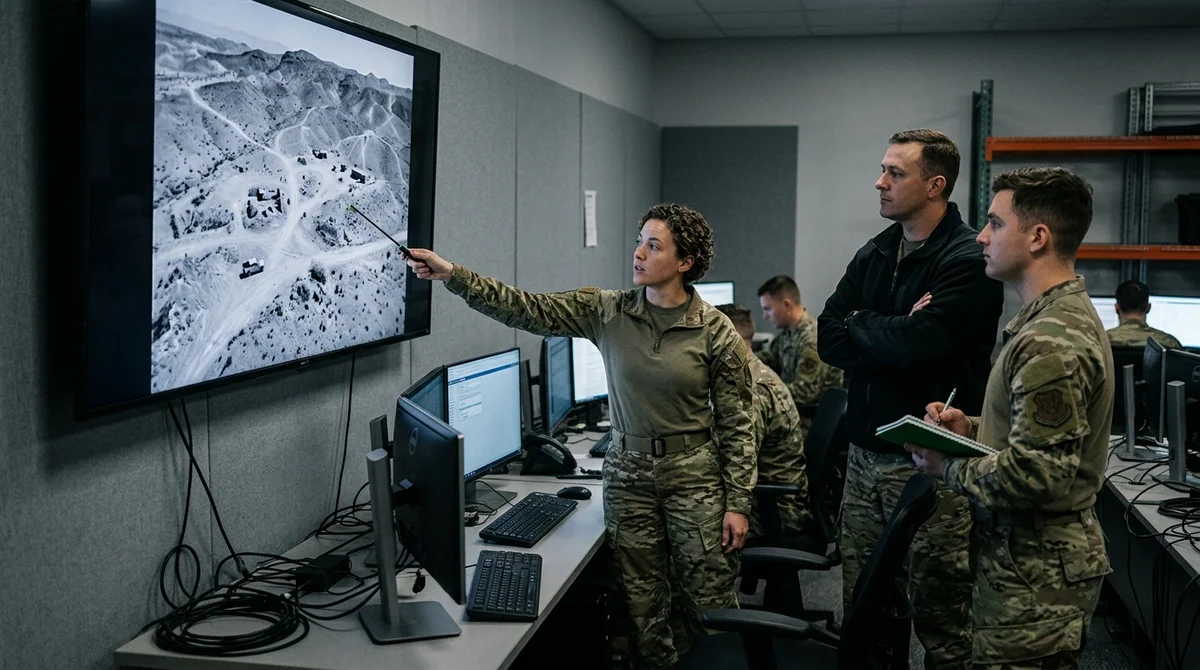
The Pentagon has spent over a decade deliberately building AI infrastructure for warfare, recruiting Silicon Valley as a contractor for target recognition and intelligence data processing. The book "Project Maven," a fragment of which Bloomberg published, tells this story in detail for the first time — from initial Google contracts to combat trials in Iran.
How Google Entered and Exited the Project
Project Maven was launched in 2017 with a relatively modest task: train algorithms to analyze drone video recordings and automatically classify objects on the ground. Google became the first major contractor. The contract sparked a loud internal scandal almost immediately: over four thousand employees signed an open letter demanding the company exit the project, and several managers and senior engineers resigned publicly, explaining their decision on ethical grounds.
In 2018, Google officially announced its refusal to take on military AI contracts. The Pentagon responded calmly: contracts were redistributed to those willing to work. Palantir, Anduril, Microsoft, Leidos, and dozens of defense startups filled the gap.
Notably, some of the new companies were founded by the very engineers who left Google on ethical grounds, only to return to the niche later — but this time as entrepreneurs. Silicon Valley divided, but did not abandon the military market.
What Maven Systems Can Do Today
Since 2017, the scope of the task has grown many times over. The first algorithms recognized cars and buildings in grainy drone footage. Modern systems work differently:
- Real-time object identification from multiple simultaneous data streams
- Tracking movement patterns of specific people and vehicles
- Automatic threat prioritization with recommendations for operators
- Integration with command systems — up to automatic assignment of combat tasks
- Predictive analytics on likely opponent actions based on historical data
The key advantage over human analysts is speed. Video footage that a specialist would review for hours, an algorithm processes in minutes. This reduces the military OODA loop — "observe, orient, decide, act" — from hours to seconds. This is where the main contradiction lies: the faster decisions are made, the less time remains for their verification and reconsideration.
Iran: Combat Conditions Instead of Exercises
Bloomberg describes the Iranian conflict as the first serious deployment of this entire infrastructure in real combat conditions. American military personnel deployed Maven systems at a scale that existed nowhere before except in exercises and computer simulations.
"God, it's frightening," says one of the program's participants.
What frightens him is not the technology itself, but the speed at which the military stops being cautious in its application. Critics point to systemic risk: when the algorithm makes a mistake in a civilian area, people pay the price. Legal responsibility is blurred — who bears it: the system developer, the operator, or the command? There are no international precedents on this matter, and no one is in a hurry to create them. Supporters offer a counterargument: an algorithm that works without fatigue or stress makes statistically fewer mistakes than a human analyst. The discussion continues while systems are already working in the field.
What This Means
Project Maven is no longer an experiment — it is a standard. Other countries are studying American experience and building analogues. For the AI industry, the signal is clear: the military market is open and well-paid, and the ethical discussions of 2018 no longer block contracts. The border between developing technological products and creating weapons systems has become thinner than ever before — and this affects everyone working with AI.
Delegate Deep Research, Coding & Workflows to an AI Agent
Deploy autonomous multi-step execution with NomadNet Agent (agent.nomadnet.ai) — automated web research, data synthesis, code generation, and complex task orchestration.
The AI world, distilled — once a week
Seven stories that actually mattered, hand-picked. No noise, no reposts, no press releases.
Done! Check your inbox for a confirmation.