OpenClaw turned China into the main proving ground for agentic AI and raised alarm among regulators
In a matter of weeks, China has turned OpenClaw into a mass experiment in agentic AI: from offices and meetups to cloud services and regional subsidies…
AI-processed from Bloomberg Tech; edited by Hamidun News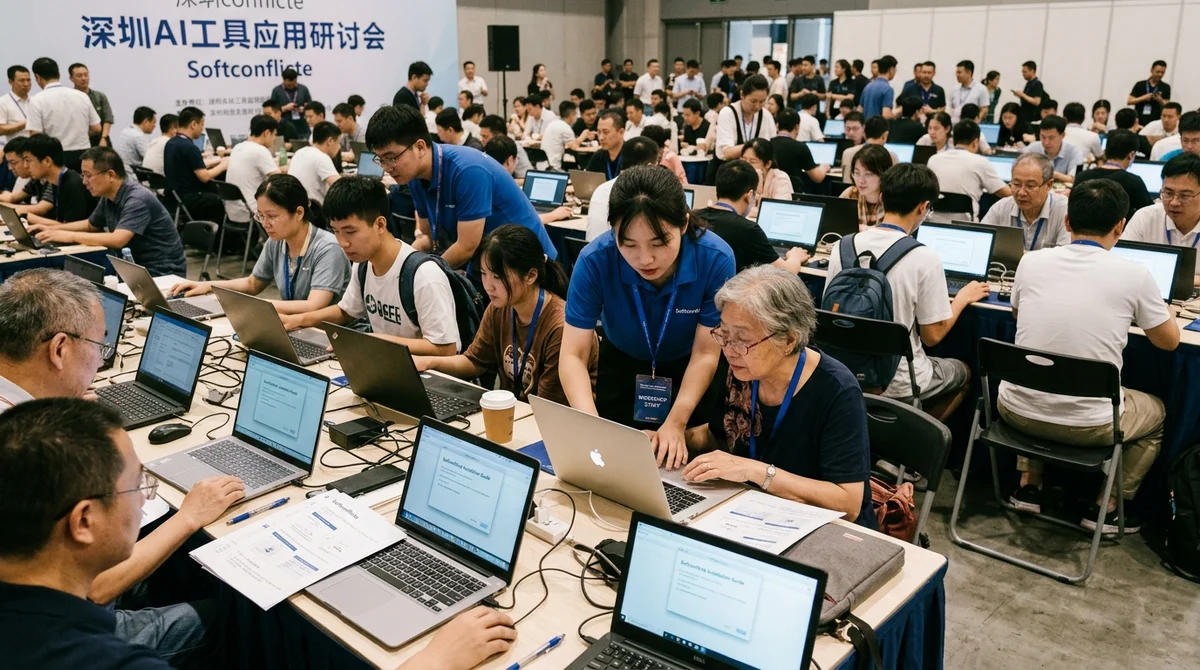
China transformed OpenClaw from a niche open-source tool into a mass testing ground for agentic AI in just a matter of weeks. While in the US such systems are still searching for stable user demand, the Chinese market is already testing them in real work, in the cloud, and in everyday office tasks.
How the Craze Began
The craze spread far beyond the developer community. A manager from a large financial group in Shenzhen recounted that before the Lunar New Year, employees were to be left with a week-long competition on using OpenClaw. After complaints, the idea was postponed, but the pressure didn't disappear: mastery of AI tools within the company became directly linked to performance and even to job security. For the Chinese office market, this is no longer a curious experiment but a new form of productivity race.
"With the appearance of
OpenClaw, everything became insanely competitive."
On Chinese platforms, the trend has already received a folk name — "raising a lobster," that is, configuring OpenClaw for your own tasks and assembling a personal or work agent from it. Interest is shown not only by engineers. Students, entrepreneurs, office workers, and retirees lined up for installation. At one Tencent event in Shenzhen, nearly a thousand people came to install an agent on their laptops for free and immediately try out scenarios for email, reports, and information search.
Why the Market Accelerated
Developed by Austrian engineer Peter Steinberger, OpenClaw arrived at a moment when the Chinese market was ready for the rapid deployment of agentic services. This is no longer an ordinary chatbot: the system can read incoming data, browse the web, execute commands, and bring a task to completion. For business, this promises direct time savings, and for platforms — a new layer of services on top of models, the cloud, and enterprise applications.
- Huawei, Tencent, Alibaba, and other players began offering infrastructure and services around OpenClaw
- At least four local governments launched subsidies for OpenClaw and other open-source projects
- Communities are holding mass installations, meetups, and practical workshops for beginners
- Major companies are rushing to release their own agentic products and integrations
- Users are applying such agents for reports, slides, code, posts, and financial analysis
Investors see in this an opportunity for China to surge ahead specifically at the application level. Even if the most powerful base models are not created within the country, Chinese companies can quickly package them into mass-market products, promote them through their ecosystems, and scale almost instantly. Within a week, the trend moved out of a narrow tech community into the mass market, where major players are already rushing to release their own agentic products and integrations. Against this backdrop, American companies have yet to show comparable user enthusiasm.
Where the Risks Hit
But the speed of adoption almost immediately ran into security concerns. In March, Chinese regulators warned government agencies, state-owned enterprises, and major banks about the risks of installing OpenClaw on work computers. A number of organizations received instructions not to install such applications on office devices or even personal smartphones if they use the corporate network. For the financial sector, this is particularly sensitive: any external software with access to data, messages, and internal services is perceived as a potential vulnerability.
The problem lies in the architecture of agentic AI itself. To act on behalf of the user, OpenClaw requests broad permissions: access to files, the browser, correspondence, external services, and sometimes the local system. A misconfiguration, an insecure plugin, or a prompt injection on a web page can turn a convenient assistant into a source of leaks or incorrect actions. This is why China is simultaneously accelerating the spread of agentic tools and urgently trying to establish rules for their use — without the unconditional openness it previously demonstrated toward other AI hits.
What This Means
The OpenClaw story shows that the main question for the next phase of AI is no longer just the quality of the model, but who will first learn to safely embed agents into real work. Right now, China is closest to this mass experiment.
Want to stop reading about AI and start using it?
AI News is a curated feed of AI/tech news. Hamidun Academy teaches you to use AI systematically in your work.