Merlin prepares autonomous C-130J for new tests and lists on Nasdaq
Merlin is tackling two big tasks at once: advancing the autonomous program for the military C-130J and establishing itself on the public market. After a…
AI-processed from Bloomberg Tech; edited by Hamidun News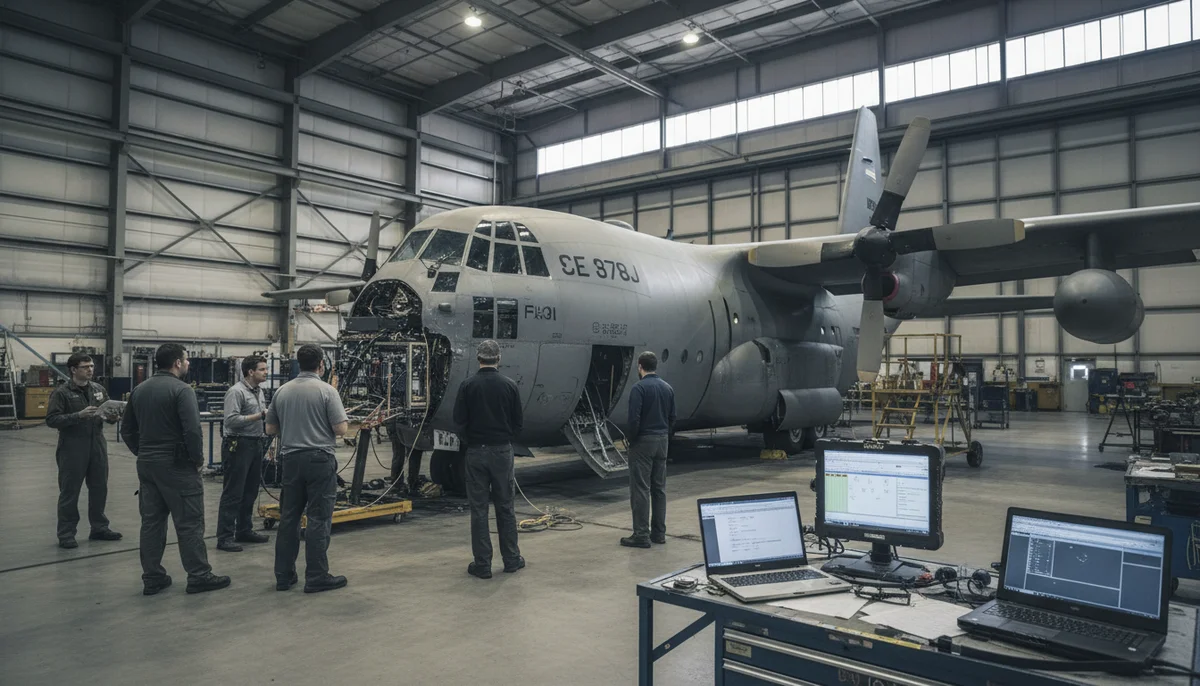
Merlin goes public and almost simultaneously demonstrates progress in one of its key projects — the autonomous program for the military transport C-130J. Company CEO Matt George linked these two pieces of news directly: capital and public company status should accelerate the path from demonstrations to certified autonomy in real aircraft.
Two Milestones at Once
For Merlin, March was a rare moment when corporate and engineering agendas converged. On March 16, 2026, the company closed its deal with SPAC Inflection Point Acquisition Corp. IV, and by March 17 began trading on Nasdaq under the ticker MRLN. Formally this is not a classic IPO, but rather a public listing through merger with a special purpose company, though the economic meaning is the same: Merlin raised over $200 million in gross proceeds and achieved an $800 million valuation before bringing in new capital. For a young aerospace company, this is funding for a long development, testing, and certification cycle.
In his interview, George emphasizes the connection between capital and technical progress. The public market is valuable to Merlin not as a showcase, but as a scaling tool: the company is building not a single autopilot for one aircraft, but a platform it wants to transfer across different types of aircraft. That's why for investors it matters not to have polished demos, but formal milestones that show the product is passing aviation safety logic, not remaining an experiment at the laboratory level. For defense and aviation partners, this is also a signal that the supplier can play the long game.
What About C-130J
The key technical signal came slightly earlier. On March 5, Merlin announced completion of the Preliminary Design Review for the autonomy program for C-130J in support of USSOCOM. This means the preliminary integration scheme and approach to airworthiness were approved, and the project can move to detailed design. Next should come system integration, ground testing, and a series of demonstration flights from takeoff to landing. For military aviation, this stage is important because it separates an industrial-level engineering program from an impressive but still rough demonstration.
- contract with USSOCOM has a ceiling of up to $105 million over five years
- this concerns the C-130J Super Hercules — the basic tactical transport of the US
- Merlin is developing a system designed for real deployment and crew reduction, not just a research prototype
- after the next stage the company expects to transition to flight demonstrations from takeoff to landing
It's also important how Merlin itself describes the program. The company doesn't promise to remove people from the cockpit of a military transport tomorrow. The current focus is autonomy with a high degree of verified reliability that can be justified from the perspective of safety, procedures, and operational approval. This is a slower path, but it's exactly what customers in the defense sector need, where the cost of error is too high and certification discipline is as important as algorithm quality.
What Merlin Is Betting On
At the core of Merlin's strategy is Merlin Pilot — an autonomous flight control system that the company calls an "operating system" for aviation. The idea is that the same "brain" can be adapted to the C-130J, a cargo turboprop, a tanker, or a commercial freighter without a complete architecture overhaul. This is the key to platform economics: each new aircraft type requires adaptation, not creation of a new system from scratch. The more aircraft types go through Merlin Pilot, the higher the value of already accumulated data and certification work.
"Autonomy without certification is a scientific project."
For Merlin, value emerges only when software can be run through real aviation requirements, not just a test range. Hence the company's technical choice: combine AI components with a deterministic rule-based core that should behave predictably even in edge scenarios. Merlin also speaks of thousands of hours of autonomous flights on several civilian aircraft types, work with the FAA and New Zealand aviation authorities, as well as partnerships with major players like GE Aerospace and Northrop Grumman. Near-term revenue essentially comes from defense contracts, but the long-term bet is on a market where certified autonomy becomes a foundational layer for civil aviation as well.
What It Means
Merlin's story shows how AI in aviation moves from the mode of "promises on slides" to verifiable stages: design review, military contract, stock market financing, and preparation for testing and certification. Mass autonomous cargo and military aircraft are still far away, but it's companies like this that are now building the infrastructure for this transition. If Merlin passes the next phase without schedule delays and proves the system's safety in flight, it will have a chance to become one of the first major suppliers of autonomy for real aviation.
Want to stop reading about AI and start using it?
AI News is a curated feed of AI/tech news. Hamidun Academy teaches you to use AI systematically in your work.