Micron to build second memory packaging facility in Taiwan next to Powerchip plant
Micron is strengthening its Taiwan cluster: after buying a memory packaging facility from Powerchip, the company decided to build another similar site next to it. The story is indicative of the broader AI market: demand is rising not only for leading-edge chips, but also for less visible parts of the chain — packaging, testing, and local manufacturing infrastructure. These bottlenecks now determine the pace of server memory deliveries.
AI-processed from 3DNews AI; edited by Hamidun News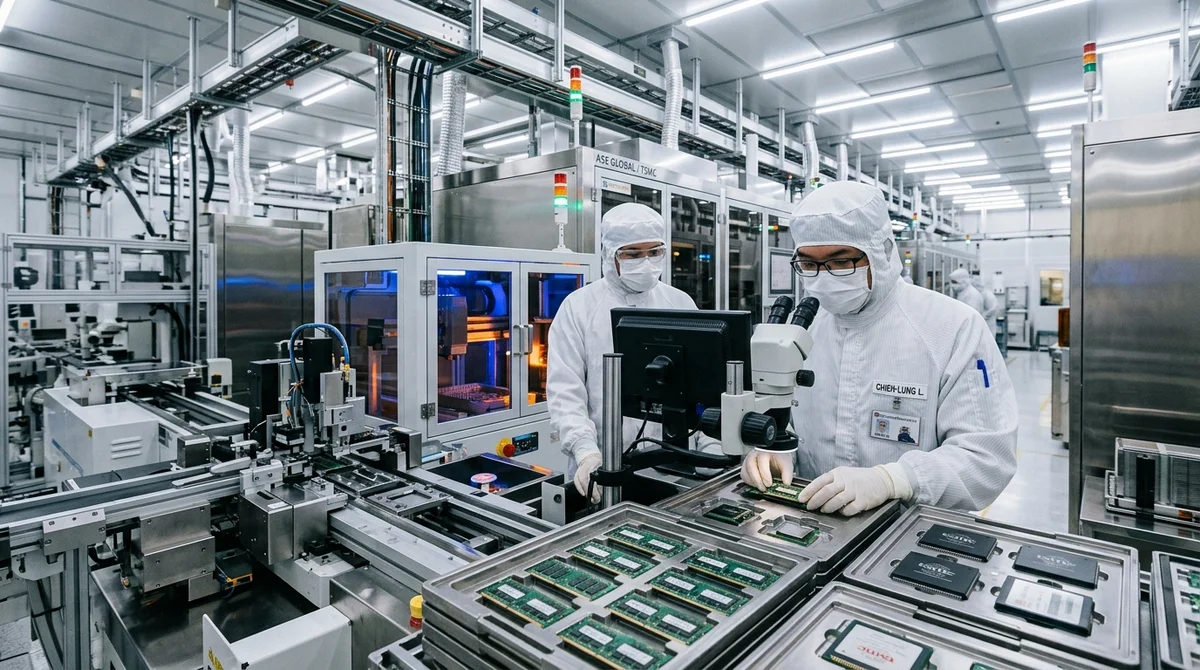
Micron is expanding production in Taiwan: next to the recently acquired facility from Powerchip Semiconductor Manufacturing Corp., the company will build another site for memory packaging. This is yet another signal that the artificial intelligence boom is transforming not only the accelerator market, but the entire infrastructure around memory.
What Happened
Micron previously agreed with Taiwanese manufacturer Powerchip Semiconductor Manufacturing Corp. to purchase a local facility intended for memory packaging operations. Now it has become clear that this step will not be the end of the story: alongside the facility, the company plans to build a second similar manufacturing site. In other words, Micron is not simply acquiring a ready-made asset, but is forming a complete industrial hub at the site, designed for further expansion.
This is not about a new factory for producing silicon wafers, but about the next critical stage—assembly, packaging, and preparation of memory chips for delivery to customers. Against the backdrop of growing AI servers, precisely such operations are becoming increasingly valuable: computing systems require ever more memory, which means the load is increasing not only on the production of the microchips themselves, but on the final stages without which the product will not reach the customer's system.
Why Packaging Matters
In discussions about the AI industry, most often GPU, manufacturing process, and the shortage of advanced lithography lines are mentioned. But the actual supply chain is broader. For memory to end up in a server, it must be assembled, packaged, tested, and shipped in the required configuration. If this particular segment becomes the bottleneck, then increasing output at earlier stages no longer fully solves the problem.
For Micron, adjacent facilities on the same territory provide several practical advantages:
- faster scaling of operations without launching a facility from scratch in another country;
- using an already established local team and manufacturing expertise;
- reducing logistics between related packaging and testing stages;
- obtaining more stable capacity under growing demand from AI clients.
The Powerchip deal also looks symptomatic. Companies that until recently were not associated with the forefront of the AI race are getting a chance to integrate into a new demand cycle through infrastructure and manufacturing tasks. The artificial intelligence boom creates value not only for leaders in GPU and lithography, but also for those players who have facilities, personnel, and technological discipline at adjacent manufacturing stages.
Why Taiwan
Taiwan remains one of the key centers of the global semiconductor supply chain. There are already suppliers of materials, engineering teams, contractors, and an established culture of contract manufacturing. For Micron, the logic is obvious: if you need to quickly expand operations, it is easier to do so within a mature ecosystem than to rebuild everything in a less prepared location.
It is also important that the concentration of several related facilities in one place gives the company greater flexibility. You can redistribute the load faster, plan expansion more easily, and synchronize supplies with partners more reliably. In the AI era, it is not enough to simply produce more memory. You need to be able to bring the product to its final state on schedule, because a failure at the last stage impacts the entire supply chain for servers and accelerators.
In fact, Micron is showing that competition for a place in the AI market is not only at the level of chip architectures, but at the level of production logistics. Whoever controls more stages closer to the finish line gains an advantage in speed and predictability of supplies. For corporate customers, this is not an abstract story, but a matter of memory availability for new systems and timelines for equipment commissioning.
What This Means
Micron's decision is a bet that demand for AI memory will remain high, and that packaging and testing will be as critical as the production of the microchips themselves. For the market, this means a simple thing: those who will benefit from the AI boom are not only the creators of the most complex chips, but also those who are capable of rapidly expanding the entire production chain around them.
Want to stop reading about AI and start using it?
AI News is a curated feed of AI/tech news. Hamidun Academy teaches you to use AI systematically in your work.
The AI world, distilled — once a week
Seven stories that actually mattered, hand-picked. No noise, no reposts, no press releases.
Done! Check your inbox for a confirmation.