Developer builds a YouTube video translation and dubbing system with Ollama
After earlier experiments with translating WoW, the developer returned to the topic and set out to automate the translation and dubbing of YouTube videos using
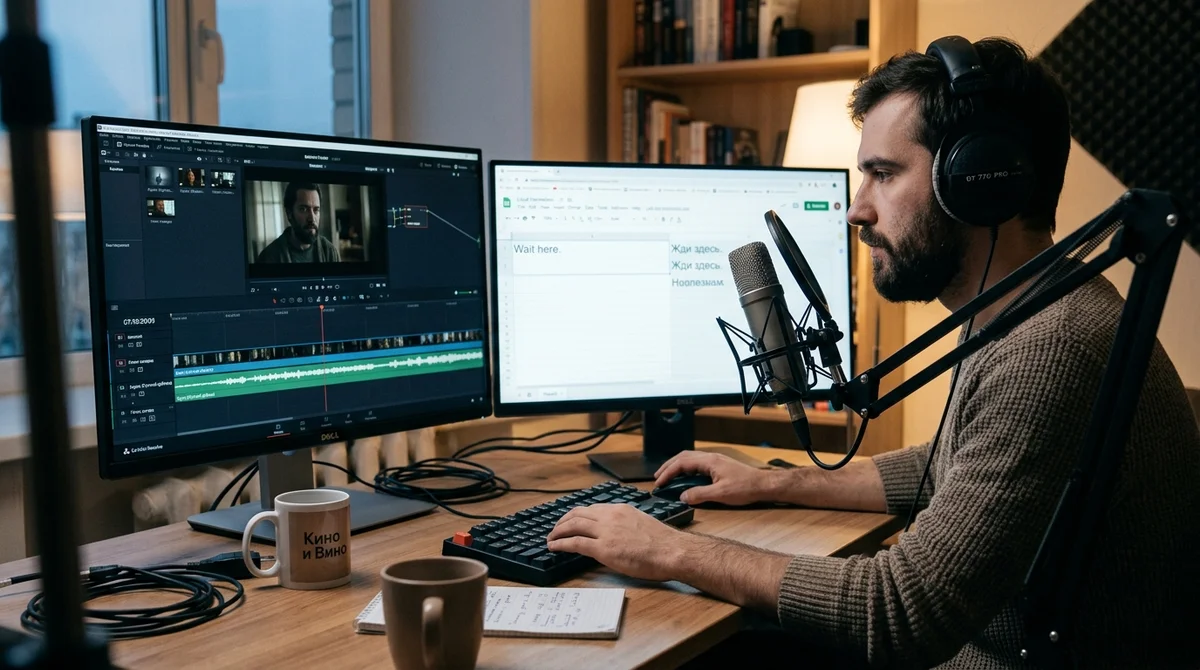
A developer builds a video translation and dubbing system on Ollama
A developer decided to turn video translation and dubbing into a local automated process. Instead of cloud services, he assembled his own stack based on Ollama — with a CLI for batch processing videos and a desktop interface for manual refinement.
From Channel to Tool
The impetus came from relaunching his own YouTube channel with clips from programming streams. This isn't his first attempt at the subject: two years ago, the author was already experimenting with local models to translate WoW into Russian. Against this backdrop, he managed to test-dub a Fireship video about OpenClaw and returned to an old idea: if the video needs to be adapted for a Russian-speaking audience anyway, why not turn this work into a reproducible pipeline. He's also interested in the topic of digital replacements and avatars, which means video translation is not a one-time task but a piece of a larger content system.
The logic is straightforward: even knowing English, many viewers prefer not the original track but a quality adaptation in Russian. The author gives a clear example: popular science and tech content is often better received when the translator doesn't just substitute words but adjusts the pace, intonation, and delivery for the local audience. You can continue doing this manually, but with regular publications, such a process quickly turns into routine that consumes time far more than recording and editing themselves.
"What can I do?
Automate in a few hours part of a process that should properly take 15 minutes."
How the Pipeline Works
The bet is placed on local models through Ollama. This is an important choice: instead of external SaaS, the author wants to get a managed pipeline that can be run locally, fine-tuned for specific voices, and integrated into other tools. This is not just about translating text but about a complete chain of actions around the video: from audio preparation to assembling the final track. Even if some steps still require human involvement, a unified interface already removes the chaos of scattered scripts and manual operations.
- extracting speech and splitting video into convenient segments
- translating lines while accounting for phrase length and audibility
- re-dubbing or preparing text for a voice model
- assembling results in CLI and subsequent verification in a desktop application
The division into CLI and desktop also looks practical. The command line is convenient for batch processing, template runs, and subsequent automation in own scripts. Desktop is needed where it's important to quickly listen to a fragment, correct the translation, reassemble a piece, and visually verify the result without wrestling with the terminal. In essence, the author is building not a demo for the sake of a demo, but a working tool for a repetitive editorial task.
Where Problems Arise
The main difficulty is that "video translation" sounds simpler than it actually is. You need not just to recognize speech and replace English text with Russian, but also to preserve pace, meaning, and naturalness of sound. A short phrase in one language easily turns into a long construction in another, which breaks timing, pauses, and accents. Local models add limitations in quality, speed, and resource consumption, especially if we're talking about long videos and home hardware.
There's also a product layer. If the author only needs to dub a video once, automation doesn't pay off. But when clips appear, regular releases, tests on other videos, and the idea of digital avatars emerge, even a fifteen-minute manual operation becomes a systemic pain point. This is the value of the approach: spend a few hours assembling the process so you don't return to the same actions again. For independent creators, this is often more profitable than immediately depending on cloud platforms and their tariffs.
What This Means
The story shows how local AI tools are transitioning from curious experiments into author infrastructure. Ollama here is important not as a trendy brand but as a way to assemble a managed pipeline for your own tasks: translation, dubbing, avatars, and repeatable content release. If such solutions become easier to install and more stable in operation, small teams and solo creators will have a real alternative to expensive cloud services.