Baidu turns smart speakers into a voice remote for the OpenClaw AI agent
Baidu is integrating smart speakers into the OpenClaw AI agent ecosystem — the devices will become a voice remote for the agent in everyday life. The company…
AI-processed from Bloomberg Tech; edited by Hamidun News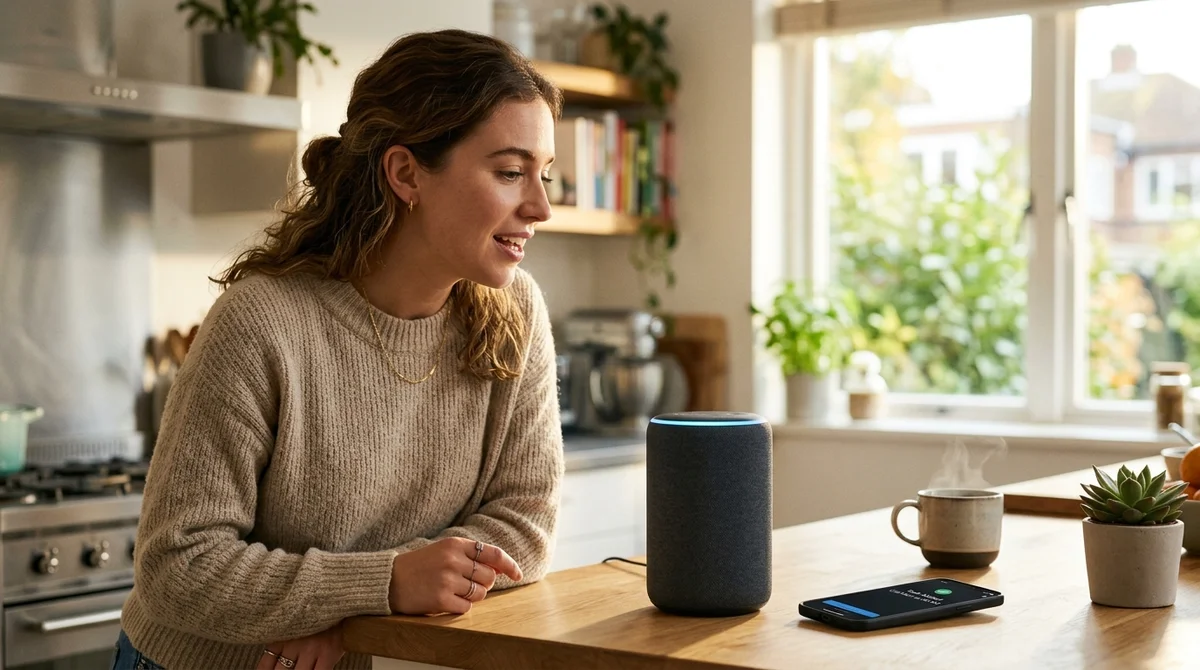
Baidu has announced the integration of smart speakers with the OpenClaw AI agent — voice devices will become the physical control interface for a system that is rapidly gaining an audience in the agentic AI market.
Betting on a New Paradigm
Baidu's core business — search and internet advertising — is experiencing a structural decline. Advertising revenues have been falling for several consecutive quarters, competition from new AI startups has intensified, and the traditional search-based monetization model is becoming obsolete. The company is looking for new growth drivers, and has now placed its bet on agentic AI.
OpenClaw has become Baidu's main strategic card. Unlike chatbots of the previous generation, it operates on an agentic model: it independently completes tasks, uses external tools, and manages other services without constant user involvement. The technology allows the agent to solve multi-step tasks through chains of calls — something that previously required multiple applications and manual input.
The agent has spread virally — users are looking not just for answers, but for a tool that acts on their behalf. Now Baidu wants to consolidate this success through a physical interface. The Xiaodu smart speaker series will receive deep integration with OpenClaw: voice commands will trigger complex agentic scenarios — from ordering delivery and booking restaurants to managing a smart home and gathering analytics on demand.
Why Smart Speakers
The choice of smart speakers as a platform is no coincidence. It is the most accessible always-on physical device for AI:
- The smart speaker audience in China exceeds 100 million active devices
- Voice input lowers the barrier to entry for non-technical users
- Always-on device: the agent is available without opening an app
- Baidu controls the Xiaodu ecosystem from the hardware level to the cloud backend
- Integration does not require new hardware — only a firmware update
Amazon spent years building Alexa as a universal voice interface — with limited success, because Alexa remained a tool for answers, not actions. Baidu is betting on a fundamentally different architecture: OpenClaw is an agent capable of initiating actions. The gap between "answering" and "doing" changes the entire product value chain.
Smart speakers extend the reach of this model to everyday contexts: the kitchen, the living room, the morning routine — scenarios where a smartphone is inconvenient and a voice command is natural.
Search Loses Its Monopoly
Baidu's advertising business is under pressure from multiple directions. TikTok and WeChat are capturing audience time. AI search — both within Baidu and from competitors — is eroding the classic monetization model: users increasingly get answers directly from the model without clicking on advertising links.
OpenClaw offers an alternative monetization logic: instead of ads alongside search results — a commission on transactions that the agent performs on behalf of the user. Ordered food, booked a hotel, bought a ticket — every action by the agent is potentially monetizable. Smart speakers scale this model to tens of millions of households.
"This is a bet on a new paradigm: agentic AI instead of traditional search" — this is how analysts describe
Baidu's strategic pivot.
What This Means
Baidu's move highlights a key pattern in the race for agentic AI: those who control the physical interface win. Companies with device ecosystems — Apple, Amazon, Google, Baidu — gain a structural advantage over purely software players.
Smart speakers are transforming from "audio speakers with a voice assistant" into entry points for agentic AI in everyday life.
Want to stop reading about AI and start using it?
AI News is a curated feed of AI/tech news. Hamidun Academy teaches you to use AI systematically in your work.