Uber and Motional relaunch robotaxis in Las Vegas and intensify their push into autonomous transport
Uber is bringing robotaxis back to Las Vegas: the service is being relaunched together with Motional, which Hyundai has invested in. For users, this is…
AI-processed from Bloomberg Tech; edited by Hamidun News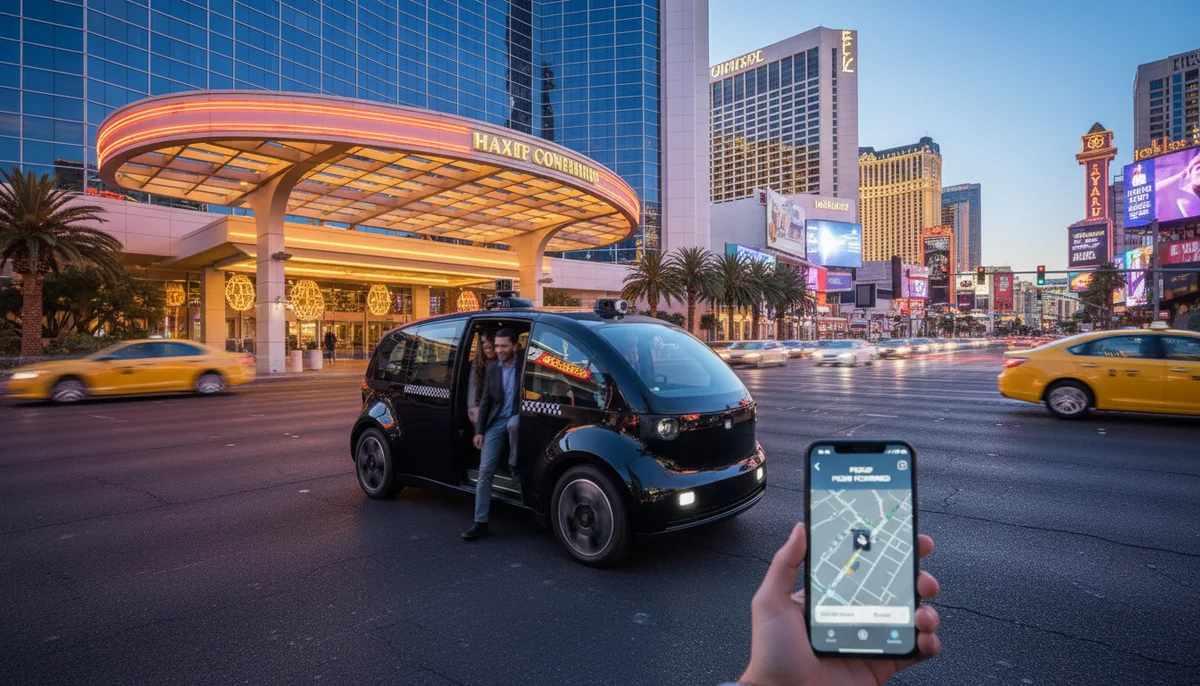
Uber is bringing robotaxis back to Las Vegas alongside Motional, a company backed by Hyundai. For users, it's straightforward: in the Uber app, more rides become available that can be executed not by a human driver, but by an autonomous vehicle.
Return to Las Vegas
The service restart is significant in itself. The autonomous taxi market has moved beyond the stage of flashy presentations to a phase where each return to a city signals a company's readiness to undergo real-world operational testing: routes, pickups and drop-offs, interaction with traffic and passenger behavior. For Uber, this is also a test of how naturally robotaxis fit into the familiar ride-ordering interface. This is precisely why such a launch will be watched not only by passengers but by competitors as well.
For Motional, a partnership with Uber is fast access to consumer demand without having to build a mass consumer channel separately. For Uber, it's a way to expand offerings without developing the entire autonomous stack independently. This model is increasingly becoming standard in the market: one company handles the app, billing, and demand; another handles autonomous technology and the fleet. Las Vegas serves as a convenient platform for testing the commercial scenario, not just an engineering pilot.
Platform for Autonomous Rides
Uber's key idea now is not simply to add another unusual service to the app menu. The company is gradually transforming its app into a universal storefront for different forms of urban mobility, where users don't need to understand who is executing the ride—a human driver or an autonomous system. If selection and payment remain familiar, the barrier to mass adoption of robotaxis drops significantly. This is how Uber lowers the psychological novelty of the technology for a mass audience.
What Uber gains from this model:
- more ride options within a single app
- ability to distribute demand across different types of fleets
- additional incentive to retain users in the ecosystem
- data on where and when autonomous rides are in highest demand
For Motional, this is also a strategic move. Hyundai's support adds industrial weight to the project: an autonomous service increasingly looks less like an experiment from a small lab and more like a product backed by automotive manufacturing expertise and a long investment horizon. At the same time, success is now measured not only by autopilot quality but also by how reliably the service operates in everyday rhythms: when a car is easy to summon, delivery is predictable, and the ride meets user expectations.
Market Entering Scaling Phase
The statement that there are more autonomous vehicles in the Uber app seems like a technical detail, but in fact it describes an important shift. Victory goes not only to the one with the best algorithms in the car, but to the one who controls the entry point to the customer. If a user opens one app and sees different types of rides there, it's the platform that begins to set the rules for demand distribution, pricing, display priorities, and user experience. This significantly strengthens Uber's position in the future economy of autonomous transportation.
Las Vegas is notable here for a reason. For autonomous transportation companies, such cities are valuable because they allow testing services in a live environment with steady passenger flow, but without needing to immediately scale to maximum national complexity. If the relaunch goes smoothly, Uber gets another argument in favor of its platform strategy, and Motional gets confirmation that its technology is ready not only to be demonstrated but to regularly transport ordinary passengers at the press of a button.
What This Means
Robotaxis are increasingly transforming from a separate technological showcase into an ordinary layer within familiar ride-hailing services. For the market, this signals that competition is shifting from individual demonstrations to a systemic question: who can faster integrate autonomous vehicles into everyday urban logistics and make them an almost invisible part of the standard experience for users. For passengers, the key criterion will be not the word "robotaxi," but how predictably and conveniently such a ride works.
Want to stop reading about AI and start using it?
AI News is a curated feed of AI/tech news. Hamidun Academy teaches you to use AI systematically in your work.