Guardian on Elon Musk's prediction: can AI give people back their free time?
Guardian has published a column on an unexpectedly optimistic scenario for the AI revolution: if agentic systems take over routine office work, people could…
AI-processed from Guardian; edited by Hamidun News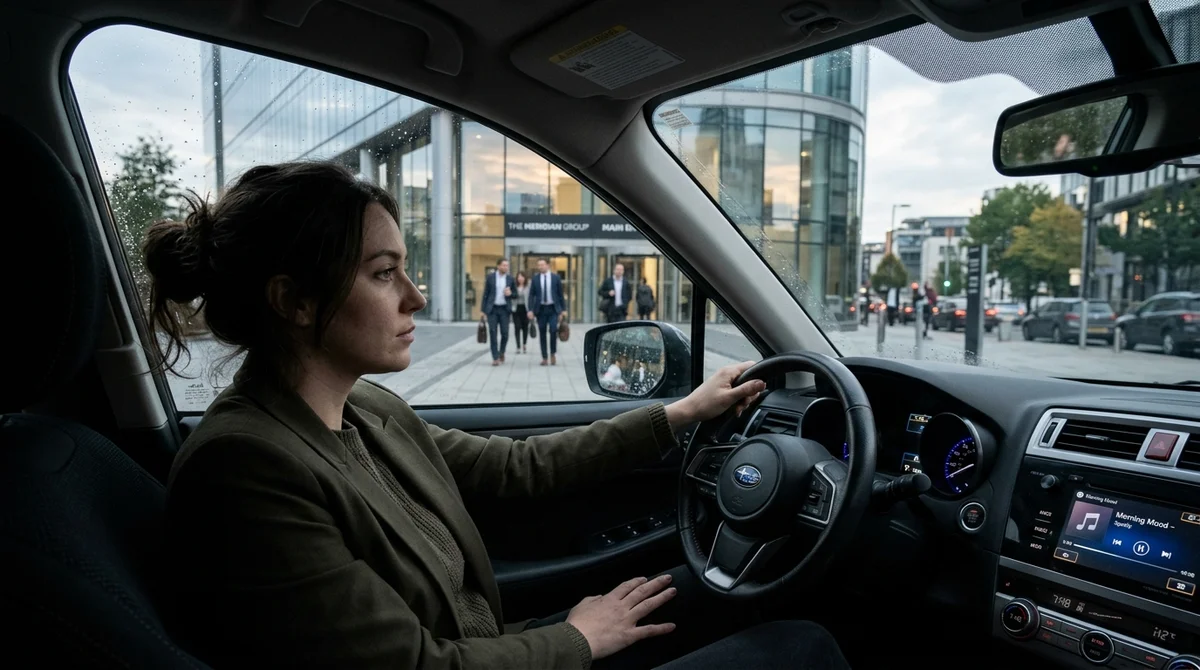
Guardian ran a column on how AI may not only take jobs away, but also give people back time for life. Columnist Gene Marks suggests looking at automation not only as a threat, but as a chance to get rid of the most pointless office drudgery.
The office as a trap
The author opens with a simple scene in a parking lot: before going into the office, an employee sits in her car, listens to music, and literally delays the moment when she will have to switch back into work mode. For Marks, this is not a minor everyday detail, but a symptom. If people experience the start of the workday as the end of freedom, then the very model of work has long needed to be reconsidered.
The column poses the question bluntly: do we really want to spend life waiting for the evening, the weekend, and vacation?
Marks then breaks down what hated office routine actually consists of. It is not only the tasks themselves, but the entire surrounding layer: early wake-ups, commuting, pointless calls, performance reviews, dress codes, supervision from management, and endless micro-politics inside teams.
Even mass culture, the author notes, rarely shows the office as a place where people become happier. On screen, it is almost always a space of fatigue, boredom, stress, and the mechanical repetition of the same actions.
What AI will take away
The text’s key idea is that generative AI and agent systems are poised to hit not physical labor first, but digital routine. Marks cites Elon Musk’s forecasts: everything tied to computer work and file production may start disappearing faster than the market can adapt. This is not about a distant future decades away, but about a shift that could become visible within the next few years.
By the author’s logic, the first things to be automated will be repeatable office operations that are easy to describe with rules and boil down to processing data, texts, and requests.
- creating and placing orders
- reconciling bills and payments
- replying to emails and messages
- posting receipts and preparing invoices
- drafting commercial proposals and standard documents
That is why the column sounds not like a routine warning about layoffs, but like an attempt to change the lens. If machines really can remove this layer of monotonous work from people, then what will be freed up is not only companies’ time, but employees’ time as well.
Marks writes plainly that human beings were not made to spend ten hours staring at a monitor, filling out spreadsheets, and living from report to report. People have other ways of being: family, rest, hobbies, reading, sports, sleep, and simply the ability to decide how to use their day.
Where the main risk lies
But the author’s optimistic scenario is tightly tied to one condition: the gains from AI must be distributed more broadly than to shareholders and a handful of tech companies. Marks allows for a scenario in which the hyperproductivity of business lets governments tax corporate profits more heavily and return part of that money to people in the form of universal income or similar mechanisms. Only in that case will the idea that work may become optional stop being a fantasy for the few.
This is where the main “if we don’t ruin everything” from the headline appears. The author openly acknowledges that people are very good at ruining even potentially fair systems. If the transition to AI follows the familiar pattern in which efficiency rises while the fruits of that growth settle at the top, automation will not free people, but make them even more vulnerable. Instead of getting life back, we will get the familiar scenario: fewer stable jobs, more anxiety, and incomes pulled even farther apart.
The text contains another important turn as well. Even if part of society still wants to spend life working, that will not go away: people know how to create new rules for themselves, new processes, and new forms of employment. But the column suggests not clinging to the office as the only source of meaning. If AI can take over stupid, boring, and mechanical tasks, then perhaps, for the first time in a long while, technology may not accelerate the race, but reduce the volume of mandatory work.
What it means
The Guardian column reduces the conversation about AI to a question more important than automation itself: who will receive the gains from productivity growth. If societies can turn those gains into free time and basic economic security, AI may indeed give people back part of their lives. If not, the same tools will become not a machine of liberation, but a machine of new inequality.
Want to stop reading about AI and start using it?
AI News is a curated feed of AI/tech news. Hamidun Academy teaches you to use AI systematically in your work.