ChatGPT and Google are changing education: will AI replace tutors and teachers
AI tools like ChatGPT, Photomath and Socratic are rapidly becoming mainstream study tools: students get explanations and ready-made solutions in minutes, while teachers use AI for lesson plans, assignment drafts and reviewing materials. But as access expands, so do the risks: cheating, the replacement of independent work, and pressure on the role of tutors and teachers.
AI-processed from Habr AI; edited by Hamidun News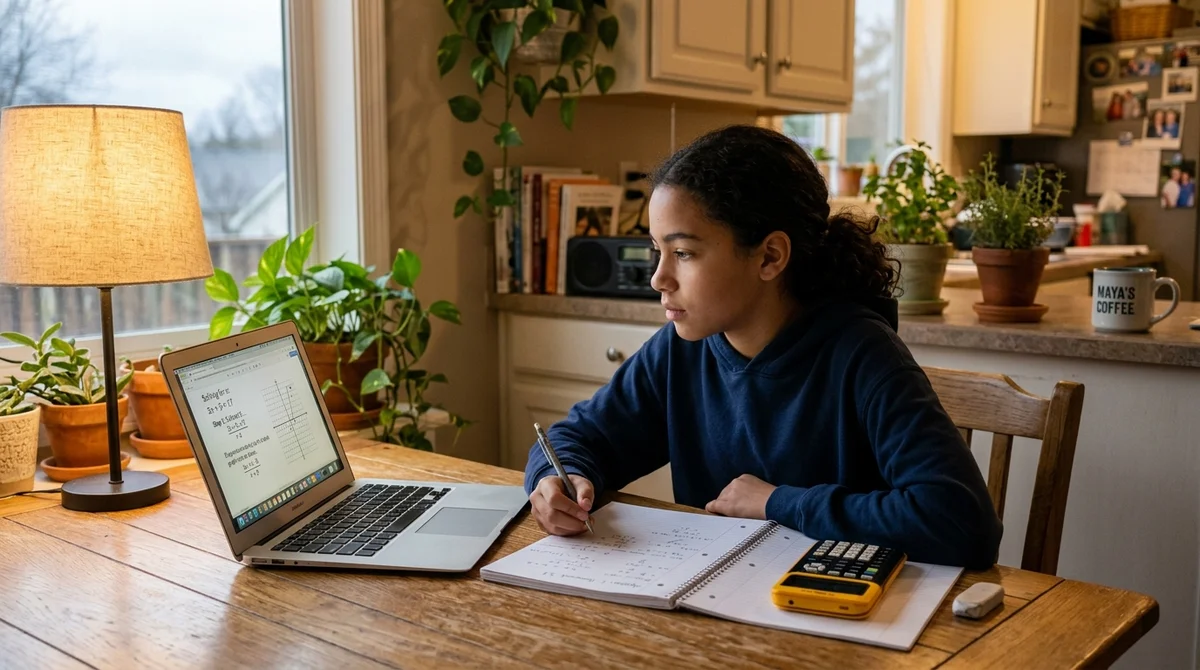
Neural networks have already become a cheap on-demand tutor for schoolchildren and university students: they explain a topic in simple words, show several ways to solve it, and immediately give practice tasks for reinforcement. But at the same time, they call the teacher’s привычную роль into question, because they can not only teach, but also help students cheat.
Why AI is entering the classroom
The scenario described in the article feels far too familiar to be dismissed as fantasy. A student opens ChatGPT, asks it to explain quadratic equations “as if I were 12,” and a minute later gets a clear breakdown with no waiting, commuting, or hourly fee. That is the strength of AI tools in education: they are available in the evening, they do not get tired, they do not get irritated, and they adapt an answer to the student’s level almost instantly. For families that struggle to afford a regular private tutor, such an alternative seems not just convenient, but economically inevitable.
The scale is already visible in the numbers. A Walton Family Foundation study back in 2023 showed that 51% of American students used ChatGPT for studying. Teachers also integrated AI into everyday work quickly: one in three uses it to prepare lessons. In Russia, the picture is similarly tense: according to HSE data, two thirds of instructors have encountered work written by a neural network at least once, and 40% of educators believe bans will not solve the problem. In other words, the technology is already in the classroom, even if regulations have not yet caught up with reality.
How it helps
At the same time, AI in education is not only about cheating. For a teacher, it is a way to remove part of the routine; for a student, it is a way to get an extra explanation precisely at the moment they get stuck. Apps like Photomath and Socratic have long sold the idea of a “tutor in your pocket,” and generative models have expanded it: now the system does not just give an answer, but can explain the solution process, come up with a similar problem, and adapt the difficulty to a specific level.
- Explain a topic in different words and at different levels of difficulty
- Show several ways to solve the same problem
- Generate practice examples and a mini-test
- Help a teacher put together a lesson plan or a draft assignment
- Quickly check the structure of an answer and find gaps
That is why the market is not waiting for officials and academics to reach an agreement. Money keeps flowing into AI-based education services because the demand is clear: parents want cheaper support, students want a quick answer without stress, and schools want tools for personalization. But that does not mean a neural network automatically replaces a teacher. It works well where explanation, practice, and repetition are needed, but it is weaker at fostering study discipline, motivation, and the long-term development path of a specific person.
Where the problems begin
The main problem is that a neural network blurs the line between help and replacing effort. If a student uses AI to understand a topic, that is one scenario. If they hand the entire homework assignment to the model and submit the ready-made answer as their own, the teacher is no longer assessing knowledge, but the quality of the prompt. That is where the sense of crisis comes from: traditional forms of assessment stop working the way they used to. It becomes increasingly difficult to verify where independent work ended and generation began, especially when the text or solution looks neat and plausible.
There is also a more practical risk: a neural network can be confidently wrong. It can produce a polished explanation with an inaccurate step, invent a fact, or suggest a suboptimal solution method. A live teacher notices confusion in such a situation, asks clarifying questions, and adjusts the explanation on the fly. A model has no real responsibility for the student’s outcome and no human contact, which is especially important for struggling, anxious, or unmotivated children. That is why talk of a “complete replacement” still looks more like a provocation than the market’s near-term plan.
What this means
Most likely, neural networks will not eliminate teachers and tutors, but will change their work. Basic explanations, practice, and rough checking are moving into AI faster and faster, while the value of a live teacher is shifting toward diagnosis, motivation, discipline, and the ability to bring a student to real understanding rather than to a polished submitted answer.
Access Frontier LLMs & Multimodal AI in One Workspace
Discover NomadNet AI (nomadnet.ai) — unified access to frontier language models, research synthesis, and multimodal workflows.
The AI world, distilled — once a week
Seven stories that actually mattered, hand-picked. No noise, no reposts, no press releases.
Done! Check your inbox for a confirmation.