TikTok in Mexico criticized over AI videos romanticizing the DFS secret police
A trend is gaining popularity on TikTok in Mexico in which teenagers use AI to turn themselves into DFS agents, the secret police of the 1970s. For some viewers, it is just a viral format, but critics see it as a dangerous romanticization of a force linked to torture, killings, and disappearances during the Dirty War. The controversy has deepened because such videos present a symbol of repression as a striking image of power and impunity.
AI-processed from Guardian; edited by Hamidun News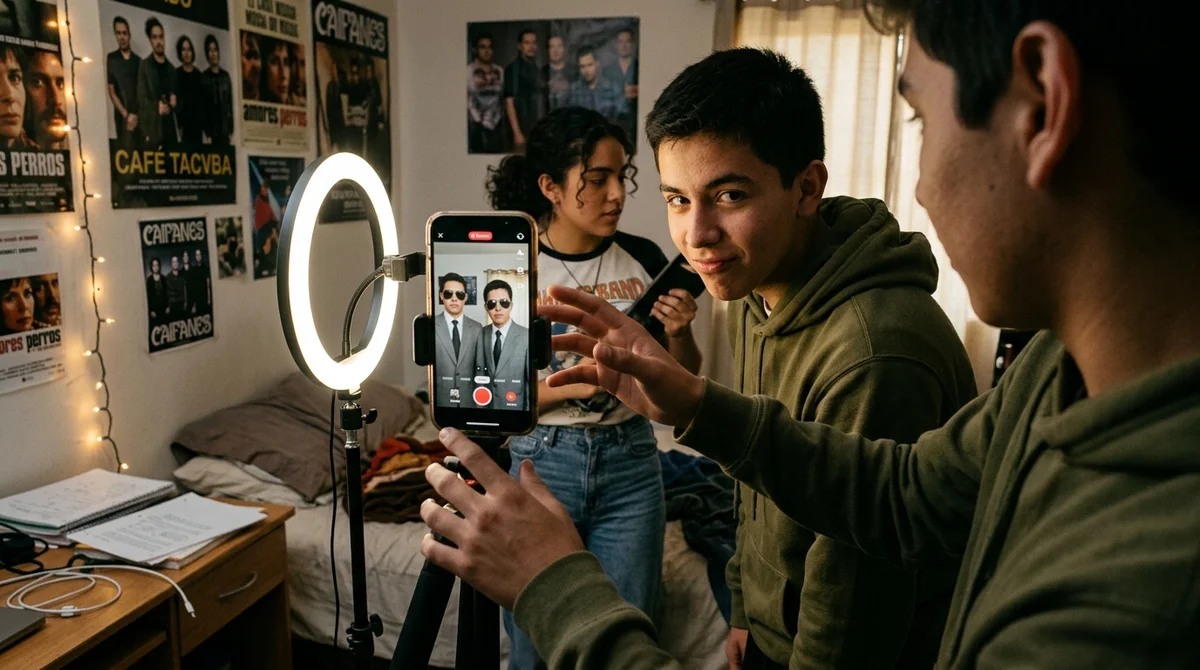
In Mexico, a TikTok trend is gaining momentum in which teenagers and young users are using AI to transform themselves into DFS agents — the secret police of the 1970s. For some, it's another viral format; for others, it's a dangerous romanticization of a structure associated with torture, killings, and disappearances during the "Dirty War."
How the trend works
The videos are built simply: a user uploads a photo or short video, and then an AI service draws in the image of a DFS officer — complete with retro costume, dark sunglasses, an air of official authority, and deliberately confident manner. As a result, a historical repressive structure becomes an aestheticized character for short vertical video. It's precisely this simplicity that makes the trend so visible: to participate, you don't need to know the context; it's enough to repeat the visual template and post the video to your feed.
The problem is that DFS in Mexico's collective memory is not simply a "service from the past." During the so-called "Dirty War," its employees were linked to persecution of opponents, illegal detentions, disappearances, and killings of thousands of people. So when such an image returns in the form of a fashionable AI filter, part of the audience sees not a historical stylization, but an attempt to make the symbol of impunity striking and attractive. This is what the current wave of criticism on the platform itself is built on.
Why this is concerning
The dispute around these videos is not only about taste. It's about how social networks change our relationship with traumatic history, when any dark story can be turned into a recognizable meme with a couple of clicks. This is felt especially acutely in a country where topics of state violence and disappearances remain part of public conversation, not a distant story from a school textbook.
Critics see several problems immediately:
- AI erases the line between historical reconstruction and entertainment
- The viral format encourages shock content and superficial copying
- The image of DFS is presented as a style of power, not as a symbol of repression
- Young audiences encounter the subject without the necessary context
In discussions, the phrase "absolute impunity" comes up — this, according to opponents of the trend, is what becomes the main object of glamorization. The issue is not that young people cannot engage with history through new tools. The question is different: what does the platform make visible — an analysis of the past or its attractive wrapper. When algorithms reward attention based on striking visual effect, these things easily swap places.
History as a mask
AI acts here not simply as a technical tool, but as an accelerator of distance between the event and its image. What previously required a costume, filming, and at least minimal knowledge of the era now assembles automatically from a couple of frames and a short prompt. As a result, the user tries on not a specific historical context, but a ready-made role — confident, dangerous, powerful.
This mechanic works well for short video, but poorly conveys what lay behind this image: real crimes by the state and the trauma of families who are still searching for answers. This is why the reaction to the trend turned out to be so sharp.
For some viewers, this is not an innocent game with retro aesthetics, but a symptom of a wider problem: platforms are skilled at quickly repackaging even the darkest pages of the past into attractive content. The simpler AI makes such packaging, the more often the debate shifts from technology to responsibility — of the user, the service, and the recommendation feed itself.
History doesn't disappear from the frame, but transforms into a set decoration, where the moral weight of the event gives way to visual effect.
What this means
The DFS story shows that generative AI is already affecting not only work and creativity, but also collective memory. When a few clicks turn a repressive apparatus into a viral image, the dispute inevitably moves beyond TikTok.
For platforms, this is a signal that moderation and context questions will increasingly concern not only fakes, but also how AI repackages real historical traumas.
- Oct 26, 2026Pollo AI Builds an Ad Production Pipeline on GPT-5.6, GPT-6 Astra and GPT-Image-2.5
- Oct 26, 2026Court Vacates Pelkey Sentence After Judge Said He Liked AI Video of the Victim
- Oct 26, 2026Jimeng AI Launches "Short Drama Studio" to Run the Full Production Cycle in One Window
- Oct 26, 2026Nikon strips micro-video contest winner of prize over generative AI
Key Questions Answered
How the trend works?
The videos are built simply: a user uploads a photo or short video, and then an AI service draws in the image of a DFS officer — complete with retro costume, dark sunglasses, an air of official authority, and deliberately confident manner. As a result, a historical repressive structure becomes an aestheticized character for short vertical video. It's precisely this simplicity that makes the trend so visible: to participate, you don't need to know the context; it's enough to repeat the visual template and post the video to your feed. The problem is that DFS in Mexico's colle
Why this is concerning?
The dispute around these videos is not only about taste. It's about how social networks change our relationship with traumatic history, when any dark story can be turned into a recognizable meme with a couple of clicks. This is felt especially acutely in a country where topics of state violence and disappearances remain part of public conversation, not a distant story from a school textbook. Critics see several problems immediately: AI erases the line between historical reconstruction and entertainment The viral format encourages shock content and superficial copying The im
What are the key details on History as a mask?
AI acts here not simply as a technical tool, but as an accelerator of distance between the event and its image. What previously required a costume, filming, and at least minimal knowledge of the era now assembles automatically from a couple of frames and a short prompt. As a result, the user tries on not a specific historical context, but a ready-made role — confident, dangerous, powerful. This mechanic works well for short video, but poorly conveys what lay behind this image: real crimes by the state and the trauma of families who are still searching for answers. This is w
Delegate Deep Research, Coding & Workflows to an AI Agent
Deploy autonomous multi-step execution with NomadNet Agent (agent.nomadnet.ai) — automated web research, data synthesis, code generation, and complex task orchestration.
The AI world, distilled — once a week
Seven stories that actually mattered, hand-picked. No noise, no reposts, no press releases.
Done! Check your inbox for a confirmation.