WTO warns: expensive oil due to war with Iran could slow the AI boom
The WTO warned that a long period of expensive oil could cool the AI boom. The reason is that data centers, servers, and chip production depend on energy, so…
AI-processed from Guardian; edited by Hamidun News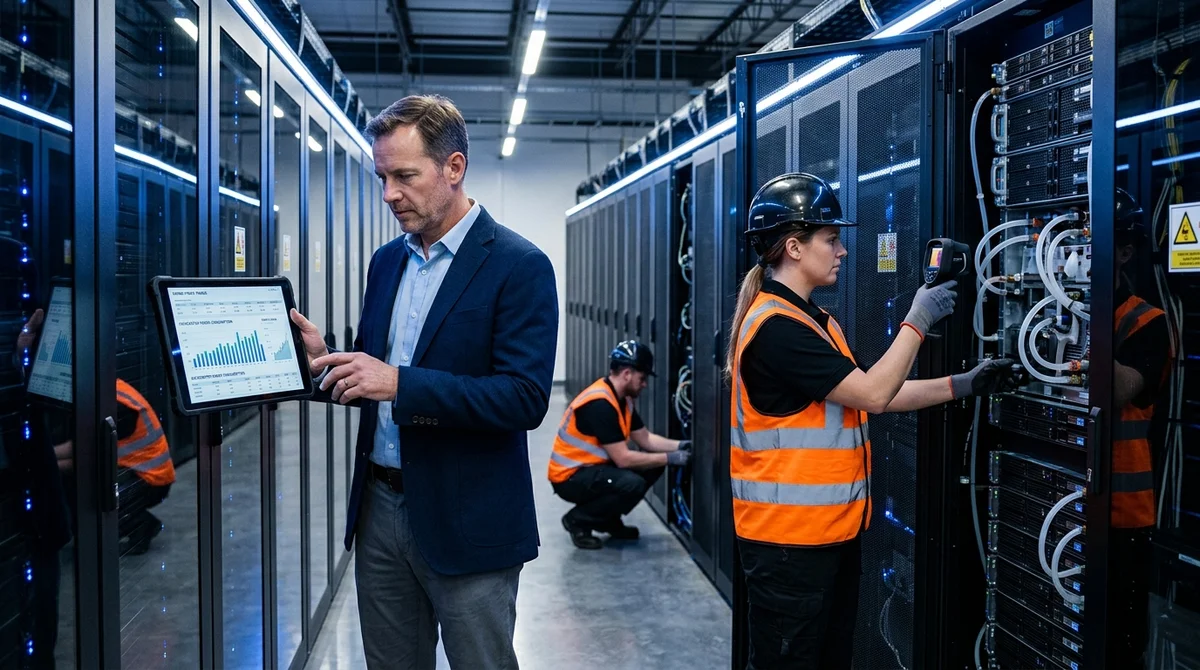
The WTO has warned that a prolonged spike in oil prices caused by the war in the Middle East could stall the current AI boom. The logic is simple: generative AI, data centers, and server hardware production require enormous amounts of energy, and expensive energy quickly hits investments.
Why AI is vulnerable
World Trade Organization chief economist Robert Staiger linked two processes usually discussed separately: the war surrounding Iran and the boom in artificial intelligence investments. According to him, if energy remains expensive throughout the year, this could noticeably slow down the growth of the AI sector.
For the market, this is not an abstract risk. The current AI race relies not only on software, but also on massive procurement of servers, accelerators, networking equipment, and the construction of ever-new data center capacity.
"If energy remains expensive all year, it could slow down the AI boom."
The problem is also that these investments are concentrated among a comparatively small number of very large companies. When the cost of electricity, fuel, and logistics rises, capital-intensive projects are the first to come under review.
An additional factor is the uncertainty around AI returns: businesses are already spending tens of billions, but it has not yet been definitively proven how quickly these investments will translate into sustainable profit. If infrastructure costs rise even further, some companies may slow their expansion or postpone purchases.
WTO forecast in numbers
The WTO emphasizes that in 2025, global goods trade showed an unexpectedly strong result even amid new US tariffs. Growth came in at 4.6%, with demand for AI-related goods and strong exports from Asia playing a notable role. In other words, AI is already influencing not just the technology market, but global trade flows.
Here are the figures the organization points to:
- global goods trade grew 4.6% in 2025;
- the baseline forecast for 2026 is a slowdown to 1.9%;
- if oil and LNG remain expensive throughout all of 2026, goods trade growth could fall to 1.4%;
- such a scenario could remove 0.3 percentage points from the global GDP forecast and 0.5 points from the trade forecast, and the blow could be even harder for energy importers;
- approximately 70% of the investment growth in North America in the first three quarters of 2025 came from AI-related goods.
These estimates are also important because the AI boom has already become one of the main compensators for weaker global conditions. The WTO itself allows for a more positive scenario: if the conflict does not drag on and AI investments maintain their pace, trade in 2026 could receive additional support. But the baseline scenario currently looks noticeably more cautious than it did a year ago.
Risks extend beyond tech
The story does not come down to data centers being more expensive to operate. The WTO considers the war and its impact on energy and fertilizer costs to be the main risk to the global economy. Gulf countries play a key role not only as oil and gas suppliers, but also as an important link in the fertilizer supply chain. If disruptions prove prolonged, pressure will quickly move from the energy sector into agriculture, and then into inflation and consumer prices.
This creates a double blow. On one hand, the infrastructure on which AI is built becomes more expensive. On the other — costs rise for businesses far beyond the tech sector, leaving companies with less room for risky or long-horizon investments.
For North America this is particularly sensitive, because that is precisely where demand for AI goods grew fastest, while Asia remains the main manufacturing hub for such supplies. If American corporations begin spending more cautiously on AI, chip, server, and equipment manufacturers across the Asian supply chain will feel it quickly.
What this means
The AI boom has turned out to be not a purely digital story, but part of a broader industrial and commodity economy. If expensive oil persists for a long time, the market will start evaluating AI not only by the quality of models and number of users, but also by the price of electricity, logistics, and hardware — without which all this growth simply cannot scale.
Want to stop reading about AI and start using it?
AI News is a curated feed of AI/tech news. Hamidun Academy teaches you to use AI systematically in your work.