Epotos implemented local AI for claims and moved complaints to Bitrix24
Epotos showed how it moved claims from manual email and Excel workflows to a local AI pipeline. The system reads emails and attachments via Tesseract…
AI-processed from Habr AI; edited by Hamidun News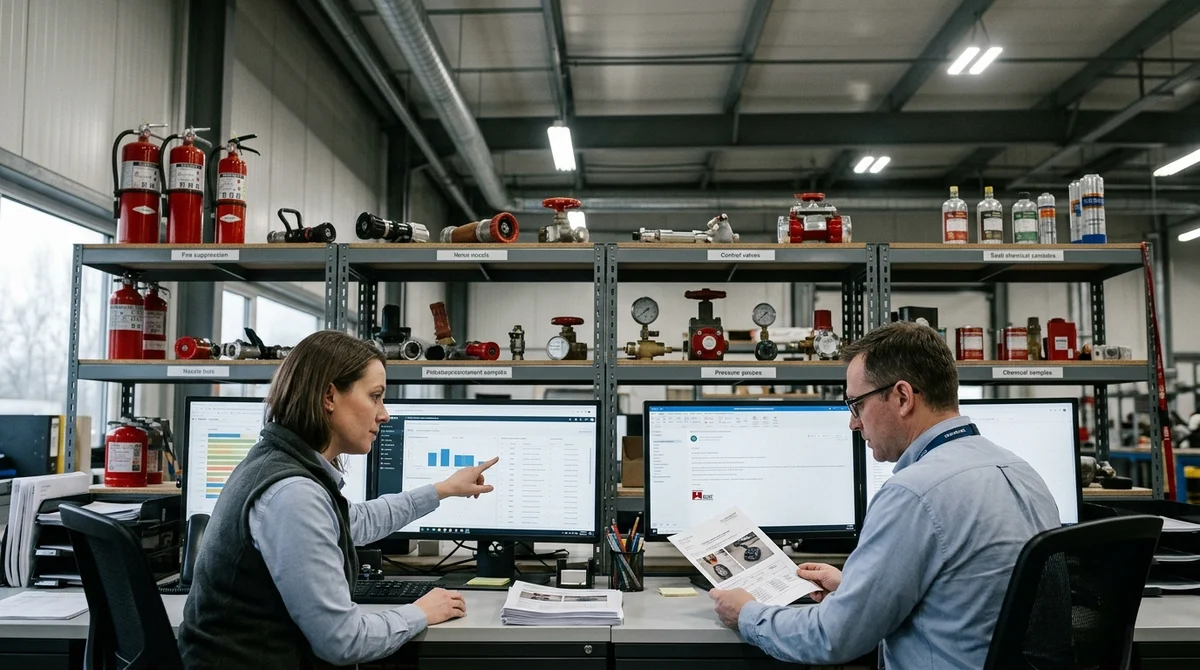
Epotos, a manufacturer of fire suppression systems, moved customer complaint handling from manual email forwarding and Excel into a semi-automated AI pipeline. Incoming emails, attachments, and photos are now processed by a local stack of OCR, LLM, and Bitrix24, while employees receive a ready-made task with a checklist.
How it used to work
Before the rollout, everything relied on a familiar but cumbersome setup: complaints arrived in a shared inbox alongside commercial offers, trade show invitations, and routine correspondence. The secretariat manually forwarded the relevant emails, registered the cases, and effectively served as the first filter. For a company with several business lines—from special-purpose vehicles to ground transport—this became a bottleneck, especially once the volume of cases grew to several dozen per week and complaints specialists no longer had time to analyze the root cause of each case.
The data was then moved into an Excel table with statuses and updates, but it was filled in manually. The history of communication with the customer spread across long email threads, and the procedure for handling complaints often existed either in the heads of experienced employees or was passed verbally to newcomers. As a result, the company could see the mere fact of a complaint, but lost speed, transparency, and a single processing standard. Against that backdrop, automation no longer looked like an experiment, but like a way to bring the process back under control.
How the system was put together
The team decided not to break the familiar channel and kept email as the entry point. Emails are then fetched via IMAP, and their contents are processed by a local AI stack so customer data does not have to be sent to the cloud. For attachments, they used Tesseract with a Russian OCR model: it extracts text from PDF files, photographs, and other files where ordinary copy-paste is not enough. As the language model, they chose Qwen3-30B-A3B, launched through Ollama. It determines whether an email is a complaint and, if so, parses it into structured fields for further work.
- Reading the email body and attachments, including PDF, images, and text files
- OCR for photos and scans where the defect is described not in the text, but in a document or image
- Classifying the incoming email as a complaint, spam, an internal email, or an irrelevant inquiry
- Extracting details about the product, serial number, defect, category, and sender contact information
- Writing the result to Bitrix24 across 25–30 fields and automatically creating a task with the required checklist
Separately, the team built a system of prompts and rules: the model must respond strictly in JSON, distinguish a product complaint from commercial emails, and sort complaints into categories. After that, the data goes to Bitrix24, where lists and business processes are created with assignees, watchers, and closure stages.
On top of the main pipeline, the author built a small admin panel: it shows processing logs, run history, a list of emails, prompt settings, and an option to rerun cases for a specific date if the service stopped and some emails had to be processed manually.
What the implementation delivered
The main effect is not that AI “answered emails instead of people,” but that a complaint became a digital object with a clear lifecycle. The company now records not just the fact of the complaint, but the entire context: which product is mentioned in the case, who reported the problem, what exactly broke, and what stage the review is at. This simplifies meetings, makes complaint dashboards more useful, and helps look for cause-and-effect links in product quality rather than just closing incidents one by one.
The second result is standardization. When a task is created automatically in the CRM with the required checklist, new employees receive not verbal advice but a ready-made sequence of actions. It also adds real-time status control: you can see who is responsible for the case and what has already been done. At the same time, the case honestly shows that the process does not disappear entirely without people—the secretariat still monitors the inbox, and the service sometimes required a manual restart. But even with that limitation, complaint handling became noticeably more organized and transparent.
What this means
This case clearly shows a practical AI scenario for manufacturing: not building a separate “smart platform,” but embedding the model into an existing environment of email, documents, and CRM. For many industrial companies, a local LLM with OCR and clear rules can deliver the fastest impact exactly where the incoming flow still lives in an inbox and spreadsheets.
Want to stop reading about AI and start using it?
AI News is a curated feed of AI/tech news. Hamidun Academy teaches you to use AI systematically in your work.