Colusa Indian Energy and Strata Expanse to build AI campus on tribal lands in California
In California, tribal company Colusa Indian Energy has reached an agreement with Strata Expanse to build an AI and energy campus on tribal lands. The first…
AI-processed from Bloomberg Tech; edited by Hamidun News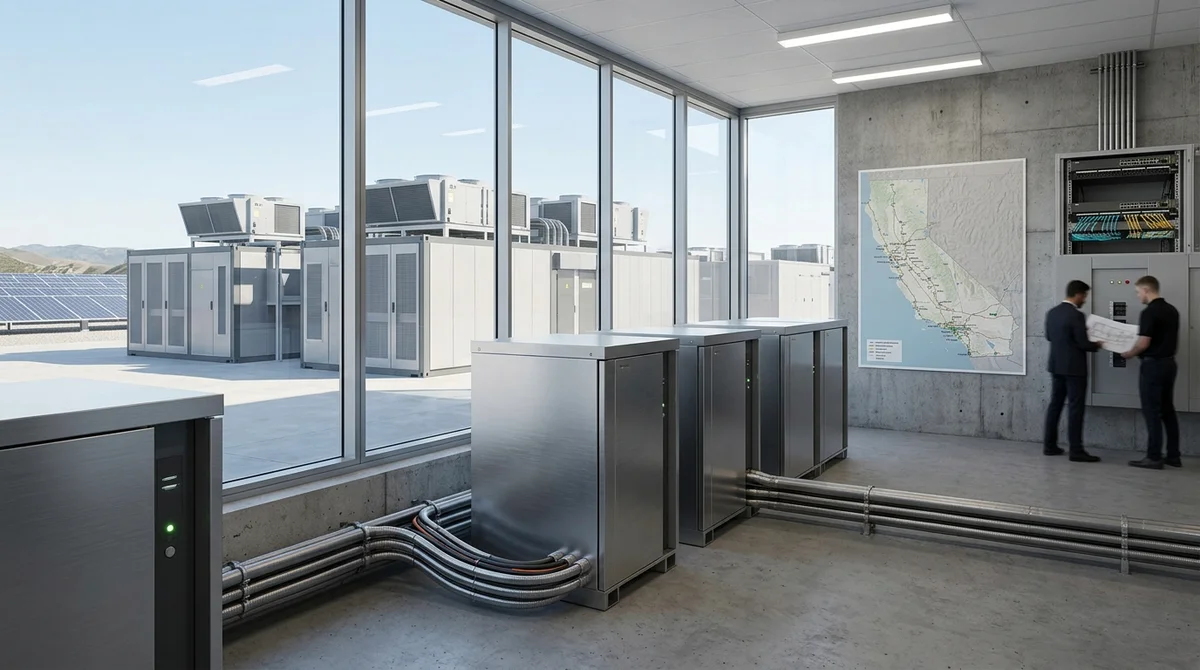
In the agricultural Sacramento River Valley, one of California's indigenous peoples has decided to enter the AI boom not only as a landowner, but also as an infrastructure partner. Colusa Indian Energy, together with Strata Expanse, is preparing an AI and energy campus on the lands of the Cachil Dehe Band of Wintun Indians, betting that in the age of generative AI, deficits emerge not only in chips but also in electricity, premises, and connection speed.
How the Project is Structured
The basic scheme is simple: Colusa Indian Energy, fully owned by the Colusa Indian Community, is joining forces with developer Strata Expanse to build infrastructure for AI computing in Northern California. The first phase includes a Center of Excellence — a working platform where new AI system loads will be tested and validated. For Strata Expanse, this is the first partnership with a tribal community, while for the community itself, it is a step from the energy business into a more profitable segment of digital infrastructure.
According to Bloomberg, the project begins with the lease of several acres on tribal lands, and over the next 18 months the scale could exceed 100 acres. In parallel, the partners are also discussing increasing their own power generation to over 100 MW. This is an important detail: the campus is being built not according to the classical model, where one waits for years for grid capacity and then launches a data center.
Here the logic is reversed — the computing platform is immediately tied to available power and local infrastructure.
Betting on Energy
The key advantage of the project is the existing microgrid of the Colusa Indian Community. According to the company itself and materials from the U.S. Department of Energy, it has been operating in island mode for over two decades, and without unplanned outages for over 14 years. For AI infrastructure, this is not merely an impressive reliability metric. If the market is constrained by a shortage of capacity and long connection times to the main grid, then a facility with proven local power generation immediately becomes far more valuable than ordinary land. The project already includes technology partners that should cover the computational and engineering aspects of the campus:
- DDN — storage systems and data infrastructure
- Supermicro — server platform
- Nvidia, Intel and AMD — computing components
- Amphix Center of Excellence — environment for pilot launches and AI workload validation
For tribal territories, this model looks particularly attractive because it allows shortening the path from idea to launch. Colusa Indian Energy's materials directly state that power generation happens on-site, with a shorter approval cycle and the ability to build such facilities faster than in a conventional grid model. Against the backdrop of utility and grid companies across the country falling behind demand from AI data centers, energy has become the key argument in negotiations over the placement of new capacity.
Why This Matters for the Tribe
The story is interesting not only as yet another data center in the USA, but as an example of how tribal communities are trying to claim a larger share of the value chain. Around AI today, earnings come not only from model developers but from landowners, power generation operators, cooling providers, fiber optic networks, and construction permits. Colusa Indian Energy is presenting the project as a tool for economic diversification: income can come not only from leasing but also from energy, infrastructure maintenance, long-term service contracts, and new jobs.
The community already has agricultural lands, its own energy base, and experience in managing critical infrastructure, including a casino resort and utility facilities. Now these assets are being transformed into a platform for AI computing. In one of the company's statements, COO Kenneth Ahmann formulated this as directly as possible: tribes want to be perceived not as privileged territory, but as equal partners in building the new technological economy.
"We have shown a way forward and ask to be treated as equal partners," —
Kenneth Ahmann.
What This Means
The AI boom is increasingly shifting from models to physical infrastructure: land, electricity, cooling, and the right to build quickly. The Colusa Indian Energy case shows that in this race, not only big tech and traditional data center operators can win, but also tribal communities if they already have control over land, energy, and deployment timelines.
Want to stop reading about AI and start using it?
AI News is a curated feed of AI/tech news. Hamidun Academy teaches you to use AI systematically in your work.