US AI companies risk derailing up to half of planned data center launches due to power shortages
Construction of AI data centers in the US is starting to stall: according to Sightline Climate, 30–50% of facilities scheduled to launch in 2026 will slip behind schedule or be canceled. The main constraint is not just a lack of electricity, but also shortages of transformers, batteries, and other power infrastructure. Of the 16 GW of capacity promised by the end of the year, only about 5 GW is actually under construction.
AI-processed from 3DNews AI; edited by Hamidun News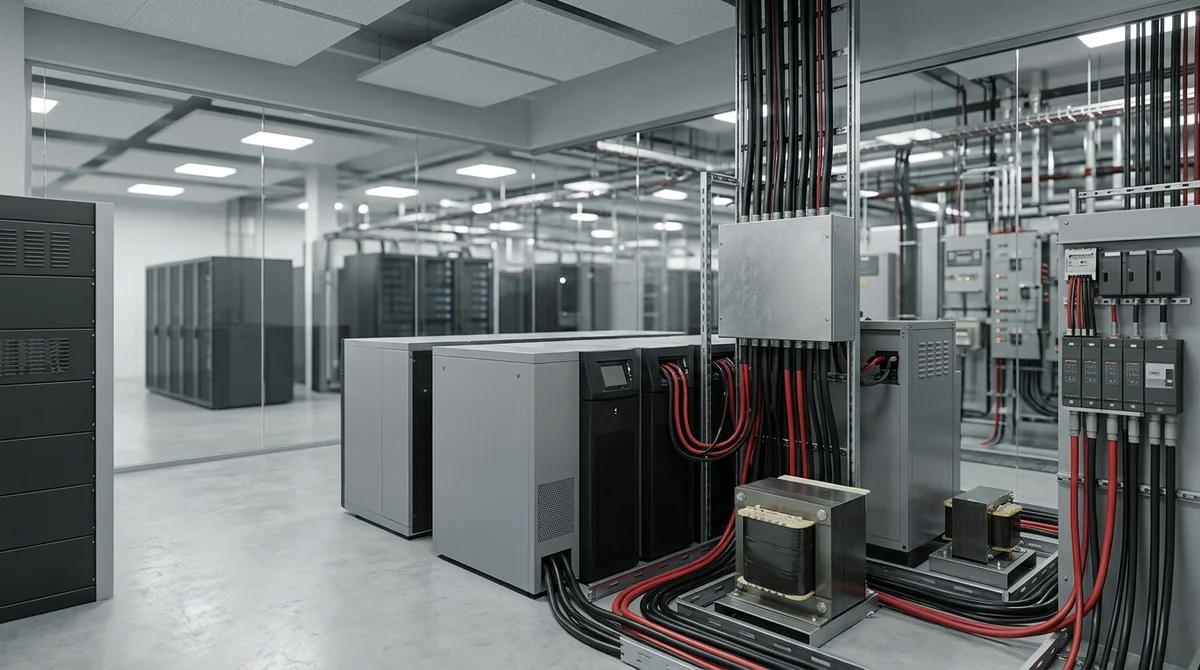
The USA has faced an unpleasant reality of the AI boom: building data centers for new models and services turned out to be faster in presentations than on the ground. According to Sightline Climate estimates, in 2026, 30% to 50% of American AI data center projects could fall behind schedule or fail to launch altogether.
Scale of Delays
The problem already looks systemic, not local. Analysts have identified 140 projects that should add at least 16 GW of computing capacity by the end of 2026. But only about 5 GW are currently in active construction phase.
For this type of facility, this is an alarming gap: a standard construction cycle takes 12 to 18 months, so projects that by spring 2026 still haven't started construction work are practically losing the chance to meet their stated deadlines. The picture becomes even tougher when looking further than one year. Another 16 GW of capacity remains at the announcement stage with no clear signs of real progress.
Meanwhile, last year already showed that the industry chronically underestimates its limitations: approximately 26% of announced capacity was postponed, and commercial deployment of another 10% was delayed. For 2027, the USA has announced over 25 GW of new projects, but less than 10 GW are being built so far. This means the queue for launch only keeps getting longer.
What's Slowing Construction
The main bottleneck is not servers or the buildings themselves, but energy infrastructure. New AI data centers need a lot of power immediately, but local power grids are often not ready for such load. Connection requires modernization of substations, new lines, approvals and time, which operators no longer have. Against this backdrop, local discontent is also growing: residents of areas where new facilities are planned see higher electricity bills and fear environmental consequences, even if companies promise jobs.
- Insufficient capacity of power grids
- Shortage of transformers, batteries and other electrical equipment
- Long construction cycle — from 12 to 18 months
- Growing demand for memory, storage and processors from the AI sector
- Dependence on a combination of grid, nuclear and renewable generation
Companies themselves are trying to ease the shortage through mixed energy sources — grid connections, local sources, nuclear and renewable generation. But even this doesn't solve the supply problem. In addition to GPUs and memory, the industry critically lacks far more mundane components: batteries, transformers and other electrical equipment, without which a data center cannot be fully commissioned. As a result, the market is constrained not only by megawatts, but also by basic industrial supply chains.
Why the USA Can't Keep Up
A separate problem is the gap between the ambitions of AI companies and the capabilities of American industry. Attempts to accelerate local production through tariffs and policies to bring factories back to the USA have not yet had the needed effect. Domestic capacity is insufficient to quickly meet demand for critical components, so the market remains dependent on imports, including from China.
For the industry, this is an unfortunate signal: the race for AI leadership is increasingly determined not only by the quality of models and investment volume, but also by who can secure electricity, equipment and contractors first. For operators themselves, this means a revision of expansion strategy. Large players will be able to reserve capacity in advance, choose states with freer network infrastructure, and make separate energy deals.
But smaller companies and independent providers risk ending up at the back of the line. If the trend continues, the market will get not just delays of a quarter or two, but a more expensive and less uniform map of AI infrastructure across the country.
What This Means
In 2026, the main constraint for AI growth in the USA becomes not only chips, but also physical infrastructure: megawatts, substations, transformers and construction timelines. This shifts competition from the world of software to the world of energy and industry. For the market, this means launch delays, pressure on cloud service costs, and growing value for companies that control access to electricity and equipment in the coming years.
Access Frontier LLMs & Multimodal AI in One Workspace
Discover NomadNet AI (nomadnet.ai) — unified access to frontier language models, research synthesis, and multimodal workflows.
The AI world, distilled — once a week
Seven stories that actually mattered, hand-picked. No noise, no reposts, no press releases.
Done! Check your inbox for a confirmation.