Nothing is developing smart glasses with AI and targets a release in the first half of 2027
Nothing is preparing smart glasses with AI and, according to insiders, could unveil them in the first half of 2027. The device will work alongside a…
AI-processed from 3DNews AI; edited by Hamidun News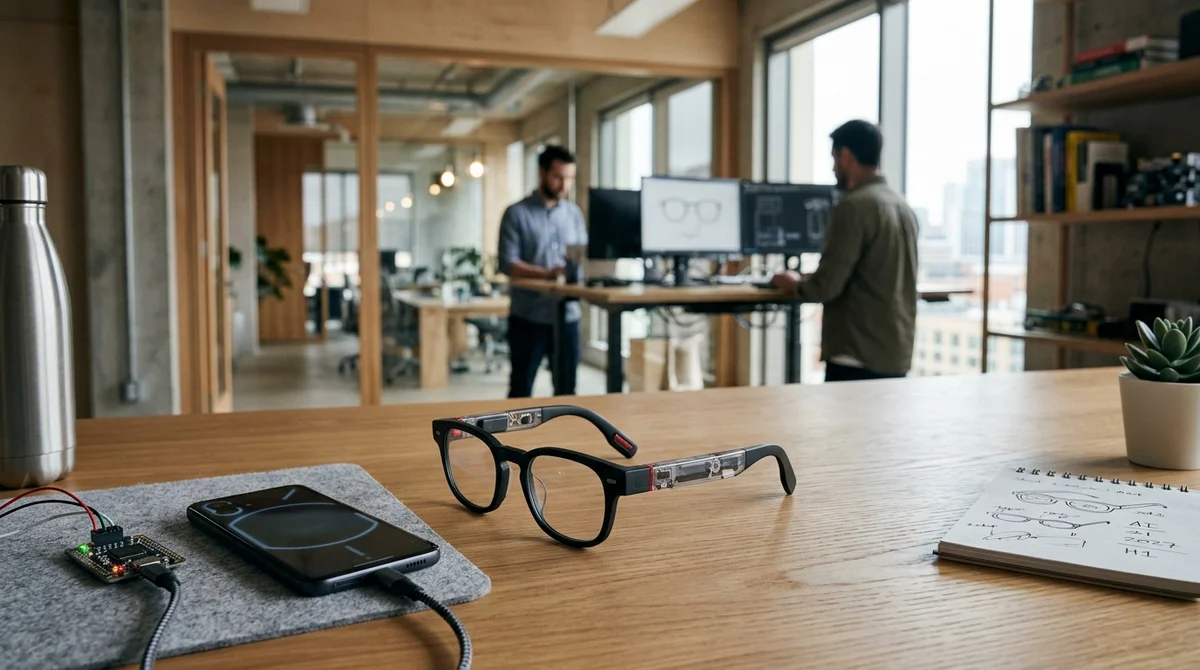
Nothing is preparing its own AI-powered smart glasses and may introduce them in the first half of 2027. For Carl Pei's company, this is not a side experiment but an attempt to capture a position in a device category that many in the industry consider the next step after smartphones.
When to Expect the Announcement
According to insiders, the device is planned to be unveiled in the first half of 2027. Before that, in 2026, Nothing intends to release new earbuds with a more pronounced focus on AI features. This order of launches makes sense: first, the company strengthens its wearable electronics, then expands the ecosystem with another personal device.
For the brand, this is a way to prepare the audience for tighter integration between the smartphone, audio devices, and future glasses. For Nothing, this represents an important shift. Carl Pei was previously quite skeptical about the idea of smart glasses, but now, as reported, supports a broader product strategy.
The idea is not to bet everything on smartphones alone but to simultaneously develop several types of devices connected by a unified interface, design, and set of AI scenarios. If the plan works, the company will be able to sell not individual gadgets but a complete user environment around its brand.
How the Glasses Will Work
This is not about full-fledged AR glasses with compact displays in front of the eyes. At this stage, Nothing, like some competitors, is betting on a simpler model: glasses with cameras, microphones, and speakers that use a connected smartphone as a computational base. The AI will rely on cloud services.
This approach allows the device to be thinner, lighter, and closer to ordinary glasses, thus lowering the barrier for the first purchase. In practice, this means the glasses will become another access point to the assistant rather than a fully autonomous computer on your face. This approach reduces requirements for battery size, cooling, and cost but maintains strong dependence on the phone and cloud.
For mass launch, this is a reasonable compromise: it is easier for a user to accept a lightweight device without a display than an expensive and bulky AR gadget. At the same time, the company has a chance to release the product faster and test demand without ultra-risky engineering bets.
- voice requests and quick commands without needing to take out the smartphone
- image capture and context capture through cameras for subsequent AI processing
- real-time audio responses from the assistant
- personal scenarios tailored to the owner's habits
- integration with Nothing OS features and other devices from the brand
Betting on the Ecosystem
Nothing already has a foundation in AI at the software layer. The company is developing tools that simplify note-taking, screenshot work, and other everyday actions on smartphones. Separately mentioned is a branded assistant for vibe-coding: with its help, even users without development experience can assemble screen widgets and share them with others.
In this scheme, smart glasses look not like a separate product but as a continuation of the line already begun, where AI is embedded in familiar user actions. There is also the question of competition. In the smart glasses segment, Meta is currently the most prominent, while future competitors mentioned are Apple, Google, and Samsung.
According to available data, Google and Samsung may show their devices as early as 2026, while Apple may do so in 2027. For Nothing, this means the window for launch exists, but waiting too long is not an option: the category is only forming, and right now brands are trying to secure recognizable roles in it. Missing by a year or two could drastically reduce chances of significant market share.
However, the company is not entering the market from the position of a giant. The brand's main popularity comes from countries with growing economies, while it is noticeably weaker in the USA. On the other hand, in 2025, the startup attracted 200 million dollars at a valuation of 1.
3 billion dollars. This provides resources for new hardware experiments, even if the first version of glasses will be more of an entry ticket into the category than a mass hit. For investors and partners, such a launch will be a test of whether Nothing can grow beyond smartphones.
What This Means
Nothing is trying not to catch up with the smartphone market but to integrate into the next wave of personal devices. If the company manages to release convenient and affordable AI glasses before the segment is completely divided among Big Tech, it will have a chance to establish itself in a new niche as brightly as it once did with smartphones and earbuds. Even the first version without an AR display could prove significant if it convinces users to wear an AI interface on their face every day.
Want to stop reading about AI and start using it?
AI News is a curated feed of AI/tech news. Hamidun Academy teaches you to use AI systematically in your work.