Microsoft and Chevron discuss a $7 billion energy complex for data centers in Texas
Microsoft is discussing a long-term deal with Chevron and investment firm Engine No. 1 that could underpin a $7 billion energy complex in West Texas. The…
AI-processed from Bloomberg Tech; edited by Hamidun News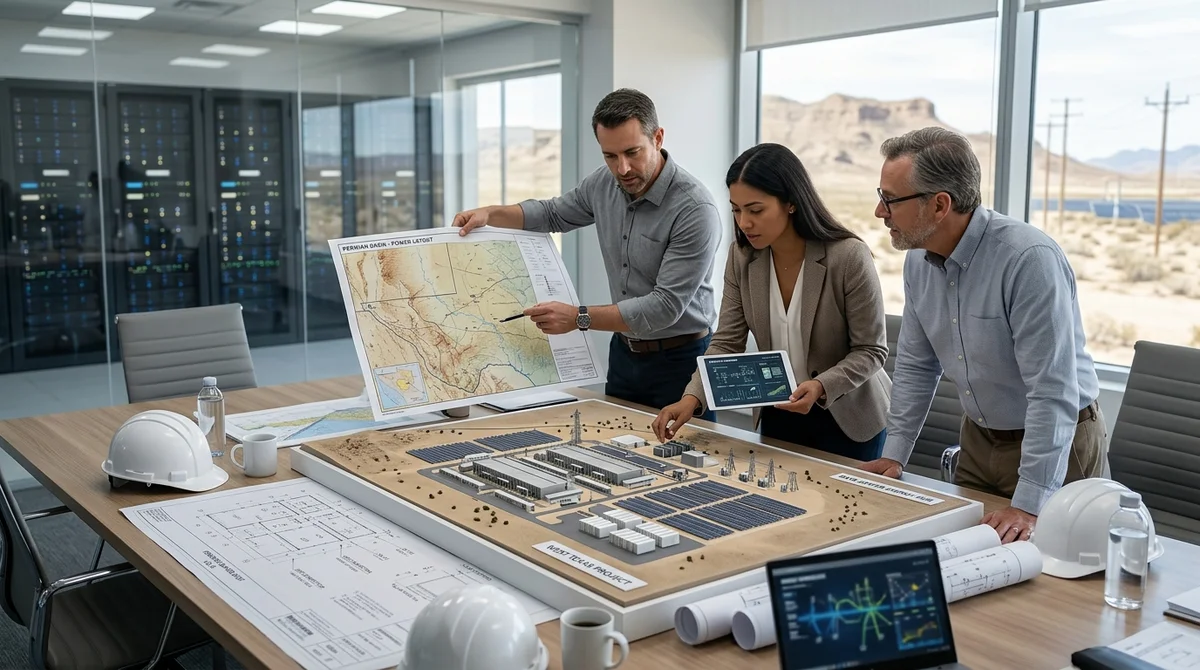
Microsoft is in exclusive negotiations with Chevron and investment fund Engine No. 1 about a long-term agreement that could become the foundation for an energy complex worth approximately $7 billion in West Texas. Electricity from this site is planned to be directed to a large data center campus, and the story itself shows how quickly AI infrastructure is turning energy into a strategic asset.
What the negotiations are about
This is not about a short-term power supply contract, but about a deal that should provide the project with clear economics for years to come. Microsoft, Chevron and Engine No. 1 are discussing a model in which a large energy complex in Texas gets an anchor customer before launch or in the early stages of development.
For Microsoft, this is a way to secure access to electricity for a new data center campus in advance, while for its partners, it is a way to reduce the risk of expensive infrastructure construction. So far, little is publicly known: the parties are in exclusive negotiations rather than at the stage of final signing. Neither the exact capacity of the facility, nor the launch timeline, nor the format of each party's participation have been disclosed.
But the scale alone — around $7 billion — shows that this is not about a local substation next to a server room, but about an energy base for long-term growth of computing capacity. West Texas looks logical for such a project because of available sites and the region's familiarity with large industrial facilities.
Why Microsoft is moving into energy
Not long ago, major IT companies primarily bought power from utilities or signed contracts for renewable generation. Now this is increasingly insufficient. AI models require more and more computing, which means more and more stable electricity available 24/7. One large data center campus can consume as much as a significant industrial cluster, and the question is no longer just about the price per kilowatt-hour, but about guaranteed access to it. If the grid is overloaded or the connection process stretches over years, the launch of new AI services and cloud capacity starts to slow down.
- Long-term contracts help reserve capacity in advance
- Proprietary or quasi-proprietary energy infrastructure reduces dependence on connection queues
- A large campus is easier to scale when energy is planned together with computing infrastructure
- For investors, an anchor customer of Microsoft's level makes the project more predictable
This is why the market is shifting from standard electricity purchases to closer alliances between tech companies, energy providers, and financial investors. In this scheme, Microsoft acts not just as a buyer, but as a participant who effectively helps launch the facility with its future demand. Chevron brings energy expertise, Engine No. 1 brings investment structure and capital, and together they can assemble a project that would otherwise launch more slowly and at higher cost.
What is known now
At this stage, what matters most is not the engineering details, but the signal to the market. Microsoft is not just expanding its server fleet, but is in advance building a supply chain for the next stage of AI workload growth. For Texas, this is further confirmation of the region's role as a hub where data centers, major energy infrastructure, and long-term capital converge.
For competitors, it is a reminder that the race for AI leadership is increasingly being decided not only by models and chips, but also by who can secure electricity faster. At the same time, the deal could still change in structure or timeline. Exclusive negotiations do not guarantee immediate closure, and project parameters will likely depend on regulatory approvals, construction costs, and the actual timeline for data center launches.
But even at such an early stage, the story looks telling: energy supply is ceasing to be a background issue for IT and is moving to the level of direct strategic decisions of the board of directors.
What it means
The next stage of the AI race will be determined not only by the quality of models, but also by who can secure energy, land and network connectivity first. If negotiations between Microsoft, Chevron and Engine No. 1 close in a deal, the market will get another example of how data centers are being designed together with energy generation, not after it.
Want to stop reading about AI and start using it?
AI News is a curated feed of AI/tech news. Hamidun Academy teaches you to use AI systematically in your work.