Kaiten and ChatGPT helped PF-FORUM cut task assignment time from 30 to 3 minutes
At PF-FORUM’s metalworking plant, Kaiten and ChatGPT were integrated to automate task creation immediately after planning meetings. A manager now writes a…
AI-processed from Habr AI; edited by Hamidun News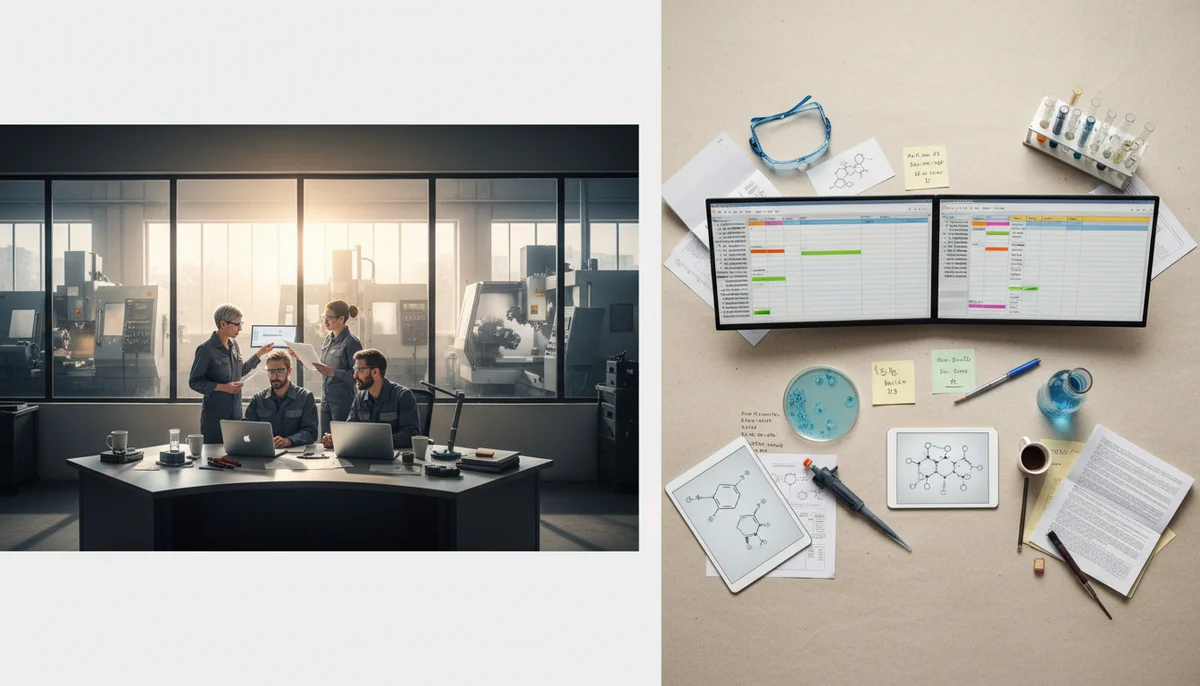
PF-FORUM, a metalworking factory with its own digital infrastructure, connected Kaiten and ChatGPT and dramatically accelerated task setting. Instead of spending half an hour on manual work after the morning standup, a manager now spends 2–3 minutes on a single AI assistant request.
Where was the bottleneck
At PF-FORUM's production facility, digital tools for controlling equipment, materials, and operations had existed for a long time, but office tasks continued to live separately from this system. Instructions were communicated verbally, stored in notebooks and personal notes, and a single manager might have 15–20 employees. When the company grew, this mode stopped working: by the next standup, some agreements were forgotten, and the meetings themselves were spent recovering context rather than making decisions.
"Tasks disappeared into the void."
The team needed a separate task tracker that would show work status without constant calls and reports. They borrowed the idea from physical kanban boards but adapted it to a digital format. When choosing a tool, they focused not on a long list of features but on three practical criteria: clear visualization, simple access, and an open API for integrations. Kaiten fit these requirements—it could be flexibly configured for production processes rather than forcing processes to fit the service template.
How they built the process
Implementation happened in stages. First, the system was used for personal tasks and communication between colleagues, then the IT department was brought in (which was initially skeptical), and then managers from other divisions. Now four directions work fully in Kaiten: development together with IT, production, construction, and qualification. They created separate spaces and boards for each to avoid mixing strategic initiatives, content, quick assignments, and production tasks with different deadline logic and workload.
They also reconfigured the workflow itself. Instead of the standard "queue — in progress — done" scheme, production created its own stages: ideas, quarterly goals, weekly tasks, today's tasks, a "Waiting" column, and completed cards. The "Waiting" column became the main focus of the daily 10-minute standup: the team discusses only blockers rather than rereading the entire task list. In IT and production, they also made a time estimate field mandatory so managers could see employees' actual workload.
The next bottleneck turned out to be the quality of task formulation. After the standup, a department head still had to manually create 15–20 cards, which again took over 30 minutes. Then the team built a custom Kaiten Router assistant using ChatGPT Actions and Kaiten's open API. For each manager, they configured a separate assistant with a personal API key, so cards are created on behalf of the specific requester without confusion about responsibility. Now a manager only needs to list tasks separated by commas in free form and confirm the action; if the wording needs clarification, the card can be quickly edited manually.
- The card immediately goes to the right space and the right employee's track
- The description automatically adds the goal, context, and execution steps
- The system sets acceptance criteria and labels by task type
- The responsible person and task setter are assigned without manual entry
What changed in work
The effect was noticeable not just in card creation speed. Daily standups were reduced to 5–10 minutes because the team no longer needs to spend half an hour searching for context and figuring out who meant what. Tasks are visible before the meeting starts, and discussion concentrates on obstacles that actually slow work down.
Now the AI assistant is used by at least two teams—production and the development department—and for them it's already a morning work ritual. At the same time, management transparency increased. Every task has a deadline, description, and responsible person, so projects stopped getting stuck due to verbal agreements.
Managers check work directly on the boards, often already with laptops during coordination meetings, and the CEO gets a picture of employees without additional reports. The next step is a unified summary board for management, connecting accounting and procurement departments, and automatic meeting transcription that turns agreements into new cards.
What this means
This case shows that implementing AI into operational work doesn't always require large internal R&D. If a company already has a clear process, a task tracker with an open API, and managers willing to change their habits, even an industrial enterprise can quickly remove routine from managers and shift task management from verbal agreements to a transparent digital system. For the market, this is another signal: the value of AI often unfolds not in a standalone chatbot but in a combination with already-working business tools.
Want to stop reading about AI and start using it?
AI News is a curated feed of AI/tech news. Hamidun Academy teaches you to use AI systematically in your work.