Baidu outage: more than 100 Apollo Go robotaxis came to a halt in the middle of roads in Wuhan
Baidu faced a rare outage for the sector: on the evening of March 31, more than 100 Apollo Go robotaxis in Wuhan came to a halt simultaneously in live…
AI-processed from TNW; edited by Hamidun News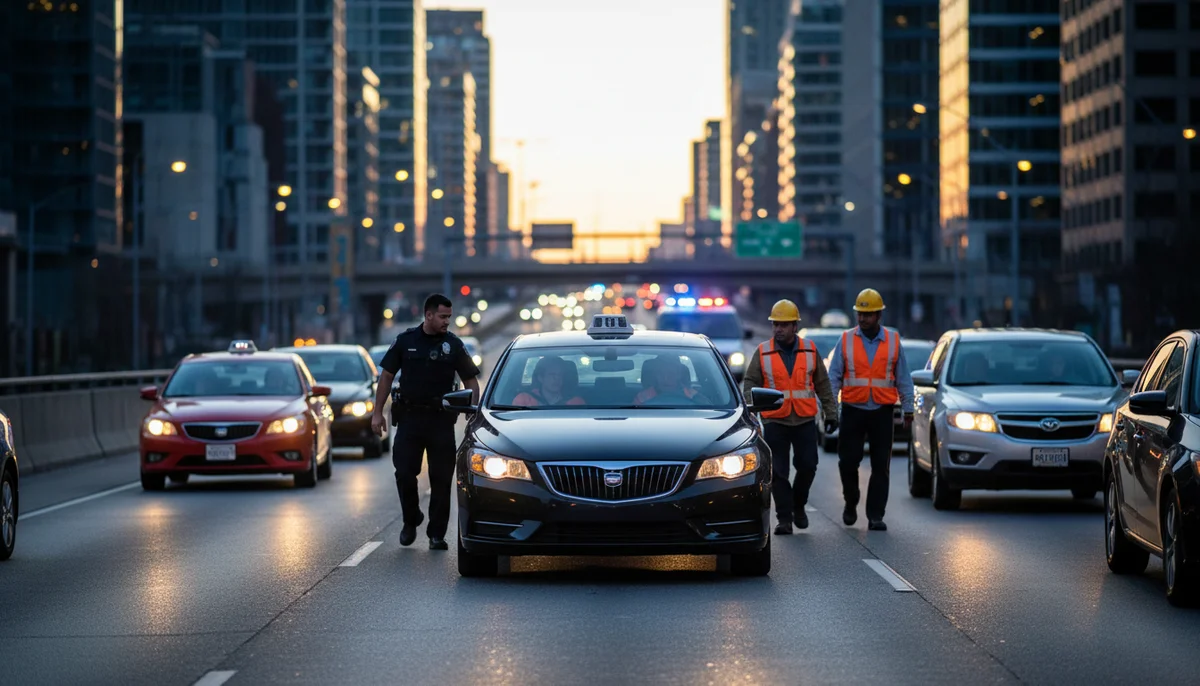
Baidu encountered a rare scenario for the industry: on the evening of March 31 in Wuhan, more than 100 autonomous Apollo Go taxis simultaneously stopped in traffic lanes. The vehicles did not move to the roadside and did not activate a noticeable emergency scenario, as a result of which passengers were stranded inside the vehicles, and traffic on the roads and elevated highways quickly became congested.
How the failure occurred
According to Wuhan police, the first alerts began coming in on March 31 at approximately 20:57 local time: Apollo Go robotaxis stopped at intersections, on city highways, and even in the middle lanes of ring roads. Video from Weibo shows cars standing with emergency lights on while traffic flows around them from both sides. In one video, the failure apparently led to a collision on the highway, although authorities stated that there were no casualties and all passengers were safely evacuated from the vehicles.
The preliminary version from police is a system failure, but the exact cause was still being investigated at the time of publication. The key detail here is not just the failure itself, but its scale: in Wuhan, Baidu operates the largest Apollo Go fleet in China, with more than 1,000 fully autonomous vehicles. When more than 100 cars simultaneously "freeze," it's no longer a localized incident of one vehicle, but a full-scale event for the entire transportation system of the city.
Baidu itself provided no public explanation to international media in the first hours.
Why this is a warning sign
Baidu has long moved beyond the pilot stage. According to the company's latest reporting, Apollo Go has been deployed in 26 cities worldwide, and the total number of orders has exceeded 20 million. In the fourth quarter of 2025 alone, the service completed 3.4 million fully autonomous rides, and during peak weeks it surpassed 300,000 rides. Against this backdrop, a mass fleet stoppage looks particularly painful: the more successful the scaling, the more expensive a single error in common infrastructure becomes.
- More than 100 vehicles stopped simultaneously
- The incident occurred on roads and elevated highways, not in a test zone
- Wuhan is the largest Apollo Go market within China
- Passengers could not simply exit the cabin due to traffic around them
- The cause of the failure remained unclear at the time of publication
This difference was well described by UCL professor of science and technology policy Jack Stillgoe. According to him, even if autonomous vehicles are on average safer than humans, such incidents demonstrate a new class of threats: not an individual error on one vehicle, but a simultaneous failure of multiple vehicles due to a common cause. These are precisely the scenarios most difficult for city services, insurance models, and regulators, because they transform a technical product problem into a crisis for the entire road network.
"Technology can still fail in entirely new ways."
Pressure on expansion
For Baidu, the timing is particularly unfortunate, as Apollo Go is actively expanding beyond China. At the end of 2025, Uber and Lyft announced partnerships with the company to launch its vehicles on the roads of Great Britain, primarily in London, after receiving regulatory approvals. In parallel, the service is expanding in the Middle East: fully autonomous rides have already launched in Abu Dhabi, and in Dubai Baidu received its first permit for fully autonomous vehicle testing and began offering rides through the Uber app.
The problem is that regulators are now assessing not only the probability of error in a single vehicle, but also the risk of correlated failure of the entire fleet. A similar case happened with Waymo in San Francisco in December 2025, when a power outage disabled traffic lights, and dozens of robotaxis stopped, overloading the remote support system. Baidu's situation looks more severe: the fleet in Wuhan operates without drivers, so during a mass failure the difference between inconvenience and actually trapping a passenger inside a vehicle becomes very noticeable.
What it means
The story in Wuhan shows the main new risk of robotaxis: even if an individual vehicle drives carefully, the overall platform can create a city-wide failure at a hundred locations simultaneously. For the market, this is a signal that scaling autonomous fleets will now be evaluated not only by the number of rides and accidents, but also by readiness to quickly transition vehicles to safe mode, clear roads, and release passengers during a centralized failure.
Want to stop reading about AI and start using it?
AI News is a curated feed of AI/tech news. Hamidun Academy teaches you to use AI systematically in your work.