LanChess showed the path from vibe coding to production: 100,000 lines of code in three months
LanChess is a rare candid case study of what happens after vibe coding. The creator of the service built a production-ready chess analytics product in less…
AI-processed from Habr AI; edited by Hamidun News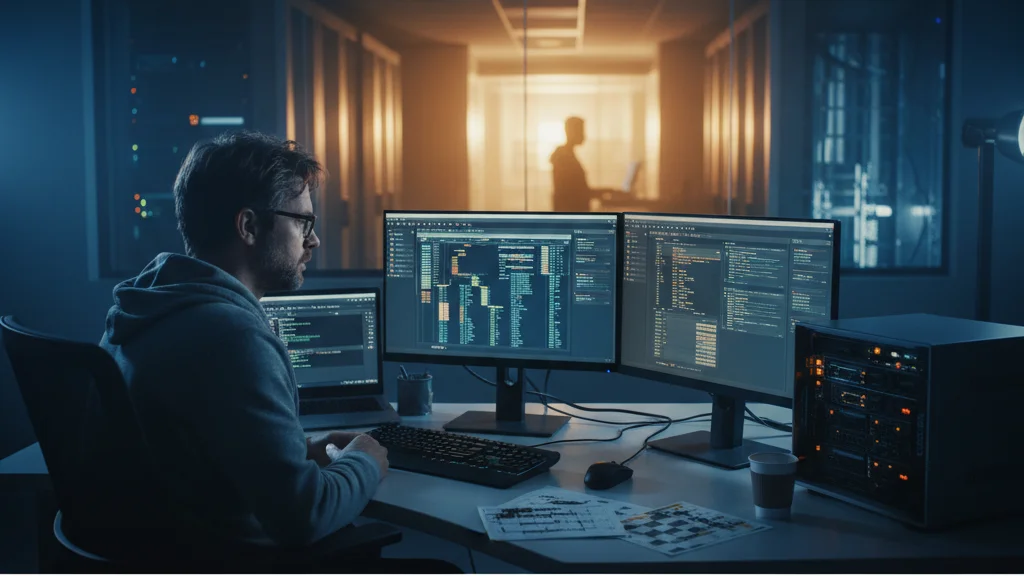
LanChess became a clear example of how a quick AI prototype turns into a real service with users, backend, and legal constraints. The project author describes the path without NDA and beautiful legends: 3300 prompts, 832 commits, nearly 100,000 lines of code, and a whole set of problems that can't be solved with a single good prompt to a model.
How LanChess Grew
The story starts not with an idea, but with a working loop. Late in the evening, the author watches in the terminal as a Celery worker on an eight-core server processes 67 blitz games with Lichess for a single user. In a minute, the service should return personalized analytics and exercises. In this scene, what matters is not the romance of late-night development, but the fact of product maturity: this is not a mockup or a one-time script, but a system that takes real data, calculates results, and promises the user concrete benefit in predictable time.
The author himself presents LanChess as a rare example of a project that can be discussed completely openly. Within less than three months, he got approximately 100,000 lines of code, not by writing them manually, but by managing the process through AI tools. This is not just a story about speed. What's more important is different: the project has measurable artifacts of work — 3300 prompts, 832 commits, a production service, and an audit of decisions that can be analyzed without regard to NDA. That's why the case is interesting not only to chess players, but also to developers trying to understand the real cost of vibe coding.
Where Limitations Began
As soon as the service goes beyond a personal prototype, the pace of development starts to depend not only on the quality of prompts. The author had to become a personal data operator, because the product works with user information. Roskomnadzor recommended removing Google authorization, and connecting VK dragged on until the developer registered as self-employed. For a demo, this would look like incidental details, but for production, it's exactly these details that determine whether a user can log in at all and whether the launch will remain legal.
"100,000 lines of code and not a single one by my own hands."
The technical side also quickly stopped being trivial. If the server in the background analyzes dozens of games and must return a result in a minute, then behind the facade of chess analytics there are already a task queue, load distribution, execution time control, and fault tolerance. The user sees several screens with conclusions and exercises, but the developer sees infrastructure, where any small thing hits trust. Vibe coding helps quickly assemble the first version, but doesn't eliminate the need to think about computational cost, bottlenecks, and operational stability.
What the Case Teaches
The main difference between vibe coding and professional AI development is shown very practically in this text. The difference is not whether the model can generate a lot of code, but who bears the consequences of that code after release. When a product has users, authorization, regulatory requirements, and background computations, the role of the engineer changes: he no longer asks the model to write a function, but manages a system of constraints, compromises, and priorities.
- AI dramatically reduces time to the first working version.
- Production requires queues, servers, monitoring, and stable authorization.
- Legal restrictions can change a product faster than any refactoring.
- Metrics like 3300 prompts and 832 commits help discuss productivity without myths.
Another important conclusion is that open cases of this kind are more useful than abstract arguments about whether "AI will replace programmers." Here you can look not at slogans, but at traces of real work: how many iterations there were, where failures began, what hit against the law, and what hit against infrastructure. LanChess in this sense works as an honest testing ground: it shows both the acceleration and the price of this acceleration, and the volume of manual decisions that still remains with the human.
What This Means
The story of LanChess soberly tests the market. AI really does allow one person to go from POC to a working service much faster than before, but the competitive advantage remains with those who know how to bring such a service to a legal, stable, and maintainable state. The most valuable conclusion here is not about 100,000 lines of code, but about the fact that real development begins right after the wow effect of the first generated version.
Want to stop reading about AI and start using it?
AI News is a curated feed of AI/tech news. Hamidun Academy teaches you to use AI systematically in your work.