YouTube Shorts rolls out AI avatars with voice cloning to all users
YouTube Shorts has opened access to personal AI avatars for all users: a realistic digital twin with a cloned voice can now appear in videos instead of a…
AI-processed from 3DNews AI; edited by Hamidun News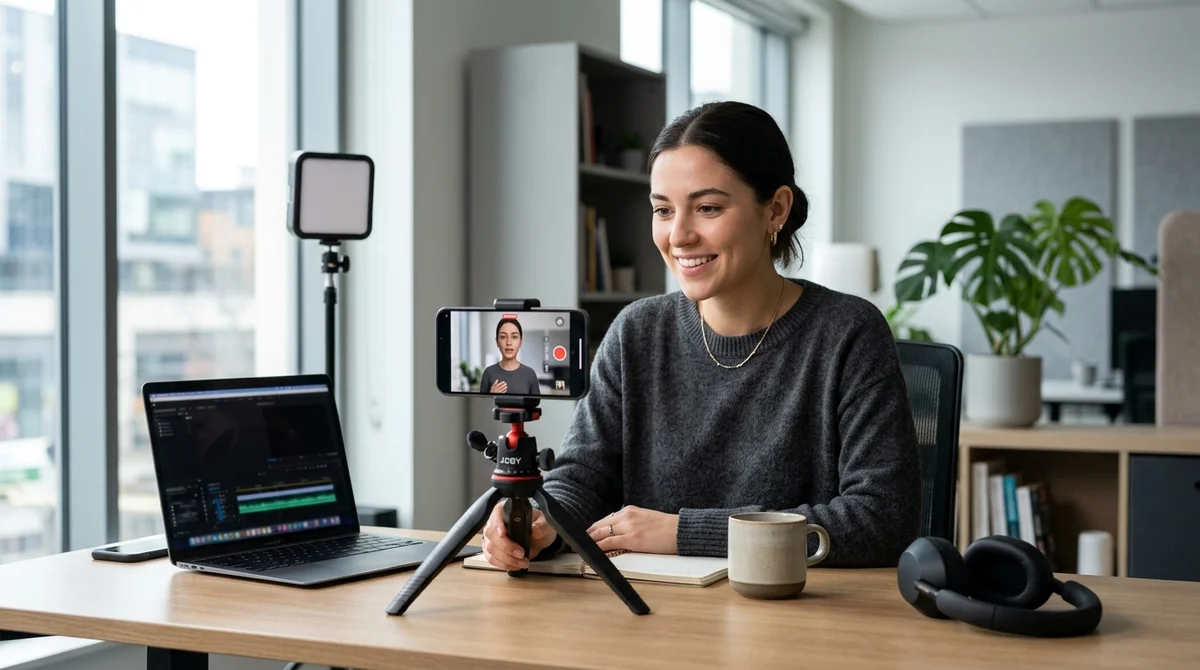
YouTube has opened mass access to personalized AI avatars for Shorts: now every creator can embed a realistic digital double with a cloned voice into any short video.
How the technology works
To create an avatar, a user needs to record a short video with themselves once. A system based on generative AI analyzes appearance, facial expressions, and voice timbre, then builds a realistic digital copy. The finished double can be repeatedly embedded in different videos — it will move and speak like the original, even if the author didn't physically participate in the shoot. Voice cloning is included in the basic package. The avatar reproduces the timbre, intonations, and rhythm of real speech based on text or audio script. This allows you to record dozens of videos in minutes without turning on a camera or booking a studio.
What changes for creators
Before this feature, short video production required camera presence, proper lighting, and at least minimal props. Now the process comes down to writing a script and a few clicks. For channels with daily content releases, this is fundamentally different production economics: one "snapshot" of an author works infinitely.
Key capabilities of the new tool:
- Realistic avatar with voice cloning without third-party applications
- Built directly into the YouTube Shorts interface
- An avatar created once — reusable in any videos
- Doesn't require additional subscription
- Lip sync with speech in real time
YouTube against competitors
YouTube isn't the first on the video avatar market: HeyGen, Synthesia, and D-ID have been offering similar solutions for corporate video for several years. However, integration directly into Shorts changes the equation — the tool becomes available to the platform's billion-strong audience without registering on third-party services. Meta and TikTok are also testing generative avatars for their short formats. But YouTube has a structural advantage — the largest community of monetizable creators. For them, it's economically more profitable to stay in one ecosystem: avatars, partner program, analytics — all in one app.
"Generative AI has allowed everyone who wants to try themselves not
only in the role of director, but also actor, and without visible emotional effort and expenses for preparing props."
Ethical questions
Realistic digital doubles raise inevitable questions about consent and verification. YouTube promises labeling of AI content — in line with already existing rules for synthetic video. An avatar created based on someone else's appearance without permission will violate the platform's terms of use. However, in practice, deepfake moderation remains an unresolved problem for the entire industry. When scaling to hundreds of millions of users, controlling abuse is orders of magnitude more difficult than in professional studios.
What it means
The barrier between idea and video content continues to lower. For small channels — this is an opportunity to dramatically increase publication frequency without buying equipment; for large ones — a tool for localizing new languages and markets. The winner in this race is the platform itself: each user becomes a potential permanent content producer.
Want to stop reading about AI and start using it?
AI News is a curated feed of AI/tech news. Hamidun Academy teaches you to use AI systematically in your work.