Kia to deploy Boston Dynamics Atlas robots at U.S. plants from 2029
Kia announced the deployment of Boston Dynamics Atlas humanoid robots at its U.S. plants — with the first vehicles entering production in 2029. At the same…
AI-processed from Bloomberg Tech; edited by Hamidun News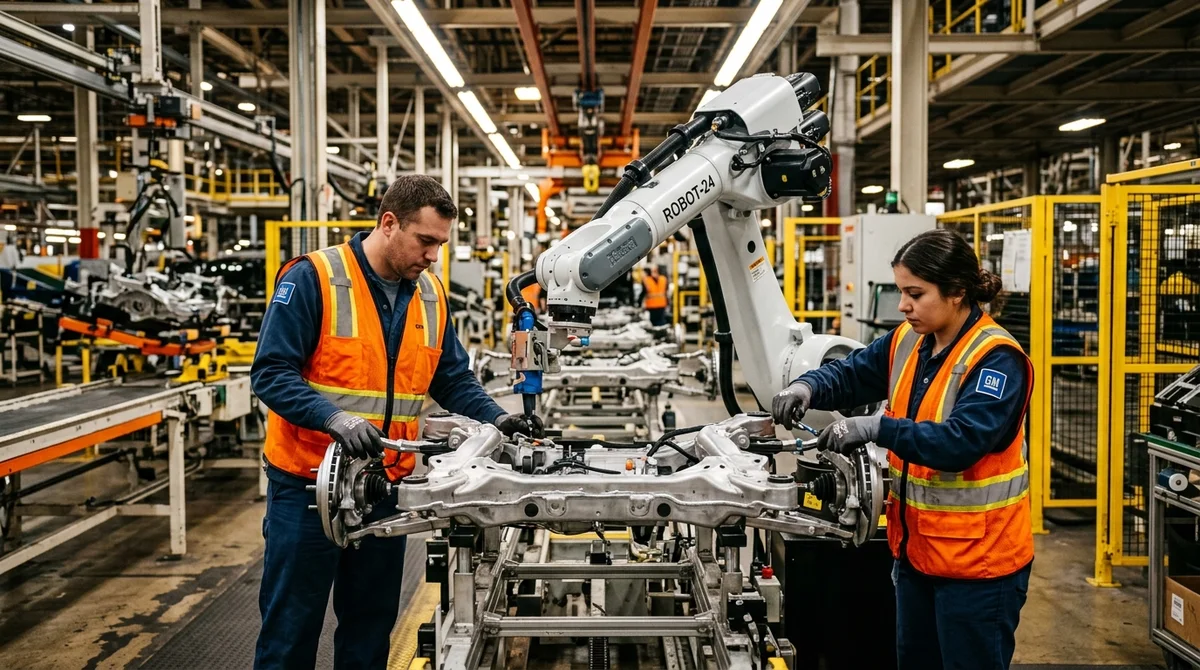
Kia will begin using Boston Dynamics Atlas humanoid robots at its American factories from 2029 onward. In parallel, the company is developing its first vehicle on a software-defined platform — both directions are part of major investments in the next generation of manufacturing and products.
Atlas Robots Come to the Assembly Line
Boston Dynamics Atlas is one of the most technically sophisticated humanoid robots in the world. After Hyundai, Kia's parent company, acquired Boston Dynamics, integrating Atlas into production processes was only a matter of time. Now the timeline is clear: 2029, factories in the USA.
The key advantage of humanoid design is that the robot operates in an environment originally designed for humans. Same corridors, same tools, same workstations. This fundamentally distinguishes Atlas from traditional industrial manipulators, which require expensive retrofitting of workshops for specific tasks. The flexibility and mobility of a humanoid robot allow it to be deployed without complete restructuring of production lines.
The choice of American factories is explained by economics: labor costs in the USA are higher than in South Korea or Mexico, so the return on investment in robotics is faster. Plus the political context — the US administration actively stimulates manufacturing localization, and a robotized factory on American soil becomes a strong argument when engaging with regulators.
The First Software-Defined Vehicle
In parallel, Kia announced the development of its first SDV — software-defined vehicle, where key functions are controlled by software rather than discrete hardware modules. This changes both the car's architecture and the manufacturer's business model:
- over-the-air updates (OTA) — new features without visiting a service center
- monetization through subscription: autopilot, media systems, comfort packages
- the manufacturer maintains contact with the customer throughout the ownership period
- reduced dependence on hundreds of suppliers of individual control units
- faster rollout of new capabilities without hardware changes
Tesla pioneered this model back in the 2010s. BYD, NIO, Xiaomi Automotive were built as SDV platforms from the start. Hyundai and Kia made this move later, but with accumulated engineering expertise and without needing to reinvent the wheel.
Market Pressure Leaves No Choice
Kia is investing in robotics and SDV not in a vacuum — the automotive market is undergoing a transformation of rare intensity. Chinese manufacturers are aggressively cutting prices and capturing new segments. Tesla maintains technological leadership in North America. European brands are losing market share. Hyundai and Kia are holding up better than many, but the horizon is shrinking.
BMW is already testing Figure AI humanoids at its factories. Mercedes is working with Apptronik. The race to reduce production costs is happening across the entire market — manufacturers lagging behind in automation risk being out of the game within one product generation.
Importantly, Kia is moving on both fronts simultaneously: reducing production costs through robotics and restructuring product architecture through SDV. This is not two parallel projects, but a coherent strategy for the next decade.
What This Means
Kia is betting that the future of automotive manufacturing lies with humanoid robots plus programmable platforms. For the industry, this is another signal: Atlas on the assembly line and SDV architecture are ceasing to be niche experiments and becoming a competitive minimum for the next decade. Those who don't keep up will be competing against those who already have.
Want to stop reading about AI and start using it?
AI News is a curated feed of AI/tech news. Hamidun Academy teaches you to use AI systematically in your work.