Why AI-generated texts annoy Habr readers and how to edit them manually
Habr AI examined why AI-generated texts often feel tiring even without factual errors. The problem is not that they are machine-generated per se, but their…
AI-processed from Habr AI; edited by Hamidun News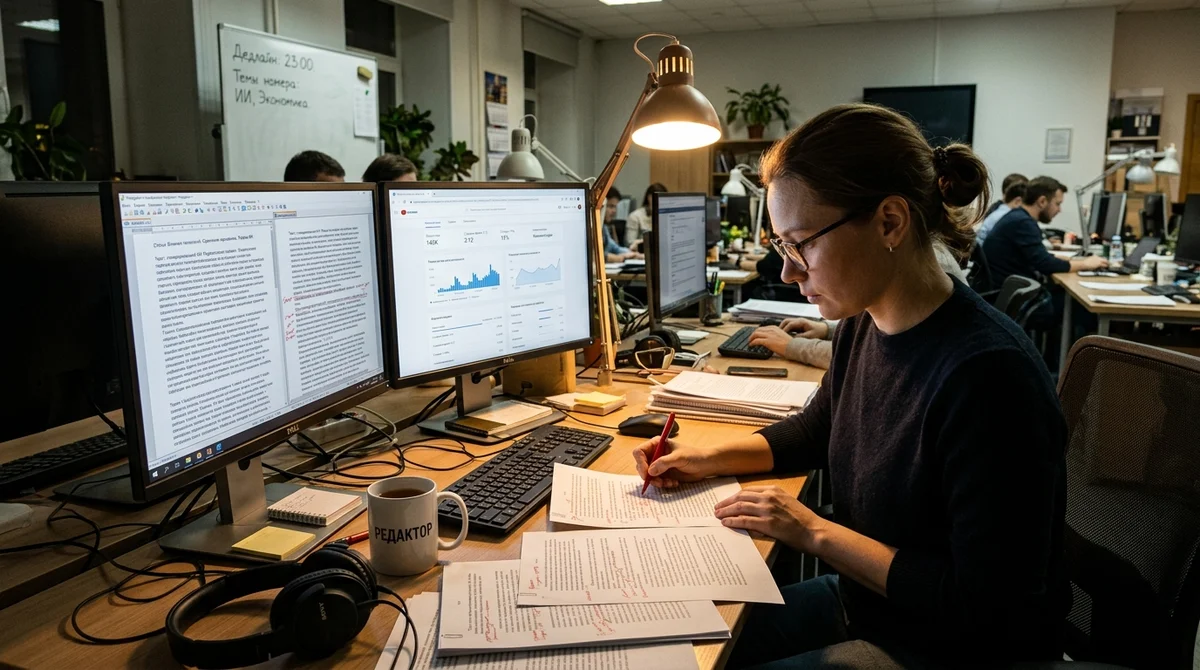
On Habr AI, a column came out about why texts generated by neural networks annoy readers even without obvious errors. The author breaks down not model bugs, but editorial markers of synthetic text that cause readers to lose attention and trust.
Why This Pisses People Off
The main thesis of the piece is simple: readers are annoyed not by the fact of AI use itself, but by the empty confidence of the text. A neural network can assemble a neat piece without obvious failures, with clean structure and logical transitions, but still fail to convey any sense of real thought. It doesn't argue directly with the reader, but constantly pretends it has already explained everything. Because of this, even a formally decent paragraph sounds suspicious.
The author puts it harshly:
A neural network too often writes text that looks like text but
doesn't feel like thought.
The problem manifests very quickly. After two or three screens of such text, it begins to wear the reader out: attention slides over the paragraphs, and only general words remain in memory. Instead of an argument, the reader gets a smooth imitation of expertise. For a technical audience this is especially painful, because they quickly sense when material is assembled from safe formulations but lacks experience, observation, or a clear authorial position. The reader sees the form but doesn't see what supports it.
Where the Text Breaks
The column lists typical markers by which an AI draft begins to annoy before the end. This isn't just about clichés. The worst offenders are long introductions, universal structure, and attempts to sound authoritative without sufficient specificity. If a paragraph can be cut in half without losing meaning, if subheadings can easily be rearranged, and if conclusions look definitive where the topic is still contested, the reader notices this almost instantly. The text looks assembled but doesn't move toward a new idea.
- Long windup instead of the point
- Skeleton of universal subheadings
- Overly even paragraph rhythm
- General words without facts or scenarios
- Categorical tone without caveats
The author separately highlights a "translated" flavor. Many texts are formally written in Russian but sound like poorly adapted English presentations. On Habr, such things are spotted especially quickly: the local audience reads a lot, tolerates padding poorly, and notices whether the author understands the subject or just assembles plausible text from familiar words. That's why the scheme of "generate, touch up lightly, and publish" works worse and worse for such a platform.
How to Fix It
The author writes that he almost never treats an AI draft as a finished article. For him it's raw material from which a readable piece still needs to be built. The first step is to remove all the empty windup and open the text with a fact, conflict, observation, or conclusion. Next comes restructuring the logic: not "what is this, how does it work, why is it important," but the order that actually moves the thought. Subheadings are almost always rewritten too, because they should not divide the canvas but move the text forward.
Then comes more rigorous editing. The text is cleaned of crutch words like "important aspect" and "opens new opportunities," specificity is returned to each general statement, the sterile rhythm of identical paragraphs is broken, and artificial categorical tone is softened. If the model promises time savings, you need to show where exactly; if a service allegedly handles complex tasks better, you need context and comparison. Cosmetic "humanization" doesn't save it here: weak synthetic text is usually simpler to rewrite from scratch than to polish superficially.
What This Means
The column captures well the boundary of generative models' usefulness: they speed up the draft stage, help you get started and sketch out structure, but don't replace an editor. For media, corporate blogs, and content teams this is a direct signal: publication quality is determined not by whether AI can be detected, but by whether the text has density of thought, specificity, normal tone, and respect for the reader. Otherwise, even grammatically clean material quickly turns into annoying noise that looks convincing but leaves nothing after reading.
Want to stop reading about AI and start using it?
AI News is a curated feed of AI/tech news. Hamidun Academy teaches you to use AI systematically in your work.