Amazon added an adult Sassy mode to Alexa+: the assistant can swear and tease
Amazon expanded Alexa+'s range of personalities and added an adult Sassy mode. The assistant can now speak more bluntly, make barbed jokes and use profanity…
AI-processed from TechCrunch; edited by Hamidun News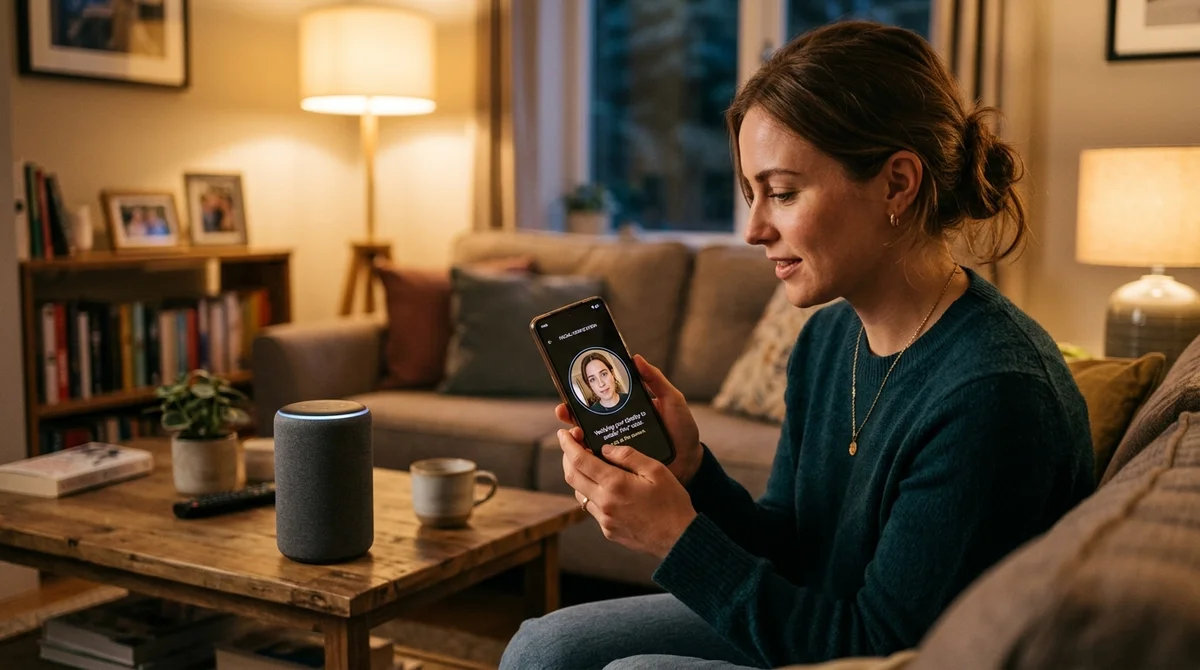
Amazon expanded the range of personalities for Alexa+ and added an adult Sassy mode. The new style allows the assistant to respond with quips and strong language, but Amazon immediately set strict boundaries: no sexual content, dangerous advice, or other topics the company deems harmful; the feature is designed for users who find the standard neutral voice of the assistant boring.
New Alexa Sassy Style
Sassy is not a separate product or a hidden mode for 18+ scenarios, but rather another way Alexa+ communicates with the user. In March, Amazon announced that to the existing Brief, Chill, and Sweet styles, an adult version would be added, designed for those who need not just a neutral assistant, but a sharper and more ironic tone. According to the company's vision, Alexa should not only answer a question but do so with jabs, sarcasm, and a rougher manner of speech.
The new mode is enabled through the Alexa mobile app. Before activation, the user goes through an additional security check, and on iPhone this can use Face ID. Another limitation: the Sassy style does not work if Amazon Kids is enabled on the account.
That is, Amazon immediately separates adult personalization from kids mode and does not allow mixing these scenarios within a single setting. A warning in the interface specifically states that the style uses harsher language and is designed only for adults.
Where the Lines Are Drawn
The main intrigue around Sassy was simple: if Amazon allows the assistant to swear and behave provocatively, how far will it go? The answer turned out to be quite conservative. The company allows harsher language and mature delivery, but does not open the door to 18+ content or dangerous requests. In the interface, the style is marked as an option with adult themes, but this is about tone, not about expanding the list of permissible scenarios. Banned for Sassy are:
- explicit sexual content;
- hate speech and insults based on protected characteristics;
- advice on illegal actions;
- personal attacks and harmful responses;
- tips related to self-harm or risk to others.
In other words, Amazon is selling not an "adult Alexa" in the spirit of provocative AI personas, but a more audacious wrapper over already familiar safety rules. The assistant can joke with the user, add a strong word, and respond less politely, but the architecture of permissible topics remains the same. This is an important distinction against a market where some companies are trying to make adult AI companions as a separate genre. Sassy looks more like a change of mask than a change of platform policy.
Why Amazon Is Doing This
The launch of Sassy shows that the battle between AI assistants is increasingly shifting from the realm of basic capabilities to the realm of character, tone, and user habit. If previously companies competed on who best understands a request and answers it faster, now they are also tuning the emotional packaging. The user chooses not just an assistant, but a communication style: brief, friendly, soft, or biting.
Essentially, the voice assistant is starting to behave like a customizable character rather than a single faceless interface. For Amazon, it's also a way to make Alexa+ more flexible in the era of generative AI. The company has already launched Brief, Chill, and Sweet styles, and Sassy logically expands this lineup toward "adult" communication.
At the same time, Amazon is trying not to repeat the problems that arose with other AI platforms, when too involved, flattering, or emotionally dependent communication style caused criticism. Hence the dual approach: more personalization, but on top of strict safeguards.
What This Means
AI assistants are becoming not only smarter but also more customizable in tone, much like interfaces or avatars. For the market, this is a signal that the next stage of competition will go not only on the quality of models, but also on how precisely the product hits the specific communication manner of a particular user — without abandoning basic moderation and safety restrictions. This is especially important for home assistants, with which people interact many times a day.
Want to stop reading about AI and start using it?
AI News is a curated feed of AI/tech news. Hamidun Academy teaches you to use AI systematically in your work.