Amazon added conversational food ordering via Uber Eats and Grubhub to Alexa+
Amazon has added food ordering via Uber Eats and Grubhub to Alexa+ in the form of a regular conversation. Users can choose a cuisine or restaurant, change…
AI-processed from TechCrunch; edited by Hamidun News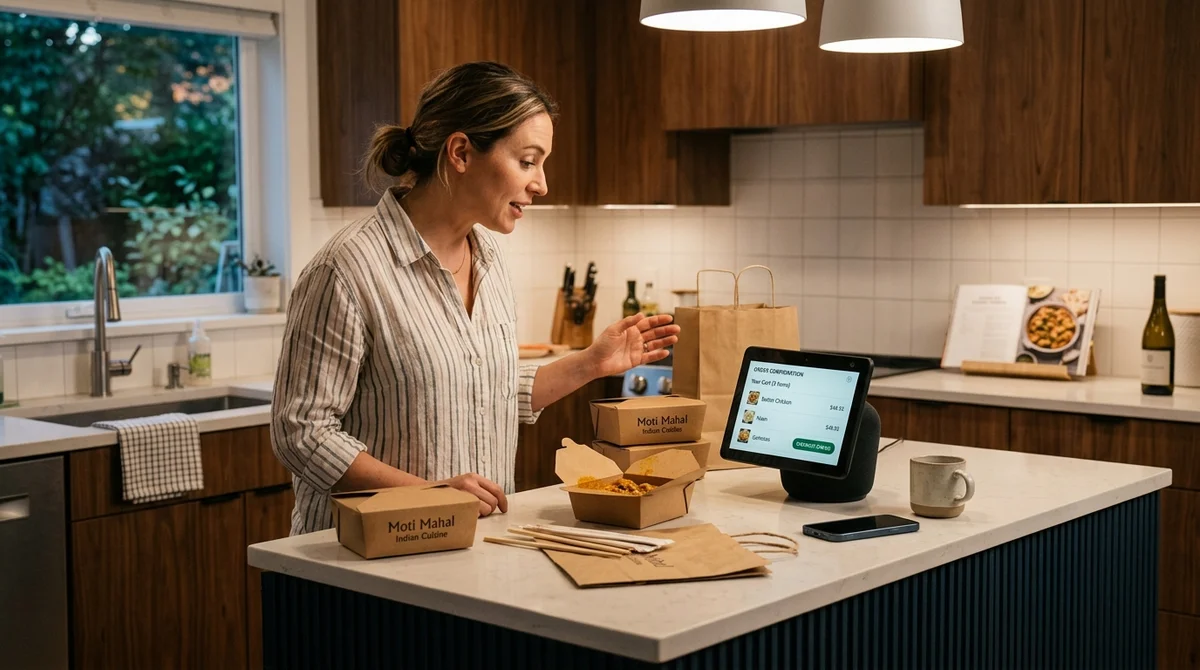
Amazon expanded Alexa+ capabilities: users can now order food from Uber Eats and Grubhub through the assistant using natural conversation, without rigid command scripts. Users select cuisines, clarify order details, and modify orders throughout the dialogue, while the system immediately displays the cart summary.
How the order works
The new feature transforms voice ordering into one continuous scenario. Instead of a series of short commands, a user can say they want, for example, Italian food for delivery, and Alexa+ will suggest matching restaurants and guide them through the menu. During the conversation, users can ask questions about dishes, request desserts, add items, change ingredients, and adjust quantities.
Amazon compares this experience not to a typical voice assistant, but rather to a conversation with a waiter or ordering at a drive-through. To enable the feature, users need to link their Uber Eats or Grubhub account in the Alexa app. After that, past orders are imported into the system, so users can quickly repeat their usual selection or start fresh.
On screen, users see exactly what's in the cart: dish names, quantities, price per item, and total amount. After checkout, Alexa+ can display delivery status and answer questions about where the food currently is.
What's different
Amazon is betting not just on another integration with delivery services, but on a new type of interface for Alexa+. Traditional voice assistants usually work in question-answer mode: the user gives one command, the system executes one step, and waits for the next instruction. Here, Amazon is promoting a different logic—a long conversation with changing intent throughout. This is important for tasks where people rarely know their full order in advance and often make decisions during the process.
- Select a cuisine or specific restaurant
- Build an order for one person or a group
- Change dishes, ingredients, and quantities during the conversation
- Request desserts, popular items, or options for children
- Check the cart total and delivery status after payment
Customers can simply describe what they want, ask questions, and build their order in real time.
That's roughly how Amazon's partners describe the idea.
For the company, this is the first practical case of what's called an adaptive interaction model: Alexa+ should adapt its dialogue style to the task. Food ordering requires one scenario, weather forecasting requires another, smart home management requires a third. In the long term, Amazon wants to transfer this approach to other categories, including grocery shopping and trip planning.
Where are the risks
The launch doesn't look mass-market in any sense yet. The new scenario is beginning to appear for Alexa+ customers on Echo Show 8 and larger devices—that is, Amazon is first testing the format where there's a screen and users can visually confirm the cart contents. This makes sense: when ordering food by voice alone often isn't enough, because people need to see the menu, substitutions, additions, and final price before clicking purchase.
There's also a more general risk: AI in food delivery has already earned a reputation as a technology that looks impressive in demos but easily makes mistakes in real orders. The market remembers cases where automation at fast-food points added extra items or got confused with details. So the key question for Amazon isn't whether Alexa+ can support a pleasant dialogue, but how accurately it will build the cart, especially in long and complex orders for a family or group.
What this means
Amazon is using food delivery as a testing ground for a more ambitious idea: transforming Alexa+ from an assistant with a set of commands into a service that understands task context and guides users to results. If the experience proves accurate and convenient, such conversational scenarios will quickly expand beyond restaurants—into shopping, bookings, and other everyday actions where today you still have to jump between apps.
Want to stop reading about AI and start using it?
AI News is a curated feed of AI/tech news. Hamidun Academy teaches you to use AI systematically in your work.