Elon Musk’s lawsuit against OpenAI stumbled in court after admission about xAI training
The first week of Musk’s trial against OpenAI did not go as the plaintiff had planned. During cross-examination, documents surfaced showing that he himself…
AI-processed from TNW; edited by Hamidun News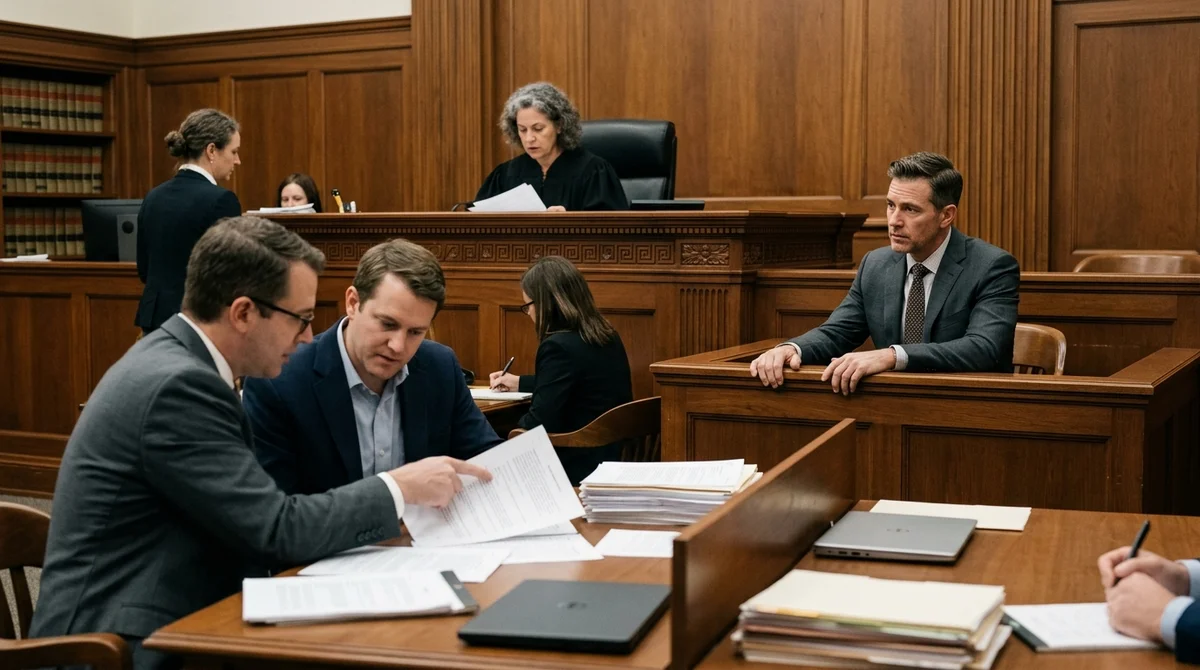
The first week of court proceedings in Elon Musk's lawsuit against OpenAI did not go according to his script. Instead of a simple story about a "betrayed mission," the hearings in Oakland quickly turned into a review of facts uncomfortable for Musk himself — from old internal documents to the admission that xAI used OpenAI models to train Grok.
What Surfaced in Court
The case began on April 28, 2026, in federal court in Oakland. Formally, the case has a jury of nine people, but their verdict is advisory in nature: the final decision on the parties' liability and possible measures will be made by Judge Yvonne Gonzalez Rogers. This is important because the case looks not like a classic battle for jury sympathy, but like a public examination of OpenAI's entire history, its correspondence, and the motivations of the participants.
Over three days of testimony, Musk managed to lay out the familiar version of events: he helped launch OpenAI as a non-profit organization for AI safety, and then Sam Altman and Greg Brockman allegedly turned it into a commercial machine. But on cross-examination, OpenAI's attorney William Savitt presented documents from 2017–2018 showing that Musk himself also promoted the transition to a commercial structure — under his own control, no less. This weakened the main thesis of the lawsuit that Musk originally and consistently stood only for a non-profit model.
Awkward Admissions
The most striking moment of the week was Musk's admission that xAI at least partially trained Grok using the outputs of OpenAI's models. For the court, this is not a separate accusation, but a strong blow to the plaintiff's public position. Musk has spent months criticizing OpenAI for abandoning its original mission and concentrating power, and now it turns out that his own company uses the same ecosystem as a source for training.
The irony here is not just reputational. Distillation — extracting useful patterns from the responses of another model — has become one of the most painful issues for major AI labs. OpenAI, Anthropic, and others publicly fight against such an approach, especially when it comes to mass copying of model behavior through APIs.
Against this backdrop, Musk's answer "partially" looked especially awkward: in essence, he confirmed that xAI does what the market is now actively defending against.
- The court received documents where Musk himself discussed OpenAI's commercial pivot
- xAI admitted to partial training on the outputs of OpenAI's models
- OpenAI is trying to prove that Musk filed some claims too late
- The judge removed fraud accusations from the case before the trial began
- Both sides were prohibited from turning the hearings into a dispute about AI's threat to humanity
"This is not a trial about the risks of artificial intelligence to
humanity," the judge essentially reminded the parties.
The judge repeatedly brought the participants back to the narrow subject of the dispute: whether OpenAI violated its contractual and fiduciary obligations when it restructured the company. Attempts by Musk and his team to expand the conversation to AI safety philosophy have so far not worked. Moreover, the court itself noted an obvious contradiction: if Musk truly believes such systems are an existential threat, why does his own company operate in the same sector and by the same growth rules.
What's at Stake
Musk is demanding not only monetary compensation, which various reports estimate at more than $130 billion, but also structural changes: to return OpenAI to a non-profit format and remove Altman and Brockman from leadership roles. OpenAI responds that creating a commercial structure in 2019 was necessary for purchasing computing power and hiring researchers, without which the company could not compete with Google and other players. OpenAI is now organized as a public benefit corporation, where a non-profit structure and investors — including Microsoft — own stakes.
Ahead of the trial are several more weeks and more significant witnesses. Testimony is expected from Sam Altman, Greg Brockman, Microsoft CEO Satya Nadella, and early OpenAI engineers. It is during their examination that it will become clearer whether OpenAI had a real contractual ban on commercialization or whether it was more a conflict of expectations between co-founders. For now, the first week looks like this: instead of a march of accusations against OpenAI, the court began uncovering the internal contradictions of Musk himself.
What This Means
For the AI market, this is no longer just a dispute between former partners. The Oakland court is testing whether you can legally keep an AI lab within its original public mission when billions of investments, computing power, and a race for leadership are at stake. And the first week showed: the moral argument works worse here if your own company is playing by the same rules.
Want to stop reading about AI and start using it?
AI News is a curated feed of AI/tech news. Hamidun Academy teaches you to use AI systematically in your work.