US poll finds: people are more comfortable living next to an Amazon warehouse than a data center
Local resistance to data centers is intensifying in the US in 2026. One poll found only moderate support for them, while another showed an outright majority…
AI-processed from TechCrunch; edited by Hamidun News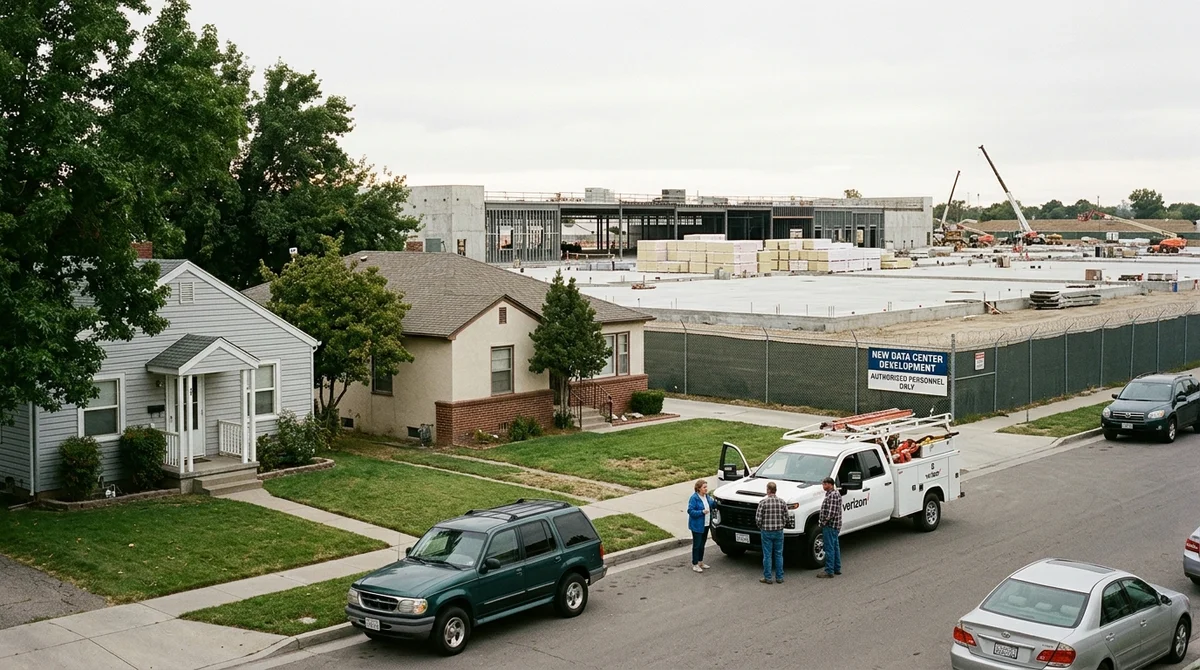
Data centers, which power the AI boom, are increasingly facing resistance not only from environmentalists but from ordinary residents. Two recent surveys in the US show that Americans are more willing to tolerate an e-commerce warehouse like Amazon's near their home than a new data processing center.
Numbers Without Euphoria
TechCrunch has gathered results from two studies, and both show there's no public consensus around data centers. A Harvard/MIT survey conducted in November 2025 among 1,000 respondents through YouGov gave data centers 40% support and 32% opposition when people were asked about construction of various industrial facilities in their neighborhoods. This isn't a failure, but it's also not the level of approval the industry has come to expect, having grown accustomed to talking about the 'inevitable' AI infrastructure.
At the same time, data centers received less sympathy than automobile factories and e-commerce warehouses, and only notably better than petrochemical facilities. This is where the Amazon headline comes from: for many residents, a hypothetical online order warehouse seems more understandable and less worrying as a neighbor than a massive facility that consumes electricity, water, and barely interacts with the local community.
What Exactly Frightens
Often it's not abstract distrust of technology, but very practical fears. In the Harvard/MIT survey, about two-thirds of participants said that a new data center in their region would likely push electricity prices up. A supplementary analysis of this research adds an important detail: concerns about quality of life explained attitudes toward projects roughly twice as strongly as electricity bills alone. In other words, people worry not only about rates, but about what happens to the neighborhood around such a facility.
- rising electricity bills
- water consumption for cooling
- noise from equipment and engineering systems
- deterioration of quality of life near the facility
- doubts that the project will provide meaningful returns to the local economy
In the second survey—Quinnipiac University, conducted March 19–23, 2026 among 1,397 American adults—resistance proved even harsher: 65% opposed construction of an AI data center in their community, while only 24% supported the idea. Among reasons for rejection, 72% cited electricity costs, 64% water consumption, 41% noise. It seems the very association with AI makes the topic even more toxic: this is a conclusion from comparing the wording of the two surveys, not a direct claim by their authors.
Where the Benefit Argument Breaks Down
The industry's main counterargument is familiar: data centers create jobs, expand the tax base, and attract technology businesses. But fresh data shows this narrative doesn't work unconditionally. Yes, in the Harvard/MIT survey, promises of jobs and economic growth did help the data center case. However, this is no longer enough to outweigh local fears—especially if residents believe they'll feel the costs immediately while benefits remain on paper.
"I was surprised that jobs and economic growth turned out to be nearly as important as concerns about prices," noted researcher
Stephen Ansolabehere.
For politicians, this is bad news. Data centers have long been considered quiet technical infrastructure, disputed only by energy specialists and developers. Now it's a local electoral issue: who will pay for the new capacity, how will the neighborhood change, how much water will be used for cooling, and why should a multibillion-dollar project receive subsidies if it won't create that many permanent jobs. The harder AI pushes demand for computing power, the louder these questions become.
What This Means
The AI boom is running up against not just chips and energy, but public consensus. If companies like Amazon, Microsoft, Google, and other market players want to build new capacity faster, they'll have to prove to local communities not abstract benefits for the industry, but concrete guarantees on rates, water, noise, and tax returns.
Want to stop reading about AI and start using it?
AI News is a curated feed of AI/tech news. Hamidun Academy teaches you to use AI systematically in your work.