Amazon and Microsoft are turning Aragon into Europe’s AI hub, but villages debate the cost of the boom
Aragon in Spain is quickly becoming one of Europe’s main AI hubs: Amazon, Microsoft, and other companies have already announced more than €80 billion in data…
AI-processed from Bloomberg Tech; edited by Hamidun News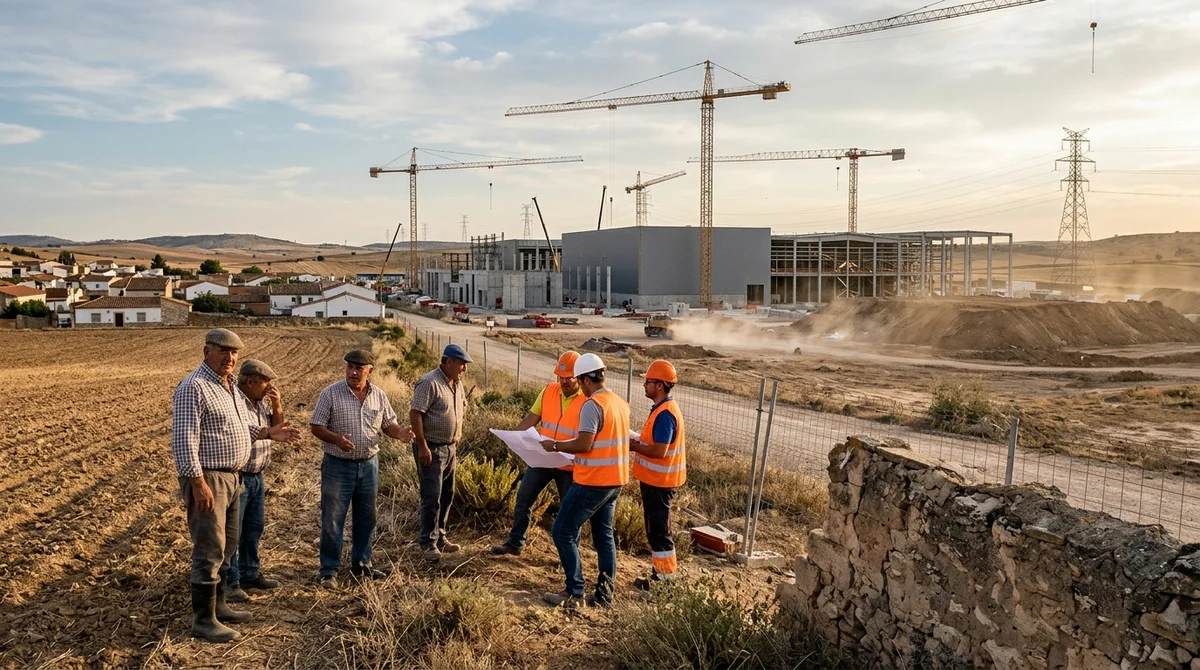
Aragon in northern Spain is becoming one of Europe's major infrastructure platforms for AI. Amazon Web Services, Microsoft and other operators have already announced projects worth over €80 billion in the region, but along with the investment boom has come conflict with local residents.
Why Aragon Was Chosen
Big tech found nearly ideal conditions in the region. Outside Zaragoza, there is plenty of free land here, electricity in Spain is on average 20–30% cheaper than the European average, and almost 90% of generation in Aragon in 2025 came from renewable sources. Plus — access to fiber-optic infrastructure and authorities willing to accelerate approvals for the status of a major European AI hub. For data center operators, this is a rare combination of price, energy and launch speed.
The key tool became the PIGA regime — a special status for projects of general interest in Aragon. It allows for faster approvals, streamlined administrative procedures and provides some tax benefits. This is the mechanism that Amazon and Microsoft cited as an example when discussing the future of the European Cloud and AI Development Act: in their view, this is how the EU could build computing infrastructure faster than years at a time. For Brussels and national authorities, this is already not a local experiment, but a potential template for all of Europe.
How Villages Are Changing
On paper, it's about jobs and a new industrial cycle. Following Amazon's announcement in March, the company increased its investment plan for Spain to €33.7 billion, and just its new stage in Aragon includes dozens of data center buildings, substations and supporting infrastructure. Microsoft is separately developing three campuses in La Muela, Villamayor de Gállego and Zaragoza. For the authorities, this is a chance to turn the region into "Europe's Virginia" — by analogy with the largest data center cluster in the USA.
At the local level, the picture is different. In villages with dozens or thousands of residents, disputes began over land prices, power lines, noise, access to water and who actually gets the main benefit. In one village near the AWS site, residents recalled letters offering to quickly sell plots, and farmers compared who agreed earlier and at what price. The spread of payments ranged from €2 to €23 per square meter, and negotiations between neighbors often became a source of mutual grievances.
"They say they want to be good neighbors, but they end up dividing the village."
Where the Dispute Is More Acute
The main point of tension is not the idea of data centers itself, but the way they are being implemented. Municipalities complain that the accelerated regime limits their influence on development, and some local taxes do not flow into the budget as a result. Environmental groups dispute with companies over real water and energy consumption, especially against the backdrop of heat and periodic droughts. For small towns, this is a question of direct control over their territory.
- accelerated project approvals and reduced bureaucracy
- ability to change land designation for campus needs
- tax breaks for investors
- disputes over water, power grids and public infrastructure
- lawsuits from residents and individual municipalities
A separate argument of critics — resource burden. Earlier, Amazon asked to increase the allowed water intake for three sites in Aragon by 48%, explaining it by hotter seasons. The company responds that it optimizes cooling, uses outside air in cold months and abandoned part of its plans for forced land seizures if land rights could be obtained through private agreements. But even after such concessions, doubts did not disappear: residents and local authorities fear that the benefits from the AI boom will turn out to be external, and the pressure on landscape, networks and agriculture — local.
What It Means
The story of Aragon shows that the race for AI infrastructure has already moved beyond data centers and cloud reports. Now it's a dispute about how to distribute land, water, energy and tax revenues when tens of billions of euros come to a region. If Europe is really going to copy this model, it will have to scale not only construction, but also the rules that protect the interests of local communities. Otherwise, technological growth will be perceived as external pressure, not as development.
Want to stop reading about AI and start using it?
AI News is a curated feed of AI/tech news. Hamidun Academy teaches you to use AI systematically in your work.