iQiyi launches its biggest overhaul in 16 years and bets on AI content
iQiyi is starting the biggest overhaul in its 16-year history and making AI a central part of its business. The company has launched the Nadou Pro platform…
AI-processed from Bloomberg Tech; edited by Hamidun News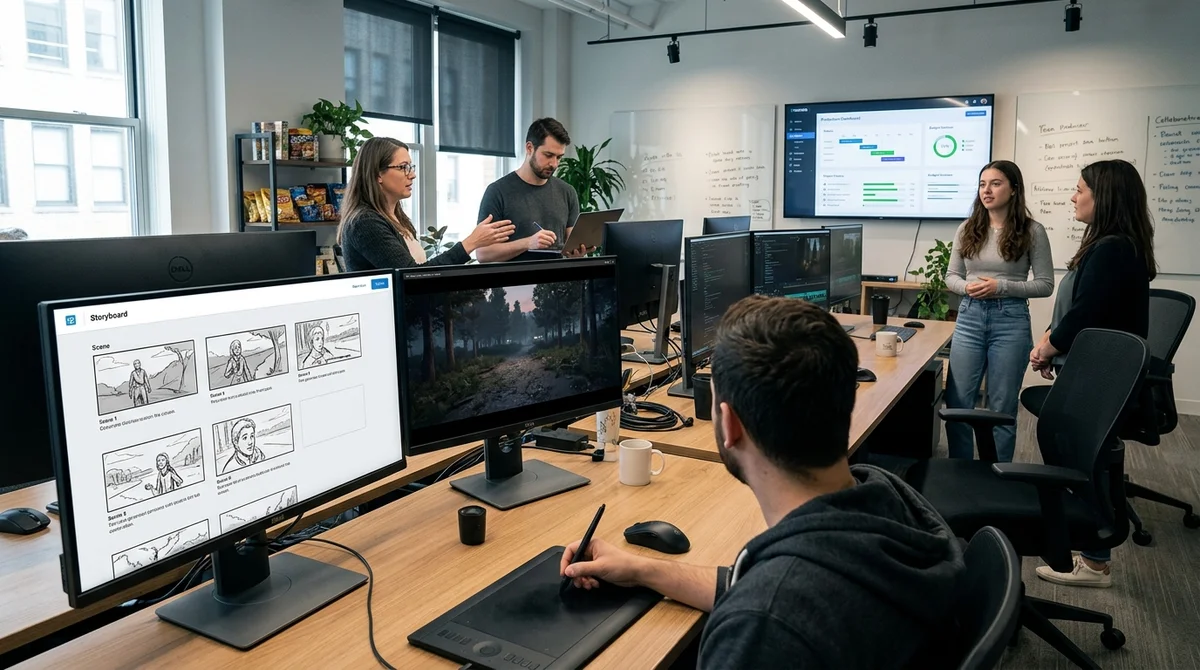
Chinese streaming service iQiyi is launching its largest restructuring in 16 years and betting on AI-generated content. The company expects that within the next five years, a significant portion of its movies and series will be created by AI almost from scratch.
The platform's new direction
The shift was announced on April 20–21, 2026 at the iQiyi World Conference in Beijing. Founder and CEO Guo Yu described the future model not as a typical online cinema, but as a decentralized platform similar to a social network: creators get more control over their IP, audience relationships, and commercial revenue, while iQiyi itself opens its franchise library, talent network, and digital assets to them.
Previously, technologies first changed distribution, then content.
Now AI directly changes content itself. For iQiyi, this is not a cosmetic update, but a change in business logic.
The company is not completely abandoning expensive premium projects, but promises to reduce the share of its own internal productions and redirect resources toward AI infrastructure. The logic is straightforward: if generative models make long-form production cheaper and faster, streaming can release more content, test ideas quicker, and become less dependent on a few studios and more reliant on a broad network of independent creators.
What iQiyi is launching
The flagship product of this restructuring is Nadou Pro, a professional AI platform for film and television production. According to the company, it runs nearly 70 AI agents that cover the entire cycle: from screenwriting and directing to visual design and editing. The key emphasis is not on short clips but on long-form stories, where character consistency, scenes, and overall visual style typically break down.
- Screenplay and storyboard generation
- Character, scene, and prop design
- Assistance with directing, editing, and visual effects
- Access to IP library, actors, and shared digital assets
- Built-in distribution, monetization, and a 20% subsidy for AI content through the end of 2026
Nadou Pro will have two operating modes: a "one-person company" where the creator leads the project with a set of agents, and a team mode for collaborative work between humans and AI in a single pipeline. iQiyi is also preparing an international version of the service: an English launch is expected in mid-May 2026, Portuguese should be next, and then the company plans a multilingual version. In parallel, iQiyi expects to showcase a commercially viable AI film by summer or fall 2026.
Where the controversy begins
The most controversial part of the strategy is not editing or storyboards, but digital actor likenesses. During the presentation, top managers explained that over 100 artists are already present in the Nadou Pro database, through which AI creators can contact image rights holders. After this, a wave of criticism swept through Chinese social media: some actors publicly stated they had not given consent, and viewers saw in the initiative an attempt to reduce demand for live performers.
iQiyi itself insists that this is not yet about a free license for actors' likenesses and that each project and even individual frames must be agreed upon with the artist. But the concern is understandable: once facial data, expressions, and movements enter the AI loop, risks emerge of data leaks, model retraining, and reuse beyond the original consent. Additional irritation was caused by Guo Yu's comments that fully "human" works might one day be perceived almost as cultural heritage — for the industry, this sounded like a signal that manual production will soon become an exception rather than the norm.
What this means
iQiyi is transforming AI from an auxiliary tool into the foundation of its product and production model. If the experiment succeeds, streaming services will start more rapidly becoming a hybrid of a studio, social network, and marketplace for AI content; if not, the market will run into audience resistance, image rights issues, and the question of whether viewers are ready to pay for series where fewer people appear on screen.
Want to stop reading about AI and start using it?
AI News is a curated feed of AI/tech news. Hamidun Academy teaches you to use AI systematically in your work.