France calls in Elon Musk over X case involving deepfakes and material depicting violence against children
French prosecutors have called in Elon Musk and former X CEO Linda Yaccarino for voluntary interviews as part of a criminal investigation into the platform…
AI-processed from Guardian; edited by Hamidun News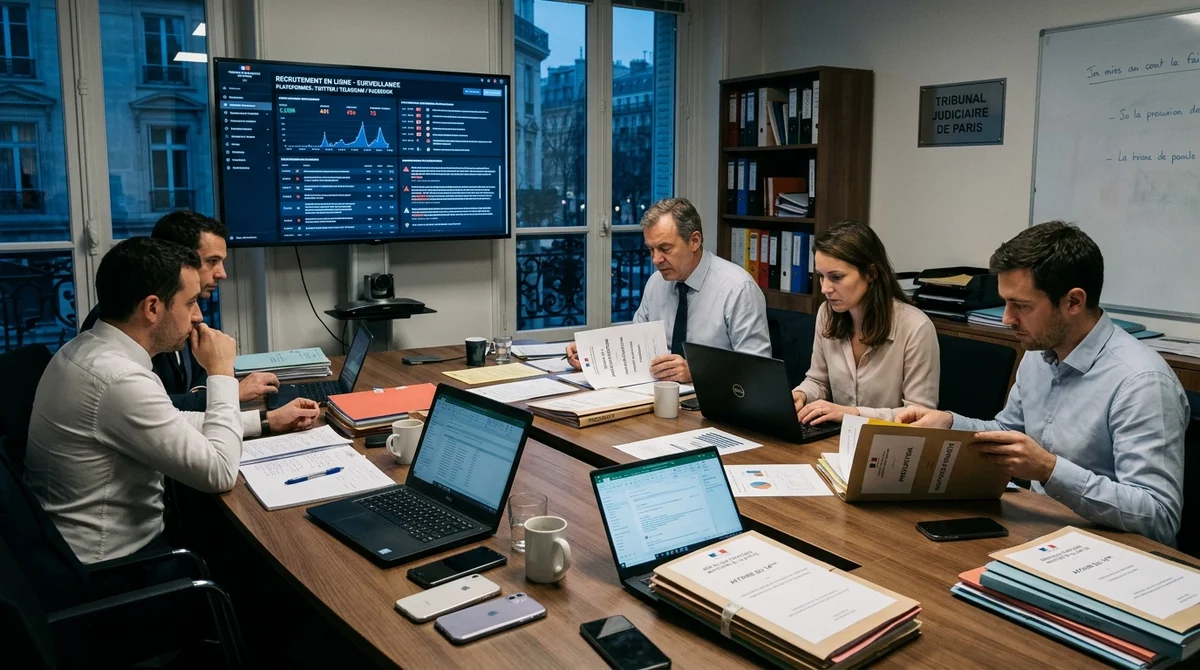
French prosecutors have summoned Elon Musk to Paris for a voluntary interview regarding the case against X. Former platform head Linda Yaccarino has also been invited to testify, while company employees are being questioned as witnesses this week.
Why leadership was summoned
The investigation is being conducted by the Cyber Unit of the Paris Public Prosecutor's Office. Formally, it is not yet about bringing charges, but about voluntary interviews: investigators want to hear the position of X's leadership as individuals who managed the platform during the period when, according to the prosecution's version, disputed events occurred. French authorities specifically emphasize that even a possible failure to appear will not stop the case.
Musk is being summoned not as a bystander, but as the owner and de facto manager of a service that operates on French territory and must comply with local law. At the same time, authorities are collecting statements from X employees in France. This format shows that the prosecution is looking not at a single post or one specific account, but at the platform's internal processes: how moderation is organized, what decisions were made about algorithms, how they responded to complaints, and what measures the company took after scandals surrounding Grok and prohibited content.
What investigators are examining
Prosecutors are studying several areas simultaneously. Based on case materials and publications by French and international media, the investigation is interested not only in sexualized deepfakes, but also in a broader set of claims against X and its related chatbot Grok.
- alleged facilitation of storage and distribution of images of child sexual abuse
- generation and distribution of sexualized deepfakes without consent of the people depicted
- possible distortion of automated system operation through changes to recommendation algorithms
- Grok publications that French authorities link to denial of crimes against humanity
- compliance measures: how X detects violations and what it does after complaints
The French prosecution emphasizes that the task at this stage is to hear explanations from management and understand what measures X is prepared to implement.
"These conversations should give leadership the opportunity to present
their position."
The company previously denied violations and called the investigation politicized.
How the case expanded
The history did not start with deepfakes. Initial reports to the prosecutor's office came on January 12, 2025: French Deputy Éric Bothorel and an official working with cybercrime stated that changes to X's recommendation algorithms could have distorted the platform's operation. In summer 2025, the prosecution opened a preliminary investigation, and in February 2026, French authorities conducted a search of X's Paris office with Europol support.
Then the focus expanded. According to Le Monde, investigators are separately examining how X changed its tools for detecting child sexual abuse material: the platform abandoned Thorn's Safer system in favor of its own solution, after which the number of reports from France to the American NCMEC center, according to the prosecution, fell by 81.4% for June–October 2025.
Against this backdrop, a scandal erupted around Grok, which, according to regulators and researchers, generated sexualized deepfakes of women and minors through simple text requests. Additional tension is created by the international context. In the EU and UK, separate investigations into X and xAI were already underway over deepfakes, personal data processing, and moderation mechanisms. For France, this case became a test of how harshly the state is prepared to apply criminal law to global digital platforms, if their products, algorithms, or protection systems, in the opinion of investigators, systematically facilitate violations.
What this means
The situation around X shows that claims against AI services quickly shift from the content moderation plane to the criminal law plane. If the French investigation goes further, it will be a signal to X, xAI, and other platforms: responsibility is now evaluated not only based on user posts, but also on product architecture, algorithm configuration, and the quality of protective systems.
Want to stop reading about AI and start using it?
AI News is a curated feed of AI/tech news. Hamidun Academy teaches you to use AI systematically in your work.