Elon Musk’s case against OpenAI stalls: first week deepens doubts about the lawsuit
The first week of Musk’s trial against OpenAI did not go smoothly for him. In Oakland, OpenAI’s lawyers presented messages about early discussions of a…
AI-processed from Bloomberg Tech; edited by Hamidun News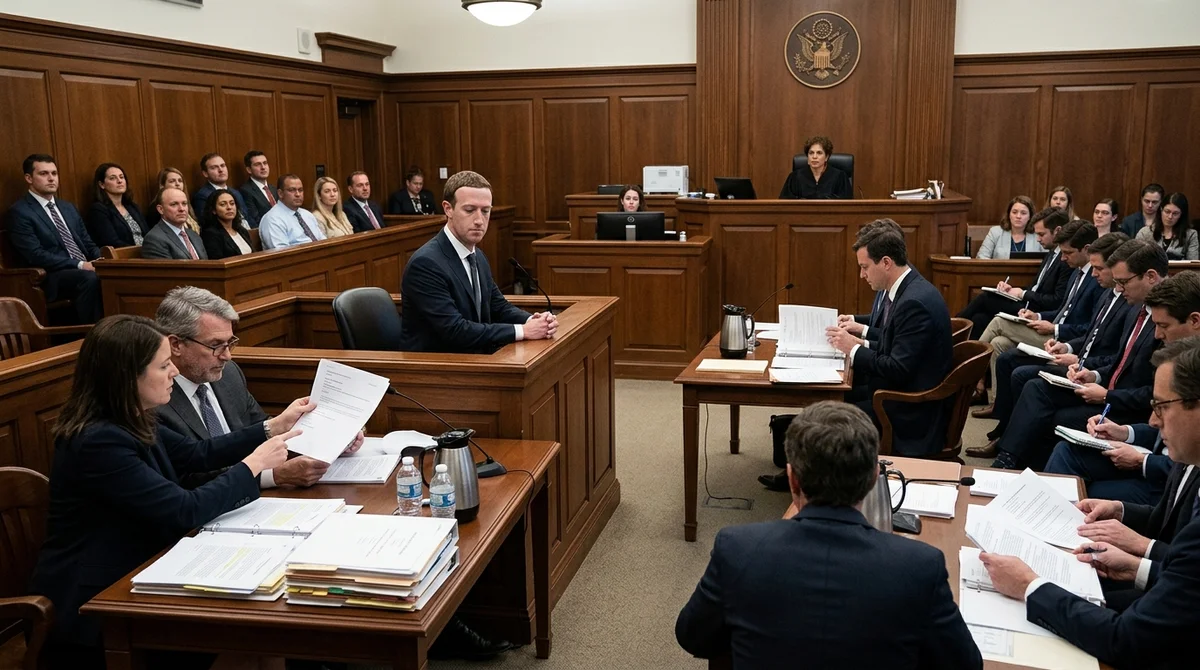
The first week of court between Elon Musk and OpenAI did not go according to the most favorable scenario for the billionaire. Instead of a simple story about how he had his nonprofit project "stolen," letters, old agreements and Musk's own contradictions emerged in the courtroom.
The simple version didn't work
In federal court in Oakland, Musk is trying to convince jurors that OpenAI, Sam Altman and Greg Brockman abandoned the original mission of the company created in 2015 as a nonprofit organization for the benefit of humanity. According to his version, after tens of millions of dollars in donations and personal assistance from Musk, the company turned into a commercial machine, fueled by Microsoft money. He demands radical measures: return OpenAI to nonprofit format, remove Altman and Brockman from management, and collect 150 billion dollars, which should go to OpenAI's charitable division.
But by the end of the first week, it became clear that this moral narrative was insufficient for the court. Before the hearings even began, the judge dismissed part of Musk's claims, leaving the proceedings on narrower grounds—violation of obligations to a nonprofit structure and unjust enrichment. OpenAI's defense insists that there was no promise to remain a nonprofit company forever, and the transition to a commercial model was necessary to pay for computing power and retain top researchers.
Against this backdrop, the dispute looks not like a black-and-white story of betrayal, but as a conflict over control, financing, and interpretation of old agreements.
What the examination revealed
The main problem for Musk is the documents and correspondence that complicate his own version of events. During cross-examination, OpenAI's lawyers showed that discussions about a commercial structure had been going on long before the open conflict. One of the most uncomfortable moments for the plaintiff occurred when he was asked about a document with conditions from August 31, 2017, concerning the transition to a commercial model under the control of a nonprofit organization. Musk replied that he did not read the "fine print," but only looked at the headline. For jurors, this is an important detail: if key papers were in his hands, proving that he was simply presented with a fait accompli becomes more difficult.
- Musk admitted that he did not carefully read the details of the document about OpenAI's future commercial structure
- Correspondence shown in court indicates that discussions of a closed and profitable model were held in advance
- He confirmed that xAI uses OpenAI to validate its own models
- When asked about the form of xAI, Musk agreed that commercial companies can also serve the public good
An additional blow to his position was inflicted precisely by the logic of his answers. Musk simultaneously claims that transforming a nonprofit into a commercial organization is impossible, but acknowledges the social utility of commercial companies and uses a competitor's products to test his AI system. OpenAI is building its defense precisely on this discrepancy: the problem, in their version, is not principles, but that Musk did not gain control of the company and is now trying to slow down a competitor through court. In such a framework, the case ceases to be a dispute about AI ethics and becomes a dispute about power and market position.
The judge is also pressing
The weak points of the claim became apparent not only in the documents but also in the overall dynamics of the process. Judge Yvonne Gonzalez Rogers asked Musk and Altman not to fight on social media after posts with attacks on opponents appeared. In the courtroom, she also limited attempts by Musk's team to turn the proceedings into a broad discussion about whether AI could destroy humanity. When the plaintiff's lawyers insisted on the theme of existential risks, the judge noted that there is irony here: Musk himself is building xAI in the same industry. This cuts into one of the central lines of his public position—the image of a man who alone restrains an irresponsible industry.
"I did not read the fine print, only the headline."
That said, it's too early to say the case is lost for Musk. He can still appeal to OpenAI's early mission, his $38 million in funding, and his role in launching the company. But the first week showed something different: his story doesn't look simple and linear. Instead of a clear scheme of "we were building charitable AI, and then we were deceived," the court saw a long and complicated evolution of OpenAI, in which Musk himself did not always hold a consistent position.
What this means
For OpenAI, this process is important because of the future corporate structure and a possible IPO, and for the entire industry—because of the question of whether AI organizations can smoothly transition from nonprofit logic to commercial logic. The first week showed that loud formulas like "stole charity" are not enough: the outcome will be decided by letters, document wording, and how convincingly each side explains its previous actions.
Want to stop reading about AI and start using it?
AI News is a curated feed of AI/tech news. Hamidun Academy teaches you to use AI systematically in your work.