AWS makes multimodal BioFMs available for drug development and clinical medicine
Amazon Web Services published a detailed breakdown of the use of multimodal biological foundation models (BioFMs) in pharmaceuticals and medicine. These…
AI-processed from AWS Machine Learning Blog; edited by Hamidun News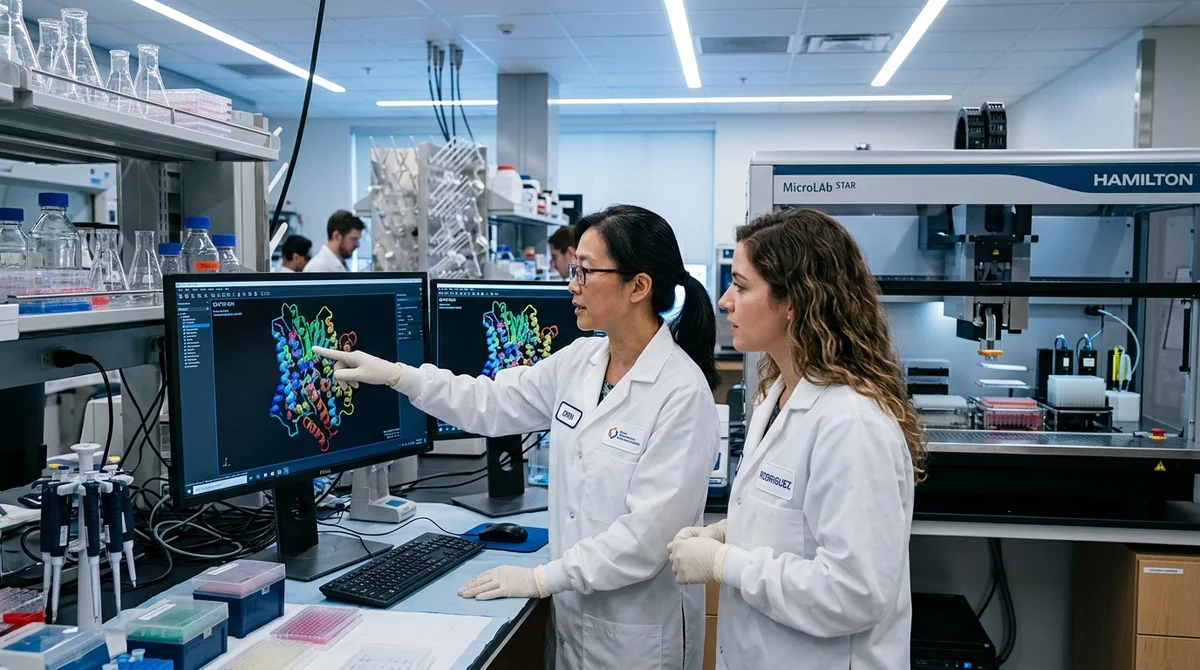
Amazon Web Services has published a detailed overview of the application of multimodal biological foundation models (BioFMs) in pharmaceuticals and clinical medicine. These are next-generation systems that simultaneously process genomic data, protein structures, medical images, and patient histories — uncovering connections inaccessible to traditional narrow-specialized tools.
What are multimodal BioFMs
Biological foundation models are neural networks pre-trained on vast corpuses of biomedical data, conceptually analogous to GPT or BERT in the world of language processing. The key word is "multimodal": such models work not with a single data type, but with several simultaneously. Before the advent of BioFMs, each task required a separate tool: analysis of genomic sequences, prediction of three-dimensional protein structures, classification of histological images, processing of clinical records — all of this were different systems. Multimodal BioFMs unite all modalities in a single architecture:
- Genomic and proteomic sequences (DNA, RNA, amino acid chains)
- Three-dimensional protein structures
- Medical images: MRI, CT, histological sections
- Electronic medical records and laboratory data
- Molecular graphs and chemical structures of compounds
Such integration allows the model to see the connection between a mutation in the genome, an altered protein structure, and clinical symptoms — work that previously required team collaboration between geneticists, biochemists, and clinicians over the course of months.
How BioFMs transform drug discovery
In pharmaceuticals, BioFMs accelerate the most labor-intensive stages of drug development. At the screening stage, the model simultaneously assesses the affinity of a molecule to a therapeutic target, toxicological profile, solubility, and synthetic accessibility — instead of sequential runs through separate QSAR models and docking systems. This radically narrows the search space before costly laboratory experiments.
In clinical trials, BioFMs help stratify patients more accurately: identifying subgroups with a high probability of response to a specific therapy or predicting adverse reactions before a participant is enrolled in the study. This reduces the cost and duration of trials — fundamentally important in an industry where a single drug costs on average $2.6 billion and takes 10–15 years from molecule to pharmacy shelf.
"Multimodal foundation models open a new era in biomedicine: AI can perceive a patient as comprehensively as an experienced clinician with years of practice does," — from the AWS
Machine Learning Blog.
The role of AWS in BioFM deployment
Amazon provides a stack for the complete lifecycle of BioFMs. SageMaker takes on training and fine-tuning models for pharmaceutical companies and research organizations — from generation of candidate molecules to biomarker analysis. Amazon Bedrock provides access to ready-made models with medical specialization without the need to build custom ML infrastructure from scratch.
HealthLake ensures structured data storage in FHIR format — the primary standard for medical information exchange in the US and Europe. Special attention is given to regulatory compliance: HIPAA, GDPR, FDA directives for AI systems in medical devices. For pharmaceutical giants and clinical networks operating under strict regulatory oversight, a ready-made compliance layer becomes a compelling argument in favor of a cloud strategy instead of deploying proprietary infrastructure.
What this means
Multimodal BioFMs are transitioning from academic laboratories to commercial infrastructure. AWS is making a strategic bet: the next generation of drug discovery platforms will be built in the cloud — and the foundation for this is being laid right now. For the pharmaceutical industry, this represents potential time savings of years in the path from hypothesis to therapy.
Want to stop reading about AI and start using it?
AI News is a curated feed of AI/tech news. Hamidun Academy teaches you to use AI systematically in your work.