Oracle raises $16.3 billion for the Stargate campus as banks give way to PIMCO
Oracle secured the largest debt package ever raised for a single technology asset — $16.3 billion for a data center campus in Michigan tied to the Stargate…
AI-processed from TNW; edited by Hamidun News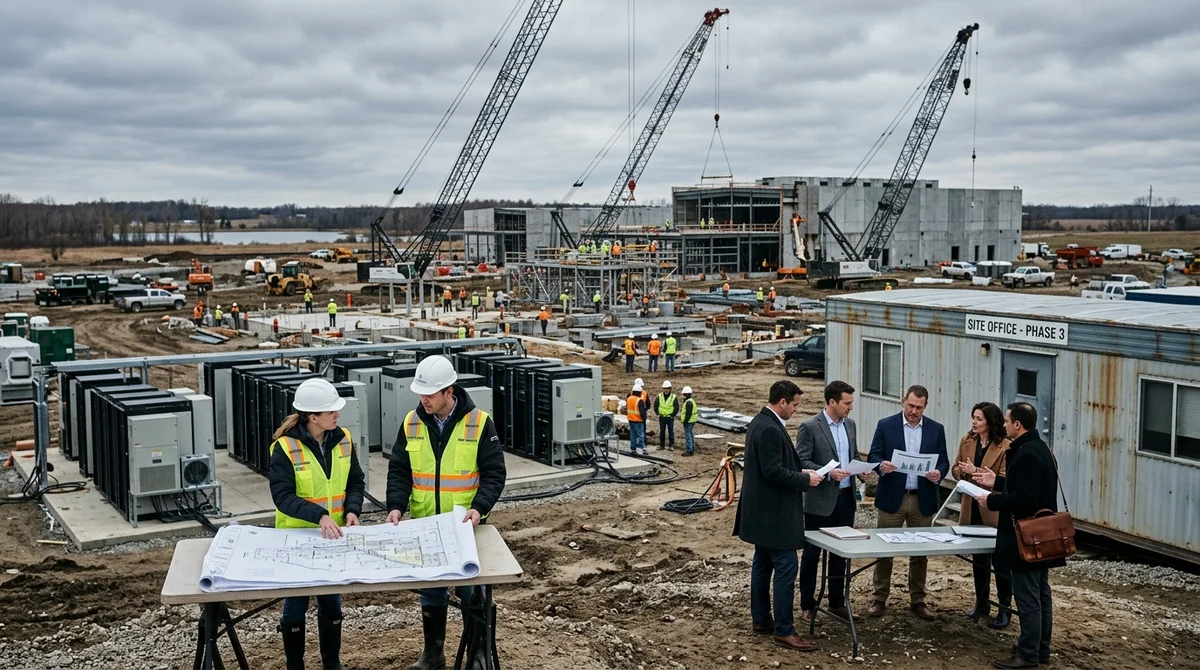
Oracle closed financing for $16.3 billion for a single data center campus in Saline Township, Michigan. This is the largest debt package in history for a single technology facility, and PIMCO became the lead anchor investor after a number of American banks withdrew from the deal.
How the deal is structured
This is about a facility that should provide more than 1 gigawatt of capacity and become part of the Stargate infrastructure—a joint project of Oracle, OpenAI, and SoftBank announced in January 2025.
The bulk of the financing came from bonds: approximately $14 billion in debt tranches, of which about $10 billion was purchased by PIMCO. Another approximately $2 billion was added as equity by Related Digital Infrastructure and Blackstone, with Bank of America structuring the deal.
The terms look harsh even by the standards of a large infrastructure project. The bond coupon was 7.5%, with a term of 19.5 years. The first six years include only interest payments, followed by another 13 years for debt amortization.
An important nuance: investors are not financing Oracle's entire balance sheet, but rather a specific campus in Michigan. The facility itself and its future cash flows serve as collateral, which is why the debt is more expensive than the company's typical corporate borrowings.
Why banks backed away
The key storyline here is not the size of the check itself, but the composition of the creditors. American banks have become more cautious about financing Oracle's data centers and doubt that demand for AI infrastructure at such volumes will remain sustainable over a decade-long horizon.
For banks, this is also a matter of regulatory constraints: risk concentration, capital requirements, and reluctance to become too deeply involved in a single asset with a long payback period.
- one campus, not a diversified portfolio of assets
- project-level financing for a specific facility, not for Oracle as a whole
- expensive debt with a term of almost 20 years
- high dependence on the facility being occupied from day one
- significant concentration of obligations with a single major client—OpenAI
This is where PIMCO entered the picture. For large asset managers, such risk can be acceptable: they have a longer horizon and greater freedom in assessing returns. But the signal to the market is harsh. If the largest data center in the history of the technology sector has to be financed through a bond fund, it means that even at the peak of the AI boom, money is no longer handed out automatically. There is demand for computing, but investors are increasingly scrutinizing who will pay for this arms race over the next five, ten, and fifteen years.
Scale of Oracle's bet
The Michigan campus is just part of a much larger program. Oracle has already secured at least $72 billion in debt financing for data centers in Michigan, Texas, Wisconsin, and New Mexico. In parallel, the company itself is sharply increasing its capital expenditures: for fiscal year 2026, they could reach approximately $50 billion, more than double the previous level. It's no wonder that rating agencies S&P and Moody's have issued negative outlooks on its investment grade rating.
Oracle has an argument in its defense: as of the end of the third quarter of fiscal year 2026, the company had $553 billion in future revenue from already-signed contracts. But there's a weakness here too—a significant portion of these commitments is tied to OpenAI. Formally, this is not speculative demand but signed contracts. In practice, however, the market is asking how sustainable the customers themselves are—those promising to occupy these facilities and finance their own expansion.
Against this backdrop, data centers are increasingly being financed as real estate or energy infrastructure rather than as a traditional IT business. What matters is not just servers, but also electricity, grid connection, cooling, water, permits, and construction timelines. One gigawatt of capacity is already at a level where miscalculating demand is very expensive. If Oracle gets the pace of AI market growth right, it will gain a strategic advantage. If not, the industry could see another example of a technological megaproject that takes much longer to pay back than promised.
What this means
Oracle's story shows that the central question of the AI boom is shifting from models to infrastructure financing. The winners will not only be those with the strongest products, but also those who can attract tens of billions for risky, long-term, and energy-intensive projects.
Want to stop reading about AI and start using it?
AI News is a curated feed of AI/tech news. Hamidun Academy teaches you to use AI systematically in your work.