Cannes and AI cinema: why the WAIFF festival raises questions about the industry's future
In Cannes, a debate has flared up over whether AI can become a new language of cinema. The official festival kept such works out of the competition for the…
AI-processed from Guardian; edited by Hamidun News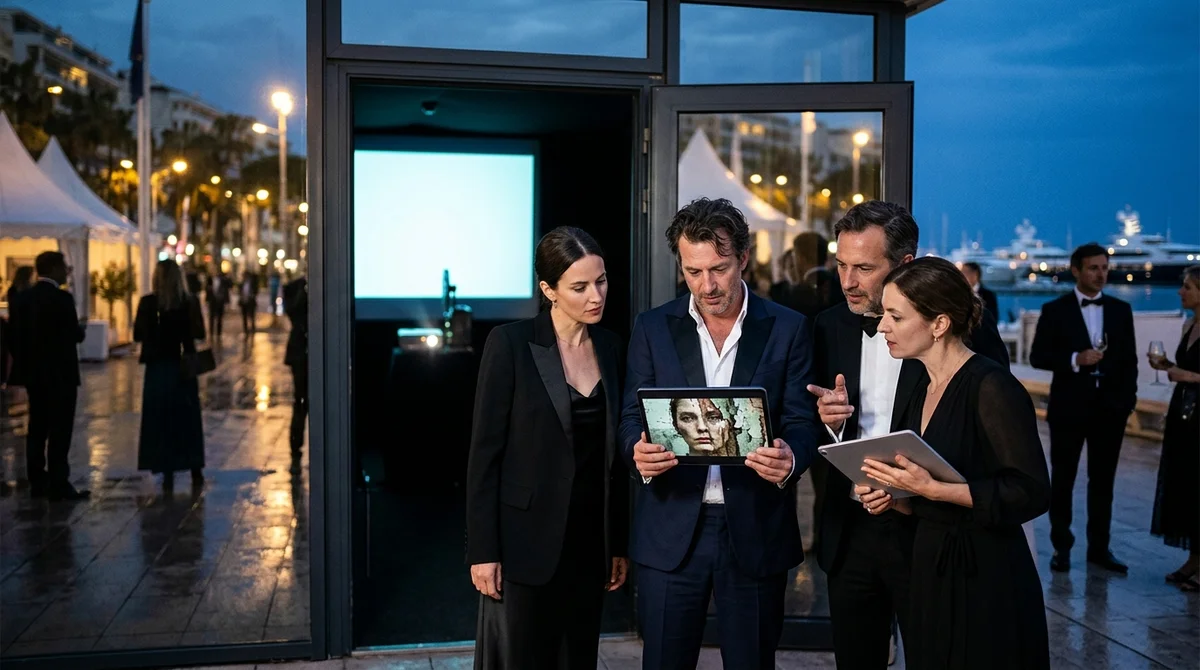
Cannes saw a collision of two positions on AI cinema: the official festival keeps such works out of the main competition, while the parallel WAIFF is already presenting them as the next wave of the industry. Behind the dispute about taste quickly emerged a harsher question — who will get the money, influence, and the right to determine what counts as cinema at all.
Two camps of Cannes
A week before the World AI Film Festival screenings, the organizers of the main 2026 Cannes Film Festival confirmed that AI works would not participate in the competition for the "Palme d'Or." The position sounds bluntly direct: an algorithm can imitate form well, but it doesn't live through the experience from which true auteur expression is born. Against this backdrop, it's especially striking how quickly the alternative venue claimed its niche on the Croisette and gathered around itself directors, tech people, and investors who care not so much about recognition from the old school as they do about staking a claim in the new market.
The result was almost theatrical contrast. On one side — an institution with a long history that protects the idea of cinema as personal and lived art. On the other — the young WAIFF festival, speaking the language of startups and big platforms: not debating the admissibility of technology, but accelerating its adoption.
Even if the visual result is still rough, the logic of movement is already familiar from other creative industries: first skepticism, then cheap experiments, then money from studios and an attempt to embed all of it into the mainstream.
What WAIFF showed
The screen world of the first WAIFF looked deliberately strange and at times unsettling. The competition featured people with fish scales and seaweed, a heroine with her heart outside her body, endless armies of identically tanned men on a battlefield, dystopias in the spirit of Blade Runner, and feverish dreams of the body, pain, and decay. This didn't look like a showcase of polished technology. Rather, viewers were shown the collective unconscious of generative video, where technical freedom still outpaces taste, editing, and dramaturgy.
- Body horror and surrealism instead of the usual festival aesthetic
- Hyperrealistic faces and shadows that are often more interesting than the plot
- Animals behaving like humans — from bears on loungers to pigs in golf carts
- Some works on the verge of copying already-known characters and styles
The main complaint about most works wasn't that they were made with AI, but that they often lacked internal rhythm and emotional center. Comic timing from synthetic actors barely works yet, and directors too easily become captivated by "perfect" skin, sharp shadows, and striking detail. At the same time, the technology already shows practical advantage: 22-year-old director Dario Cirrinchione explained that an AI scene for a film about experiencing dementia cost him €500 instead of roughly €20,000 for traditional special effects.
Money versus rules
The industry sees this not as a curiosity but as a new production economy. Around 5,000 AI films were submitted to the WAIFF competition, compared to roughly 1,000 a year earlier when the debut festival was held in Nice. There are already investments from notable Hollywood names around the format, and studios are testing a more pragmatic model: better to make a few AI or hybrid projects with a budget around $50 million than to stake everything on one traditional film for $200 million. Even Val Kilmer's posthumous AI appearance in a trailer shows the experiment has long since left the lab.
"A wave is rising: you can stand still and let it sweep you away, or you can understand what to do with it," this is how WAIFF founder
Marco Landi described the situation.
But along with the money comes the most painful question — copyright. The festival noticed a short film with characters too similar to Wallace and Gromit; the jury ultimately decided not to show or award it. This episode perfectly highlighted the paradox of the moment: directors want to cheapen and speed up production, but at the same time demand that Silicon Valley compensate for the use of others' work to train models. Some speak radically, others are cautious, but the general conclusion is the same: without clear rules, AI cinema will have not only an aesthetic ceiling but also a legal one.
What this means
AI cinema doesn't yet look like a convincing replacement for regular filmmaking, and Cannes itself openly demonstrates this. But the movement already has three things that are hard to ignore: cheap production, studio attention, and an ideology of inevitability. The next stage of the debate will not be about whether a neural network can create strange frames, but whether it can legally and genuinely tell gripping stories.
Want to stop reading about AI and start using it?
AI News is a curated feed of AI/tech news. Hamidun Academy teaches you to use AI systematically in your work.