Palantir prepares support for other AI models after Anthropic's dispute with the Pentagon
Palantir may reduce its reliance on Anthropic after the AI startup's conflict with the Pentagon. Alex Karp confirmed that the company's products are still…
AI-processed from Bloomberg Tech; edited by Hamidun News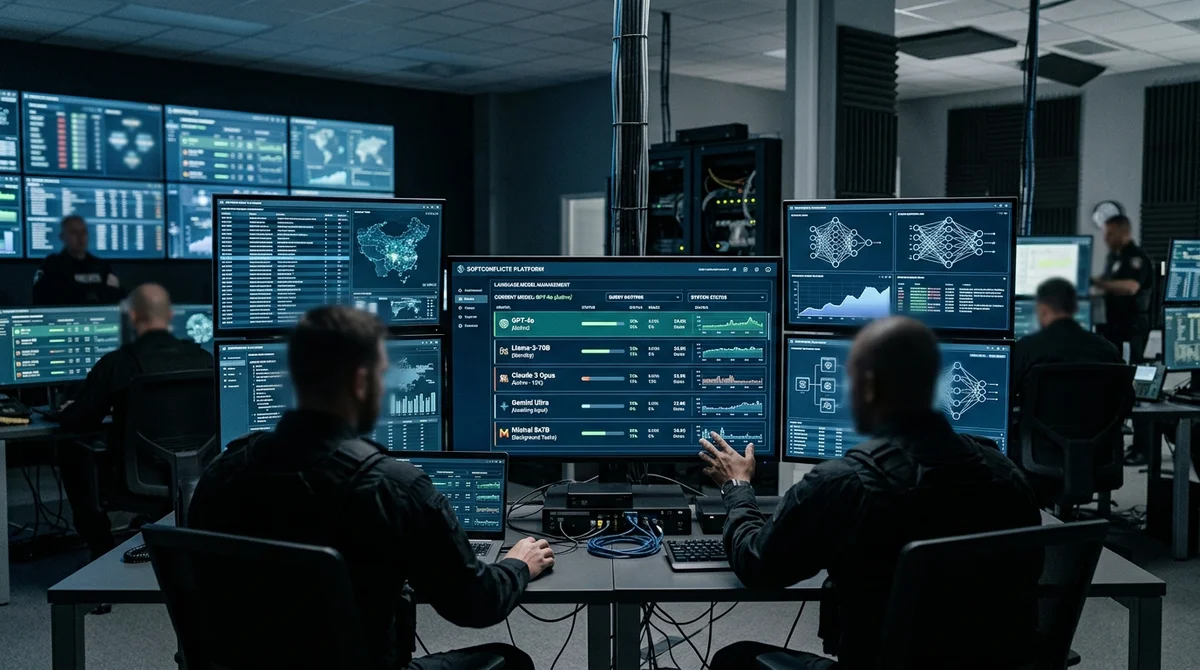
Palantir is preparing to reduce its dependence on Anthropic amid the AI startup's conflict with the Pentagon. Palantir CEO Alex Karp stated that the company's products are already integrated with Claude, but in the future will likely receive support for other large language models.
Why the risk emerged
The Trump administration recognized Anthropic as a supply chain risk and closed the company's access to government contracts. The dispute centered on how exactly the military can use Claude. Anthropic insisted on two restrictions: the model should not be used for mass surveillance of Americans and should not be used in fully autonomous weapon systems. After this, the company filed a lawsuit against the government, attempting to challenge the decision.
For Palantir, this story doesn't look like an abstract political dispute. Through its partnership with Anthropic, the Claude model is already embedded in the company's products, which work with government and defense customers. According to Reuters, the Pentagon insisted in negotiations that commercial AI can be used for any lawful purpose, even if it contradicts the supplier's internal policy.
Against this backdrop, any conflict around one model automatically becomes a risk for contractors that rely on it.
What Palantir says
On CNBC, Karp made it clear that there is no abrupt break. According to him, the Pentagon is only planning to gradually phase out Anthropic, but this process has not yet been completed, and Palantir's products continue to work with Claude.
"Our products are integrated with
Anthropic, and in the future, will likely be integrated with other large language models."
This formulation is important for two reasons. First, Palantir is not signaling an immediate departure from Anthropic and is not saying that Claude is disappearing from its stack right now. Second, the company is effectively confirming a course toward a multi-model architecture. For a defense contractor, this is a logical move: if one supplier comes under political, contractual, or regulatory pressure, the platform must be able to quickly switch to an alternative without completely rebuilding the product.
What's changing for the market
On March 11, Reuters reported that the Pentagon does allow rare exceptions to the ban. In an internal memo dated March 6, it states that Anthropic tools can be used even after the announced six-month phase-out, but only in "rare and exceptional circumstances" when it comes to critical national security tasks and there are no alternatives.
The very fact of such caveats shows: removing one model from a defense circuit is much harder than announcing it publicly.
- The ban applies not only to the Pentagon, but also to contractors
- Exceptions require a separate risk mitigation plan
- Contract officers were given 30 days to notify suppliers
- A 180-day deadline was set for confirming full compliance
- Priority is given to removing Anthropic products from systems for nuclear and anti-missile missions
For the market, this is also a signal of a redistribution of power between model developers and infrastructure players. If previously the value of Anthropic to government customers lay in Claude being one of the few advanced models allowed for use in classified environments through partnerships like Palantir, now the emphasis is shifting.
What's becoming key is not only the quality of the model itself, but also the platform's ability to survive a conflict between an AI supplier and the state. Palantir finds itself in a strong position here. The company is not forced to bet on a single developer and can turn support for multiple LLMs into a competitive advantage. The stricter a customer's requirements for compatibility, substitution, and control over the supply chain, the more valuable is the intermediary that brings different models into a single operational circuit.
What this means
The news isn't about Palantir's immediate break with Anthropic, but about a change in the logic of the entire defense AI market. Military customers want to depend less on political disputes between suppliers and get interchangeable models within a single platform. For Palantir, this is a chance to establish itself not as a showcase for one partner, but as a universal layer through which the state can quickly switch LLMs according to its rules.
Want to stop reading about AI and start using it?
AI News is a curated feed of AI/tech news. Hamidun Academy teaches you to use AI systematically in your work.