Anthropic-Pentagon conflict unnerves the AI market: industry expects a chilling effect
Anthropic's dispute with the Pentagon goes beyond a single contract. After refusing to lift bans on mass surveillance and fully autonomous weapons, the…
AI-processed from Bloomberg Tech; edited by Hamidun News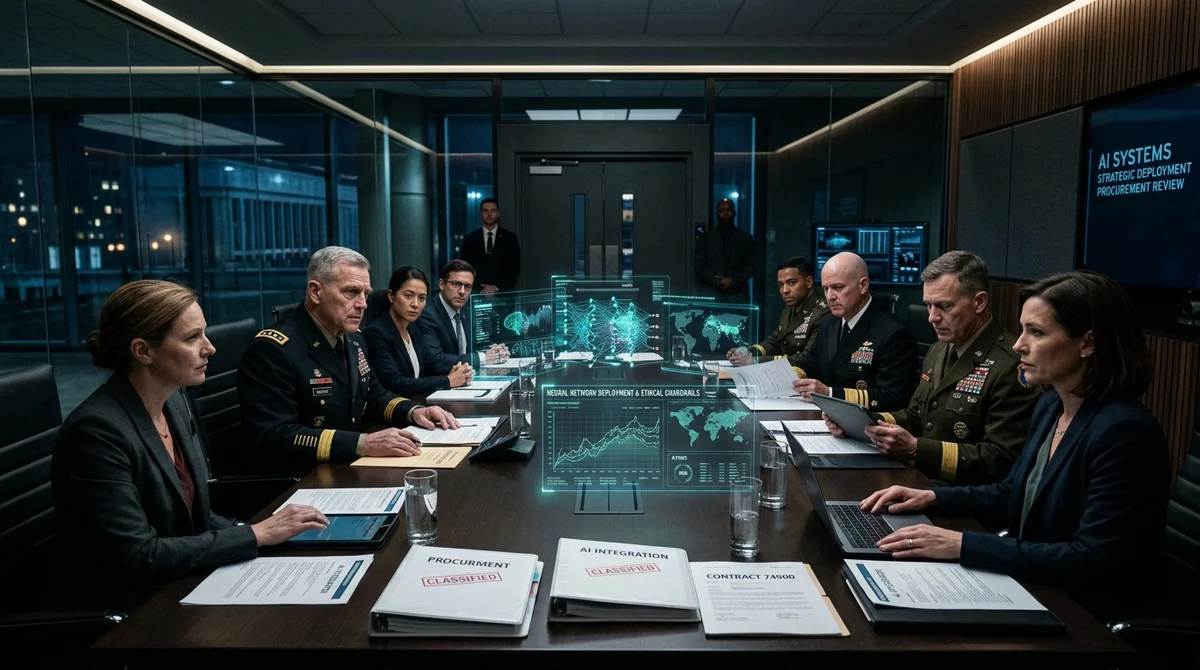
The Anthropic conflict with the Pentagon from a contract dispute quickly turned into a test for the entire AI industry. After American military officials demanded removing some restrictions on Claude usage, the industry started talking not only about military AI scenarios, but also about how far the state is willing to go in pressuring suppliers.
Why the Dispute
In late February 2026, Anthropic and the Pentagon failed to agree on new contract terms for using Claude in military systems. The military insisted on the right to use the model "for any lawful purposes," while the company wanted to preserve two strict limitations: a ban on mass domestic surveillance of US citizens and a ban on fully autonomous weapons. On February 27, the Pentagon announced its intention to assign Anthropic the status of supply chain risk, on March 4 the company received an official letter, and on March 9 it filed lawsuits in court.
Anthropic argues that the issue was not a refusal to work with the government, but two specific red lines. The company emphasizes that it has already helped American military with intelligence analysis, modeling, operational planning, and cyber operations tasks. The Pentagon's position is the opposite: a private supplier should not dictate how the state can use technologies in national security.
Therefore, the dispute quickly went beyond a single contract and touched on the question of control over frontier AI.
Why the Market is Nervous
The main fear in the industry is related not only to Anthropic as such, but to the precedent. If a mechanism usually associated with protection against hostile suppliers can be applied against an American AI company in a procurement dispute, this changes how the government contract market is perceived by the entire industry. For startups and investors, this is a signal that publicly stated security limitations could result not in tough negotiations, but in actual punishment.
- The state may attempt to unilaterally revise contract conditions that were already discussed.
- Contractors risk having to urgently redesign their products if they already have models from a controversial supplier embedded in them.
- Startup founders receive a signal that openly disagreeing with the customer over sensitive scenarios is dangerous.
- The entire defense-AI category becomes less predictable for investors and corporate partners.
"Punishing one of America's leading AI companies will inevitably damage the country's scientific and industrial competitiveness."
This is why industry associations and employees of major labs talk about a cooling-off effect. But there is no complete consensus: some observers believe that the Anthropic case is too unique, because the company is under bright political and media scrutiny, and the dispute concerns the most toxic topics — autonomous weapons and mass surveillance. This may not deter all players, but it does create a pause for reflection.
Who Supports Anthropic
By March 11-12, a notable coalition of support began forming around Anthropic. Microsoft filed an amicus brief in court and warned that sharply pushing Anthropic out of existing supply chains could derail timelines, increase contractor costs, and damage already ongoing defense projects. For the market, this is an important signal: the company is supported not only by activists or AI safety researchers, but by one of the most deeply integrated contractors of the government itself.
In parallel, industry groups representing the interests of Google, OpenAI, Nvidia, Meta, Cloudflare, Adobe and other companies came out in support of Anthropic. Their argument is simple: the government already has enough standard tools for procurement disputes, and turning a political conflict into a "supply chain risk" stigma is dangerous for the entire technology ecosystem. Even those who do not share all of Anthropic's guardrail approaches do not want to live in a model where any dispute over AI usage boundaries could end in a black mark.
What This Means
The Anthropic-Pentagon dispute is becoming not just a story about a military contract, but a test of the rules of the game for the entire AI market. If pressure through national security mechanisms becomes the norm, frontier companies will be more cautious about entering defense projects and quieter about their own red lines. If Anthropic manages to fight back, the market will get a signal that even in the most sensitive sphere, suppliers retain the right to dispute the limits of AI application.
Want to stop reading about AI and start using it?
AI News is a curated feed of AI/tech news. Hamidun Academy teaches you to use AI systematically in your work.