Pentagon may use AI chatbots to prioritize targets in military strikes
The Pentagon is considering the use of generative AI to rank military targets and recommend the order of strikes. According to an official, the system…
AI-processed from MIT Technology Review; edited by Hamidun News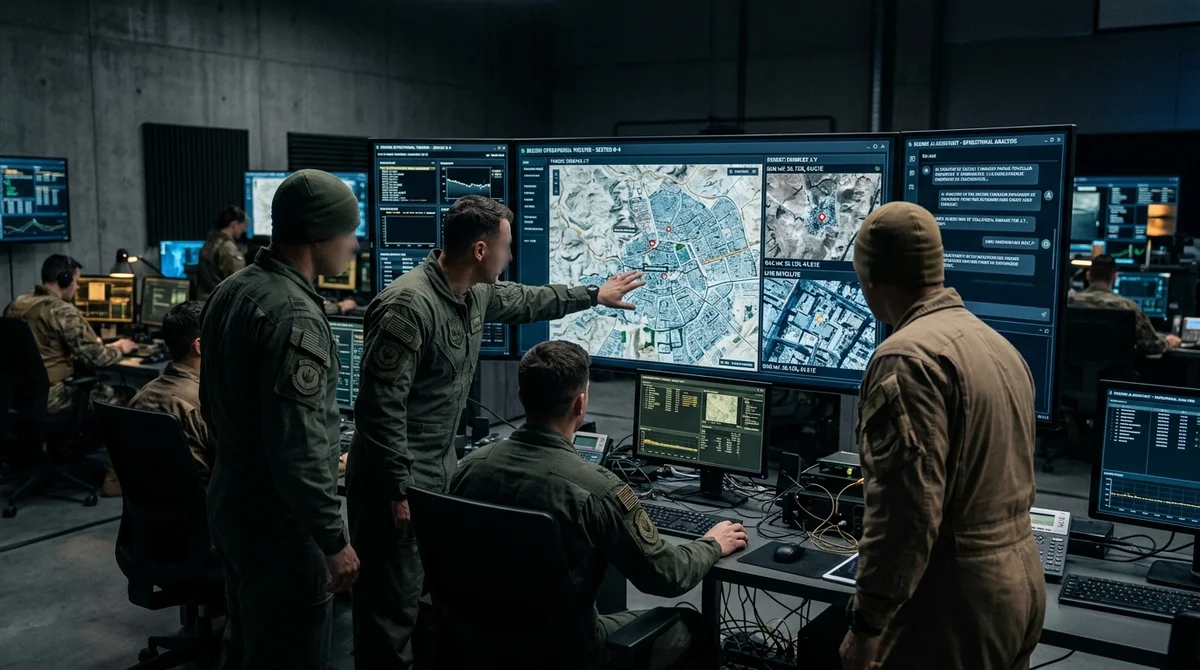
Pentagon for the first time has described quite directly a scenario in which generative AI helps the military not just search for data, but prioritize a list of targets. Formally, the final decision remains with a human, but the very fact that chatbots are bringing us closer to strike sequencing dramatically raises the stakes in the debate about military applications of AI.
How This Could Work
According to a Pentagon official familiar with the matter, the military could upload a list of potential targets into a generative system operating in a closed, secret circuit. The operator then asks the model to analyze the inputs and provide recommendations: which objects are more important, which can be postponed, and which targets it makes more sense to strike first. This takes into account not only the targets themselves, but also operational factors like aircraft positioning and overall battlefield conditions.
Importantly, the official described this as a possible working scenario, but neither confirmed nor denied whether such a scheme is already being used in real operations today. This leaves the key question unanswered: where exactly is the boundary today between analytical suggestion and AI's influence on decisions to use force. In theory, a human remains the final filter, but in wartime, what matters is not just the right to make the final click, but also who sets the order of actions.
On What Infrastructure
The Pentagon already has the groundwork for such an approach. Since 2017, American military forces have used Project Maven — a system that helps analyze large volumes of intelligence data, including drone video and satellite materials, to find potential targets faster. Initially, it was primarily about computer vision: the machine helps spot an object that an operator then checks manually.
Now a conversational layer in the style of ChatGPT, Claude, or Grok could be added on top of this stack. The difference is fundamental: previously AI mainly found and marked objects, but now it can also explain, compare, rank, and recommend next steps in natural language. Theoretically, this speeds up the work of command staffs and analysts, especially when dealing with large data streams and a short window for response.
- collect and briefly summarize intelligence data on multiple targets
- rank a list of objects by strike priority
- account for context like aircraft positioning and resource availability
- suggest which target it makes more sense to act on first
- provide recommendations to people who must then verify them
Separately, it's important to note that OpenAI and xAI have already concluded agreements allowing their models to be used in closed Pentagon environments. This does not prove that their systems are already participating in combat targeting, but it shows how quickly the technical and contractual foundation for such scenarios is being built. In parallel, other publications have linked military platforms to Claude as well, although the specific role of generative models in individual operations has not been publicly confirmed.
Why the Debate Has Intensified
This disclosure occurred at a moment when the Pentagon is already under pressure over a strike on a girls' school in Iran's Minab. According to related reports, more than 100 children died, and a preliminary investigation pointed to a problem with outdated data during targeting. Against this backdrop, any claims that AI merely helps people no longer sound like reassurance, but rather like an invitation to harder questions.
The main one is simple: how real is human verification if the system produces convincing answers in seconds, and there's little time for double-checking. If an operator needs almost as much time to independently verify the model's recommendations as the system took to produce them, the speed advantage narrows. If people begin to trust the system by default, the risk of error becomes systemic.
For military decisions, this is especially dangerous because the cost of a hallucination or incorrect ranking is measured not in bug reports, but in lives.
What This Means
Generative AI is entering not just office processes, but the most sensitive part of the military machine — the preparation of decisions to use force. Even if humans formally remain "in the loop," the real question now is different: can that human actually verify the model's advice before it becomes a strike.
Want to stop reading about AI and start using it?
AI News is a curated feed of AI/tech news. Hamidun Academy teaches you to use AI systematically in your work.