Microsoft launches Copilot Health — an AI service for unifying medical data and health analysis
Microsoft has launched Copilot Health, a separate protected section inside Copilot for working with personal medical data. The service combines data from…
AI-processed from TNW; edited by Hamidun News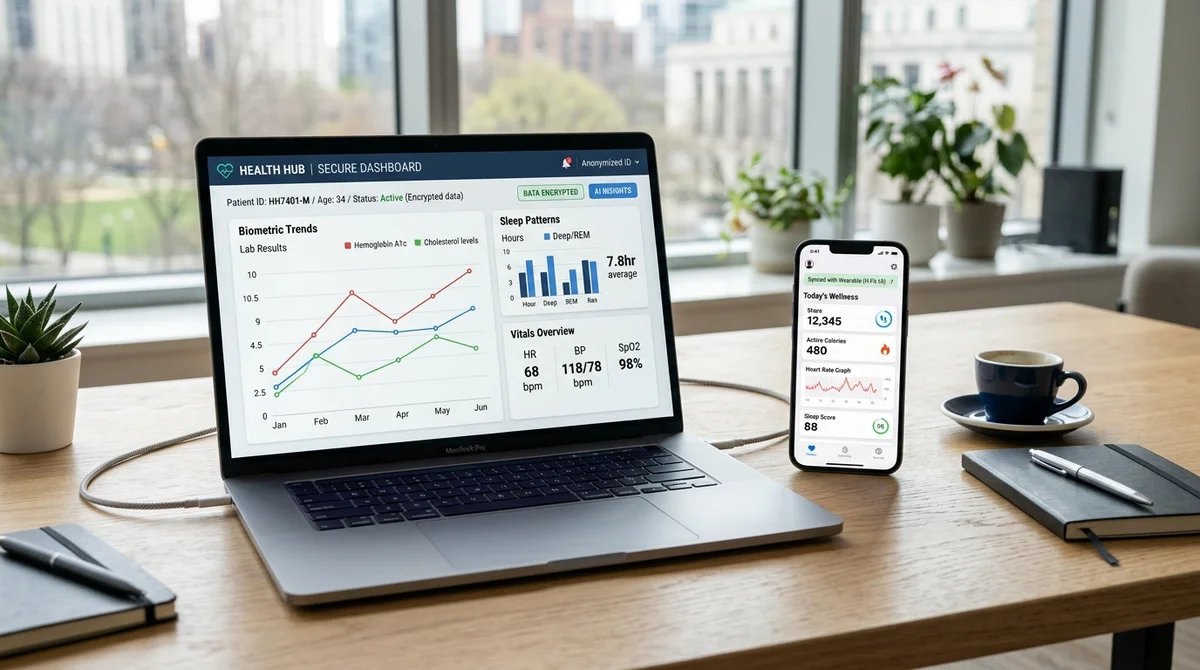
Microsoft launched Copilot Health — a separate secure space within Copilot where AI collects the user's medical data into a single profile and helps understand what they mean. The waitlist for the service opened on March 12, 2026, and the first rollout is happening in phases for adult users in the USA in English.
How the service works
Copilot Health appeared as a separate tab in the web version and mobile app of Copilot. The user can create a basic profile, specify age and gender, and then connect external data sources. After that, the system analyzes test results, metrics from wearable devices, and information from medical records to compile, as Microsoft puts it, a "comprehensive history" of health.
The idea is for a person to see not scattered numbers, but connections between sleep, activity, symptoms, medications, and doctor visits. Microsoft presents the product not as a replacement for a doctor, but as a tool for preparing for a conversation with one. The service should help users understand unclear tests, notice patterns in daily metrics, and formulate questions before an appointment.
According to the company, its consumer products Copilot and Bing already answer more than 50 million health questions per day, and Copilot Health is an attempt to turn this demand from general search into a personal scenario.
What data is being connected
The personal layer of Copilot Health is built around connectors that pull medical and everyday information from multiple sources. At launch, Microsoft mentions three main data channels and simultaneously reinforces them with external reference materials so answers don't rely solely on the user profile. As a result, the service aims to be not just a window for uploading files, but a place where AI links dry metrics with clinical and behavioral context.
- activity, sleep, and vital metrics from more than 50 devices, including Apple Health, Oura, and Fitbit;
- electronic health records and discharge summaries from more than 50,000 hospitals and medical organizations in the USA through HealthEx;
- laboratory test results through the Function service;
- reference information from verified medical organizations in 50 countries with citations and links within answers.
On top of this, Copilot Health can search for doctors in real time by specialty, location, language, and insurance, and also displays answer cards prepared by experts at Harvard Health. This makes the service not just a health chatbot, but an attempt to gather both personal data and external verified knowledge in a single interface. For Microsoft, this is also a step toward what the company calls medical superintelligence — a system that over time will be able to combine the breadth of a general practitioner and the depth of a specialist.
Privacy questions
The most sensitive part of the launch is not the model, but the rules for handling data. Microsoft emphasizes that Copilot Health stores conversations and medical information separately from regular Copilot, uses encryption in data storage and transmission, and allows you to disable any connected source at any time. The company separately states that data from Copilot Health is not used to train models — for the consumer health AI market, this is one of the key trust signals.
"Copilot Health does not replace a doctor.
It helps make time with him more productive."
During a press briefing, Microsoft separately clarified an important regulatory detail: at launch, the service does not fall under HIPAA as a classic medical provider, because it works directly with the consumer who uploads and connects their own data. The company says that new features will only be released after clinical evaluation and with explicit labeling, and the product itself has already received ISO/IEC 42001 certification for AI system management. But the question of trust will remain central here: the deeper AI goes into health, the higher the demands not only on the quality of answers, but also on the legal model of the service.
What this means
Microsoft is making the most direct bet on consumer health AI and trying to occupy the space between searching for symptoms on the internet and a full medical consultation. If Copilot Health can really bring together medical records, data from wearable devices, and laboratory results into clear conclusions without unnecessary anxiety, it could quickly become one of the most practical scenarios for personal AI assistants.
Want to stop reading about AI and start using it?
AI News is a curated feed of AI/tech news. Hamidun Academy teaches you to use AI systematically in your work.