Nvidia partner Hon Hai posts lower profit, deepening concerns over demand for AI servers
Hon Hai’s quarterly profit fell 2.4%, and investors took it as a possible sign of weakening demand for Nvidia AI servers. For the market, this is a sensitive…
AI-processed from Bloomberg Tech; edited by Hamidun News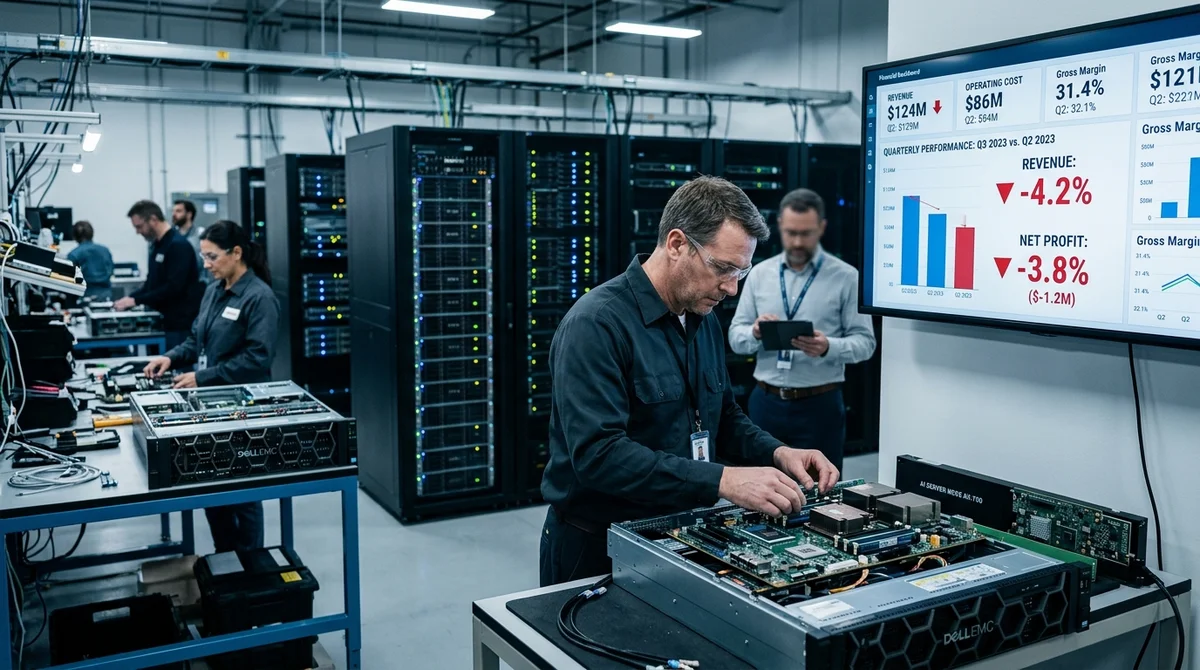
Hon Hai Precision, one of Nvidia's key partners in manufacturing servers for AI workloads, reported a 2.4% decline in quarterly profit. For the market, this is not just a weak report from an individual manufacturer, but a reason to ask again: is the demand for infrastructure on which the entire AI boom rests beginning to cool?
Why the market is tense
When a company embedded in Nvidia's supply chain reports weaker than expected results, investors read this as an indirect signal about the entire AI server segment. Hon Hai is not on the periphery of this story: its results help understand how stable the demand is for expensive server hardware purchased by cloud providers and large corporate customers. That's why even a relatively modest decline in profit immediately becomes a topic not only for Hon Hai shareholders, but for everyone monitoring the AI infrastructure market.
It's also important that we're talking about profit, not a dramatic sales collapse. But in an overheated market, the difference quickly blurs: if a company is underearning at a moment when AI is supposed to be pulling up almost the entire ecosystem, investors start looking for signs of slowing demand, deteriorating margins, or more cautious customer behavior. A single report doesn't prove anything in itself, but it shows well how sensitive the market has become to any cracks in the AI supply chain.
What's hidden in the numbers
A 2.4% profit decline doesn't automatically mean that AI server orders have collapsed. The overall figure could have been influenced by scaling production expenses, changes in supply structure, margin pressure, or shifts in the timing of major contracts. But the fact that investors linked Hon Hai's results specifically to risks for AI demand speaks to market sentiment: server manufacturers are now expected to show almost flawless momentum, and any misstep is immediately perceived as a warning.
Usually in such cases, the market tests several versions before drawing conclusions about the state of the entire segment. It could be not just about end-user demand, but also about how quickly customers are ready to turn their interest in AI into actual purchases, how sustainable their budgets are, and whether the entire production chain can profit from this growth without margin compression at every link.
- demand for AI servers is growing more slowly than forecast;
- major customers are postponing some purchases and reallocating budgets;
- margins are falling due to expensive components and high costs of rapid production scaling;
- the supply chain is becoming less predictable even with sustained high interest in AI.
Why this hits Nvidia
Nvidia remains the primary beneficiary of the AI computing boom, so any doubt around its partners instantly reflects on it as well. The market has long valued the company not only by current chip sales, but by the expectation that demand for servers with its accelerators will grow almost without pause. If key assemblers and production partners show weak spots, it forces investors to reconsider the pace of data center expansion, the timeline of new purchases, and the sustainability of the entire story about "unlimited" AI capex.
At the same time, it's important not to confuse market anxiety with a final diagnosis. The decline in Hon Hai's profit is a signal, not confirmation of a trend reversal. AI infrastructure remains a capital-intensive and volatile business: quarters can differ due to product mix, supply timing, and contract terms. But the more expensive the bet on AI becomes, the less the market is willing to forgive even moderate deviations from expectations, especially for companies in the core of Nvidia's supply chain.
What this means
The Hon Hai story shows that the AI market is entering a phase of stricter reality checks. Investors are no longer looking only at grand promises and chip demand growth: now the entire chain—from server assembly to supplier profitability—is under scrutiny. For companies in the Nvidia ecosystem, this means one thing: merely participating in the AI boom is no longer enough; they need to regularly confirm with numbers that demand truly remains strong.
Want to stop reading about AI and start using it?
AI News is a curated feed of AI/tech news. Hamidun Academy teaches you to use AI systematically in your work.